by Mark P. Fancher
South Africa did not complete its revolution with the transfer of government power to Black hands in 1994. The Marikana mine massacre shows that imperialism “will not tolerate any disruption in the flow of profits from the exploitation of highly valuable natural resources.” The question now comes to a head: Will the poor majority of South Africa tolerate a Black government that defends the interests of imperialism?
The People’s Rage in South Africa
by Mark P. Fancher
“The very reasonable demand for more money and safe working conditions prompted the police to pump rounds of ammunition into the abused bodies of more than a hundred desperate Marikana mineworkers.”
In 1990, Nelson Mandela emerged from 27 years of incarceration with a broad smile, walking hand-in-hand with his then-wife Winnie. While there were tears in the eyes of millions who watched around the world, they were not all tears of joy. Some observers contemplated the future and wept for the countless Africans who were to die on that great bloody day of reckoning when the masses of South Africa’s people would later, if not sooner, rise up and attack economic apartheid because adjustments to social and political apartheid failed to change their oppressive reality. The dawn of that day may have arrived on August 16th when South African police killed more than 30 striking platinum miners in cold blood, and wounded many more.
The massacre in Marikana, South Africa was not a run-of-the-mill wildcat strike that was met by undisciplined police officers. It was instead an event that left no doubts that while imperialism may be willing to allow Africans to sit in government offices, it will not tolerate any disruption in the flow of profits from the exploitation of highly valuable natural resources. Platinum in particular is indispensable in the manufacture of catalytic converters and other motor vehicle parts, and South Africa has more than 80 percent of the world’s platinum group metal reserves.
“Those carrying out the massacre may have been branded as “police,” but they functioned as a military unit.”
Even in 1965, Kwame Nkrumah (Ghana’s first president) understood why South Africa was a focal point of mining activities. He said: “A 1957 U.S. government survey of American overseas investments shows the single most profitable area was in the mining and smelting business of South Africa, whose profits are higher than from any comparable investment in the United States. The high profits can be explained largely by the cheapness of African labor.”
Nkrumah went on to explain that South African mineworkers earned 27 times less than their U.S. counterparts. More than half a century later, South Africa’s miners are still paid extremely low wages for dangerous, difficult work. One worker reported that he receives about $500 a month. The world now knows that the very reasonable demand for more money and safe working conditions prompted the police to pump rounds of ammunition into the abused bodies of more than a hundred desperate Marikana mineworkers, leaving a third of them dead.
This violent response should not have come as a surprise. An essential element of every neo-colonial state is an armed force with express or implied standing orders to put down rebellions. Often there are armies that play this role. In the case of the Marikana tragedy, those carrying out the massacre may have been branded as “police,” but they functioned as a military unit. They were heavily armed and ready to kill.
It should also come as no surprise that an overlap in South Africa’s police and army missions means that the U.S. military is lurking in the shadows. In an article published by the South African Institute of International Affairs, writer Thomas Wheeler reported: “U.S. defense attaches have on-going interaction with the [South African] military and police to define ways in which the U.S. can assist them.”
“The U.S. military is lurking in the shadows.”
One concrete example of this “assistance” was last year’s “Exercise Shared Accord.” The U.S. Africa Command (AFRICOM) website explained that this joint exercise between 700 U.S. Marines and about twice that number of soldiers in the South African National Defense Force was an opportunity for the soldiers to, among other things: “…engage in live-fire exercises…”
All of this raises logical questions about who South African forces are training to kill. The answers are found in the historical record. It shows that in general, African soldiers are used in conflicts with other Africans, both in their own countries and elsewhere on the African continent. The tragedy of this was not missed by Nkrumah who suggested: “…the ordinary soldier who is after all only a worker or peasant in uniform, is acting against the interests of his own class. The solution to the problem lies in the politicizing of army and police.” If that is to happen, it must happen immediately because, as “The Sowetan” newspaper commented: “[The Marikana massacre] awakens us to the reality of the time bomb that has stopped ticking – it has exploded...”
Mark P. Fancher is an attorney who writes frequently about the U.S. military presence in Africa. He can be contacted at: mfancher@comcast.net.

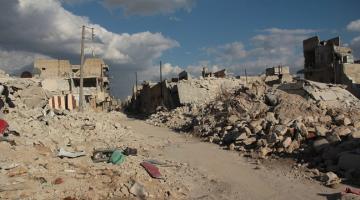 The United States has escalated its proxy war in Syria with the help of jihadist allies and continues destabilizing the entire West Asia region.
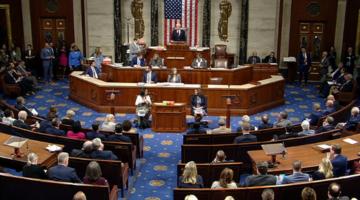 Proposed legislation uses the politicized weaponization of governmental power to stymie free speech and actively stamp out pro-Palestinian voices.
 This week, we discuss the military conflict in Sudan between warring factions. First, we discuss the International Criminal Court, which recently issued arrest warrants for Israeli officials.
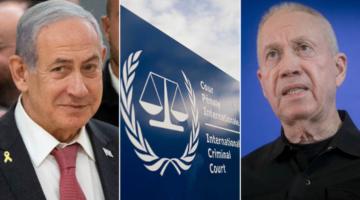 Ali Abunimah joins us from Chicago to discuss the International Criminal Court issuing arrest warrants for Israeli Prime Minister Benjamin Netanyahu, former Defense Minister Yoav Gallant and Hamas…
 Abayomi Azikiwe provides analysis on the military conflict in the Sudan which has so far been unresolved despite attempts at peace making.


