from Harper’s magazine
The United States, indicted as “the greatest purveyor of violence in the world” by Dr. Martin Luther King, 45 years ago, is today the main purveyor of high-tech terror on the planet. President Obama’s real “Kill List” is full of men and women whose names and lives are unknown to their executioners, including about 40 tribal leaders slaughtered by drones in Pakistan, last year. So traumatized are the surviving villagers, “people in the same family now sleep apart because they do not want their togetherness to be viewed suspiciously through the eye of the drone,” and “few children attend school because they fear for their lives walking to and from their homes.”
Eye of the Drone
from Harper’s magazine
The following item in the June issue of Harper’s magazine is a glimpse into the real world of terror that is President Obama’s salient contribution to America’s long history of military aggression – BAR Editors.
“These men were gathered together for a jirga, a gathering of tribal elders to solve disputes.”
From statements made in February by the families of victims and survivors of a March 17, 2011, drone attack in the village of Datta Khel in the Pakistani region of North Waziristan. The statements were collected by the British human rights group Reprieve and were included in their lawsuit challenging the legal right of the British government to aid the United States in its drone campaign. More than half of all deaths from U.S. drone attacks in Pakistan have occurred in North Waziristan. Translated from the Pashto.
I am approximately forty-six years old, though I do not know the exact date of my birth. I am a malice of my tribe, meaning that I am a man of responsibility among my people. One of my brother’s sons, Din Mohammed, whom I was very fond of, was killed by a drone missile on March 17, 2011. He was one of about forty people who died in this strike. Din Mohammed was twenty-five years old when he died. These men were gathered together for a jirga, a gathering of tribal elders to solve disputes. This particular jirga was to solve a disagreement over chromite, a mineral mined in Waziristan. My nephew was attending the jirga because he was involved in the transport and sale of this mineral. My brother, Din Mohammed’s father, arrived at the scene of the strike shortly following the attack. He saw death all around him, and then he found his own son. My brother had to bring his son back home in pieces. That was all that remained of Din Mohammed.
“I just collected the pieces of flesh that I believed belonged to my father and placed them in a small coffin.”
I saw my father about three hours before the drone strike killed him. News of the strike didn’t reach me until later, and I arrived at the location in the evening. When I got off the bus near the bazaar, I immediately saw flames in and around the station. The fires burned for two days straight. I went to where the jirga had been held. There were still people lying around injured. The tribal elders who had been killed could not be identified because there were body parts strewn about. The smell was awful. I just collected the pieces of flesh that I believed belonged to my father and placed them in a small coffin.
The sudden loss of so many elders and leaders in my community has had a tremendous impact. Everyone is now afraid to gather together to hold jirgas and solve our problems. Even if we want to come together to protest the illegal drone strikes, we fear that meeting to discuss how to peacefully protest will put us at risk of being killed by drones.
“I very much wish my children to grow up without these killer drones hovering above, so that they may get the education and life I was denied.”
The first time I saw a drone in the sky was about eight years ago, when I was thirteen. I have counted six or seven drone strikes in my village since the beginning of 2012. There were sixty or seventy primary schools in and around my village, but only a few remain today. Few children attend school because they fear for their lives walking to and from their homes. I am mostly illiterate. I stopped going to school because we were all very afraid that we would be killed. I am twenty-one years old. My time has passed. I cannot learn how to read or write so that I can better my life. But I very much wish my children to grow up without these killer drones hovering above, so that they may get the education and life I was denied.
The men who died in this strike were our leaders; the ones we turned to for all forms of support. We always knew that drone strikes were wrong, that they encroached on Pakistan’s sovereign territory. We knew that innocent civilians had been killed. However, we did not realize how callous and cruel it could be. The community is now plagued with fear. The tribal elders are afraid to gather together in jirgas, as had been our custom for more than a century. The mothers and wives plead with the men not to congregate together. They do not want to lose any more of their husbands, sons, brothers, and nephews. People in the same family now sleep apart because they do not want their togetherness to be viewed suspiciously through the eye of the drone. They do not want to become the next target.

 Palestinian people and African/Black people share more than a common struggle. They share a history dating back thousands of years.
 The Black Alliance for Peace lays out the reality of the ongoing crisis in Haiti, rejecting the mainstream narrative of a crisis of "gangs".
 MOLEGHAF calls for organization and unity among all revolutionary forces in Haiti to combat the capitalist glass and imperialist forces causing the ongoing crisis on the island.
 The end of the Second Imperialist War (World War II) did not usher in the end of colonialism and oppression for Africans on the continent and in the diaspora. The resistance of Pan-African movements…
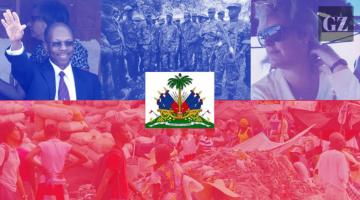 A classified diplomatic cable obtained by The Grayzone reveals the role of a veteran CIA officer in violently overthrowing Haiti’s popular President Jean-Bertrand Aristide in 2004.


