by BAR editor and senior columnist Margaret Kimberley
If police states are ranked by the number of persons imprisoned, then the U.S. is the world’s worst and biggest police state. The system runs on greed and racism. “Being ‘tough on crime’ is a metaphor for keeping black people under control.” It is a place where being a “big black guy” means conviction, and where “prosecutors routinely overcharge defendants with long sentences, and force innocent people to plead guilty in order to avoid decades behind bars.”
Freedom Rider: Criminal Injustice System
by BAR editor and senior columnist Margaret Kimberley
“Jim Crow was made illegal, so a legal means of destroying the black community had to be created.“
There are so many things amiss in the United States that one hardly knows where to begin discussing them all. Yet of all the calamitous situations faced by Americans, the cruelest by far is the criminal justice system. America is the world’s prison capital, and just one state, Louisiana, has an incarceration rate 13 times higher than China’s and 5 times higher than Iran’s.
Mass incarceration did not come about by happenstance, but was a coordinated and perfected reaction to the successes of the civil rights movement. Jim Crow was made illegal, so a legal means of destroying the black community had to be created.
America’s obsession with punishment always results in a cause celebre which gets media attention because of obvious unfairness, prosecutorial misconduct or blatant racism. However, these details are less important than the unmitigated horror of American justice. The ordeal of Brian Banks is a case in point.
Banks was a 16-year old high school student and football stand out in Long Beach, California when he was falsely accused of raping a classmate in 2002. Banks faced a charge not only of rape, but kidnapping as well. He wanted to invoke his right to plead innocent, but Banks was facing a 41-year sentence if convicted. As Banks’ recalls, his lawyer pointed out that he was “a big black guy” whom the jury would assume to be guilty. Banks followed the advice to plead no contest.
“The entire criminal justice system ought to be on trial.”
Even after serving five years in prison, Banks was forced to be monitored with an ankle bracelet, and register as a sex offender. Sex offenders in particular are in effect prisoners forever, unable to live where they want or monitored for years at a time. The draconian measures don’t end sexual assaults or make anyone safer. They are just added to the long list of ways to mete out more suffering.
Such is the case with untold thousands of Americans who end up in the maw of the system despite being innocent of any wrongdoing. The recantation of the alleged victim made the Banks case a headline story, but the entire criminal justice system ought to be on trial.
Prosecutors routinely overcharge defendants with long sentences, and force innocent people to plead guilty in order to avoid decades behind bars. Prosecutors in the state of Florida have decided that they don’t really want to try cases in court any longer. They punish suspects who want to go to trial by seeking sentences that are 5, 10 or even 20 times longer than the sentence that would be served had they pleaded guilty. Marissa Alexander fired a shot at her husband, and could have pleaded guilty and served only 3 years in prison. By insisting upon going to trial, and despite the fact she didn’t actually shoot anyone, Alexander will now serve 20 years behind bars.
What we witness in American courts bears no resemblance to a justice system, which would give judges discretion and allow defendants a day in court without fearing a life sentence. The system even punishes the innocent for saying that they are innocent. Many states automatically deny parole to individuals who assert their innocence and keep them locked up until they confess the guilt that isn’t theirs.
“The system even punishes the innocent for saying that they are innocent.”
The corrections and criminal justice system in this country is nothing but a nest of corruption and must be torn apart. Prisons and jails are used to create jobs for prison communities, make money for corporations and keep black people from effectively challenging the system as they did forty and fifty years ago. Prosecutors and politicians benefit from tough sentencing and can expect publicity, election victories and higher office should they seek it.
They have little to lose with “three strikes your out” life sentences and decades in jail for low level drug dealers. Being “tough on crime” is a metaphor for keeping black people under control. The code words are clearly understood and the fear created by media’s “if it bleeds it leads” obsession makes even many black people support these awful measures.
No crime is too small to put thousands of people away. Even child support enforcement is used to put black people behind bars who, once there, obviously can’t support their children at all. But dead beat dads, sexual predators, drug kingpins and other imagined or exaggerated criminals are never the point. They are used to keep the dreadful system running, make money for corporations, get votes for politicians, and keep racist and/or uninformed Americans happy.
The case of Brian Banks gets media attention because a liar put him behind bars. It is tempting to remember that aspect of his case but it shouldn’t be what we think about. We should think about an unnecessarily long sentence, presumption of guilt of a “big black guy” and permanent punishment.
There will always be people whose stories generate more sympathy or who have better organized supporters. Even as they get our attention we must acknowledge that there are thousands more like them. The cause of the moment should be an occasion to expose the beast and kill him once and for all. That will be the story most worthy of our attention.
Margaret Kimberley's Freedom Rider column appears weekly in BAR, and is widely reprinted elsewhere. She maintains a frequently updated blog as well as at http://freedomrider.blogspot.com. Ms. Kimberley lives in New York City, and can be reached via e-Mail at Margaret.Kimberley(at)BlackAgendaReport.com.

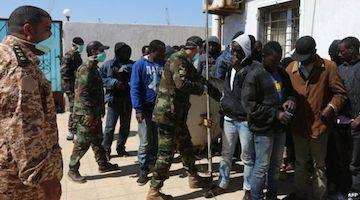 “Libya has become a marketplace for the trafficking of human beings.”
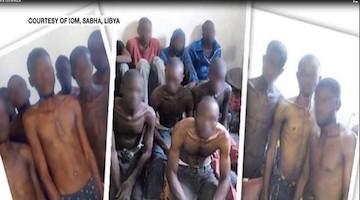 “Militants in the rebel stronghold of Misrata referred to themselves as ‘the brigade for purging slaves, black skin.’”
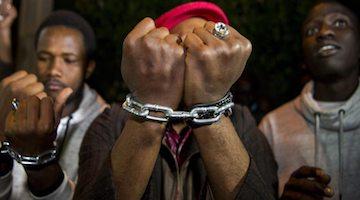 “The Obama administration bombed Libya into oblivion while using racist and terrorist rebel groups to do their dirty deeds on the ground.”
 US to Blame for Slavery in Libya
 A key strategist among the Black radicals that were behind the election of two Black mayors in Jackson, Mississippi, says his fellow activists have a decision to make: “Are we trying to be a good s



