by Toivo Ndjebela
In 1964, the Organization of African Unity’s first order of business was to hold sacrosanct the national borders inherited from colonialism, so that the continent would not be plagued by secessionist movements manipulated by the former oppressors. With the partition of Sudan and NATO’s crushing of Libya, Pandora’s box has been opened. Now Mali has been torn in two. “Those tearing Mali into administrative pieces should have observed the African Union’s principle of inviolability of borders of African countries.”
Namibian Government Blames NATO for Mali Unrest
by Toivo Ndjebela
This article previously appeared in New Era, a Newspaper for a New Namibia.
“Those countries that rushed to use military force in Libya, had underestimated the severe repercussions of their actions in the Sahel region.”
WINDHOEK – Namibia has blamed the architects of last year’s overthrow of the Libyan government for the civil strife and the recent coup against a democratically elected government in Mali.
Tuareg rebels in Mali have proclaimed independence for the country’s northern part after capturing key towns this week.
Libya’s Muammar Gaddafi administration fell last year after local rebels, with the help of NATO forces – and initially France, Britain and the USA – drove the long-serving leader out of the capital Tripoli and ultimately killing him after months in hiding.
The Namibian government believes the events in Libya are now bearing sour fruits within the western and northern parts of Africa, in what is jointly known as the Sahel region.
“The profoundly retrogressive developments in Mali are a direct consequence of the unstable security and political situation in Libya, created by the precipitous military overthrow of the government of Libya in 2011,” a government statement, released Tuesday by the Ministry of Foreign Affairs, states.
The statement continued:
“Accordingly, those countries that rushed to use military force in Libya, had underestimated the severe repercussions of their actions in the Sahel region.”
“They should thus bear some responsibility for the instability in Mali and the general insecurity in the region.”
Nomadic Tuaregs have harbored ambitions to secede Mali’s northern part since the country’s independence from France in 1960, but lack of foreign support for this idea meant the dream would only be realized 52 years later.
“The Namibian government believes the events in Libya are now bearing sour fruits within the western and northern parts of Africa.”
Namibia herself survived a secession attempt in 1999 when a self-styled rebel group, led by former Swapo and DTA politician Mishake Muyongo, now exiled in Denmark, attempted to separate the Caprivi Region from the rest of Namibia.
The Mali situation already cost Amadou Toumani Toure his job last month, when junior army officers overthrew him for what they say was his reluctance to avail resources needed to fight the advancing Tuareg rebels.
Speaker of Mali’s parliament, Doincounda Traore, was expected to be sworn in as president yesterday morning, a development that would restore civilian rule in the humanitarian crisis-hit West African country.
Traore is inheriting control of only half of the country, with northern Mali now falling under control of Tuareg rebels and Islamists.
Namibia said those tearing Mali into administrative pieces should have observed the African Union’s principle of inviolability of borders of the African countries.
“This principle of indivisibility of borders has served Africa well since its adoption by the OAU (Organisation of African Unity) Summit in Cairo in 1964,” the statement further reads.
It further stated:
“The Government of Namibia reiterates its unequivocal rejection of any attempt to dismember any African country and unreservedly condemns all manner of secessionist aspirations.”
Namibia is yet to officially recognize the new Libyan government, whose local embassy held a ‘revolution anniversary’ in February without attendance of any notable officials of the Namibian government.

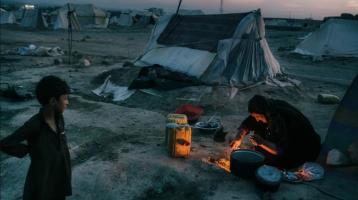 The United States continues its theft of Afghanistan's assets. The economy has collapsed and the population suffer from poverty and hunger. The Black Alliance for Peace explains in its latest update.
 Hyperbolic crime coverage by local media helped pave the way for former NYPD cop Eric Adams to become the mayor of New York City. But now that same media-manufactured crime panic is preventing Adams…
 The struggle against fascism must include a struggle against liberal democratic collaborators.
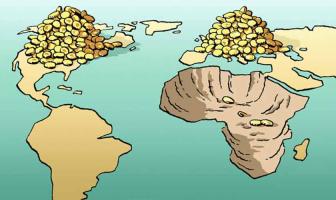 African Union member-states are facing a critical conjuncture as the looming threats of global conflict against imperialism threatens world peace.
 The recent re-election of Lula da Silva to the Brazilian presidency is a reminder of the role that he played in the occupation of Haiti. The Brazilian military took the lead in the occupation…


