Remembering Harold Washington
by Salim Muwakkil
This article
originally appeared in In These Times.
"Washington was a peoples' intellectual and a seasoned political operator."

When Harold Washington, Chicago's first
black mayor, died on Nov. 25, 1987, many of us understood that his death marked
the passing of a great man. But while we lamented the negative impact of his
loss, few of us had any inkling of the vast political vacuum he would leave
behind.
As time passes, the vacuum
expands.
Back then, it seemed likely that
Washington's powerful presence could propel the formation of progressive
alliances across the country. However, as we grope around in the political
darkness he once illuminated, it seems clear that his unique personality was a
major reason for his success.
Washington was a rare composite. Washington
was a peoples' intellectual and a seasoned political operator. He was an
effective legislator, a progressive activist and a community leader with deep
connections to grassroots organizations. His political success was never
duplicated and the movement he inspired quickly dissipated following his death.
Washington's initial election
occurred in 1983, when progressive forces were mired in the gloom of the Reagan
administration. He found mayoral success using a formula that was part campaign
and part crusade. But Washington was no political neophyte, full of naïve
idealism. He had already served many years as a state legislator and a member
of Congress, and was well versed in the nuts and bolts of pragmatic politics.
His candidacy forged political
unity among Chicago's notoriously fractious black community and helped bring
the city's feuding Latino groups (including Mexicans and Puerto Ricans) together.
He ignited a bonfire of political support among the city's traditionally
laidback Asian electorate. White progressives and reformers were attracted to
his manifest independence from the Chicago machine and his promises of
governmental transparency.
The forces of reform put into motion by his
1983 election and 1987 re-election inspired hope that a progressive prairie
fire would spread across the nation. But no such luck. However, the Washington
phenomena did provide hope that black-led, multiracial coalitions were
politically viable.
"Washington's 1983 election and 1987
re-election inspired hope that a progressive prairie fire would spread across
the nation."
The Rev. Jesse Jackson
explicitly used Washington's hybrid campaign/crusade as a template for his
presidential runs in 1984 and 1988, during which time he amassed respectable
vote totals, especially in 1988. But Jackson's Rainbow Coalition campaigns were
the last hurrah and interest in such efforts later dwindled.
That's why many veterans of the
Washington years were riveted by the political emergence of Sen. Barack Obama
(D-Ill.). His trans-racial appeal and his progressive politics seemed to echo
Washington's, and they triggered hopes for a revival of the progressive
coalitions he inspired.
Obama initially seemed willing
to utilize the Washington hybrid in his run for the presidency, but he since
has adopted a more conventional campaign model. Illinois' junior senator may
embody aspects of Washington's appeal, but he is not exploiting it.
Although a haze of nostalgia may cloud our
recall of the Harold Washington years, few can disagree that that era was a
time of hopeful activism. His mayoral tenure was a time of governmental
transparency, political fairness and even racial reconciliation. The Washington
years were a time when progressive coalitions of multiracial and multiethnic
Chicagoans were celebrating their successes and mobilizing for more.
"Epic conflicts earned Chicago the moniker, ‘Beirut on the Lake.'"
Of course, there also was a backlash
of an anxious white electorate and zealous opposition. Many in that camp
opposed Washington for racist reasons and others were ideological opponents of
his progressive assaults on the encrusted Chicago machine. Those epic conflicts
earned Chicago the moniker, "Beirut on the Lake," drawing comparisons to the
brutal civil war then raging in Lebanon's capital city. The rancor cooled
following a special election that gave Washington a more balanced city council,
and the mayor went to work engineering the fairest administration the city had
ever seen.
It may be comforting to dream of
those days and gloat about the triumphs and the promise of that era. But the
Washington years happened because people were not dreaming or awash in
nostalgia - they were awake and active.
Commemorations of the 20th
anniversary of his death should act as a wake-up call to those of us who may
have forgotten the promise ignited by this amazing intellectual of the people
who became a political champion.
Salim Muwakkil's new book
is Harold! Photographs from
the Harold Washington Years (Northwestern University Press, 2007). For more
information, visit http://www.haroldbook.org.
Mr. Muwakkil is a senior editor of In These Times, where he has worked
since 1983, and an op-ed columnist for the Chicago Tribune. He is currently a
Crime and Communities Media Fellow of the Open Society Institute, examining the
impact of ex-inmates and gang leaders in leadership positions in the black
community.

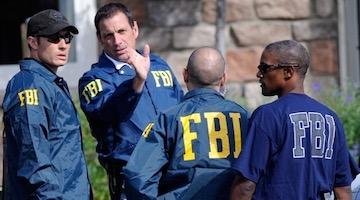 The attorney general’s theory rests on the premise that there is a set path by which one radicalizes into becoming violent.
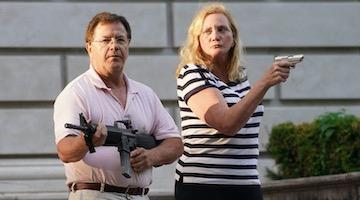 Does the belatedness and ubiquity/banality of allyship echo an anxiety about the enormous restraint that African Americans have exercised?
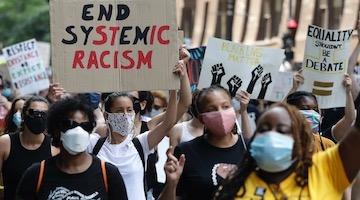 White labor leaders are failing to understand non-traditional organizing that has developed from viral social media movements.
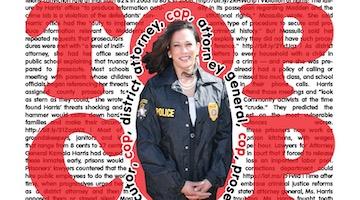 The Democrats are likely to put forward a Black woman prosecutor to legitimize the mass incarceration plague that Joe Biden helped inflict on Black America.
 Black Alliance for Peace national organizer Ajamu Baraka urged vigilance against US “attempts to control the narrative” of the Black Lives Matter movement.



