Slavery, Iraq, and Justice Delayed
by David Swanson
"Prosser was not hanged for advocating violence but for opposing slavery and advocating violence against slave owners.
This article was originally published in After Downing Street.
 The Governor of Virginia, Timothy M. Kaine, has just pardoned Gabriel Prosser for leading a slave revolt in Virginia over 200 years ago. Prosser sought to organize thousands of slaves to accomplish the "wholesale massacre" of whites in Richmond and other slave-holding areas, according to historian Virginius Dabney. Kaine cited Prosser's "devotion to the ideals of the American revolution - it was worth risking death to secure liberty." Kaine concluded that "Gabriel's cause - the end of slavery and the furtherance of equality of all people - has prevailed in the light of history."
So seeking to massacre Americans can come from devotion to the ideals of the American revolution, even if it's done by people not quite considered real Americans? Of course it can. The American revolution involved killing lots of people too. Prosser was not hanged for advocating violence but for opposing slavery and advocating violence against slave owners. Of course, in the light of history, over 200 years too late we can recognize the horror that slavery was and see slave rebellions as acts of self-defense. It is slightly remarkable for a Virginia governor to say so out loud, even today. But it's not a great moral breakthrough.
The moral breakthrough would have been for the slave owners in 1800 to have said "My God, they dislike slavery so much they are willing to kill and die to end it. Slavery must be wrong. We will end it peacefully. We will make amends. We will share the burden together of moving past slavery so as to avoid a future war." That would have been the moral breakthrough.
"Iraqis defending their country against an occupying and murderous force is acting in self defense."
Rebelling slaves today are called insurgents. They speak a funny language called Arabic. They practice a strange religion. They dress weird. And almost every depiction of them on television is negative. But we've killed an estimated 1,028,907 of them in Iraq alone and driven another 4 million Iraqis out of their homes. They are in utter and desperate poverty. Diseases are sweeping their remaining population. They are dying at twice the rate this year as last year. Their fury at the occupying army of slave owners is immeasurable. Slave owners today are called Mr. President, Mr. Vice President, the Congress, and "our troops."
 The moral breakthrough today would be to recognize that Iraqis defending their country against an occupying and murderous force - a force which in fact uses slave labor to construct its gargantuan embassy - is acting in self defense. The moral breakthrough would be to recognize now, before it's too late, that the Iraqi resistance is in fact in line with the ideals of the American revolution and is in fact destined to prevail in the light of history - if we all survive long enough to have that history.
My friend Dahlia Wasfi recently said:
"Our so-called 'enemies' in Afghanistan, Iraq, Palestine, our other colonies around the world - and our inner cities here at home - are struggling against the oppressive hand of empire, demanding respect for their humanity. They are labeled 'insurgents' or 'terrorists' for resisting rape and pillage by the white establishment, but they are our brothers and sisters in the struggle for justice.
"Last Sunday, my family's luck ran out, and one of my cousins in Iraq was killed in the violence we have brought upon Iraqis and their children. He leaves behind a wife; a 2 year old son who keeps asking 'Where's Daddy?'; a heart-broken mother and brother; and an entire family devastated by grief for whom life will never be the same. If there are political differences, then whatever they may be, there's nothing complicated about fighting for Iraqi women and children, who are the majority of the suffering population. And if we respect their humanity, can we not respect their grief as they lose their brothers, fathers, husbands and sons, the same way we mourn with and share the pain of American military families?"
Perhaps we can, Dahlia. It just might take us a couple of hundred years.

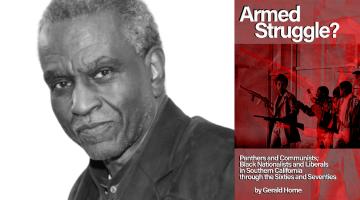 Dr. Gerald Horne talks to us about his latest book, “Armed Struggle: Panthers and Communists, Black Nationalists and Liberals in Southern California, Through the Sixties and Seventies.”
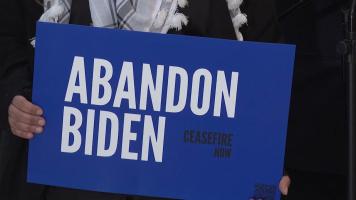 Hudhayfah Ahmad joins us to discuss how and whether the Abandon Biden campaign will change in the wake of Biden’s departure from the race and the elevation of Kamala Harris to the role of…
 Ajamu Baraka, Chair of the Coordinating Committee of the Black Alliance for Peace, and columnist and editor at the Black Agenda Report, is on the ground in Venezuela and joined The Kim Iversen Show…
 Sonya Massey’s brutal murder at the hands of the police has resulted in anguish and anger but no difference in how state violence is protested. Instead, we see surrender to the crumbs of condolences…
 For the late Dr. Bernice Johnson Reagon, Black music was a tool in the struggle for Black liberation, and not what it has mostly become today: a retrograde appendage to neoliberalism and white power.


