Racial Sins of the Past Live On, Multiplying Pain and Suffering
A Black Agenda Radio commentary by Glen Ford
"The worst states for Black amputations are South
Carolina, Louisiana and Mississippi."

The peculiar and pervasive white American psychological syndrome
of denial of the facts and implications of racial oppression, never succeeds in
making the original, race-based problem go away. Rather, the pathological
fruits of past racism constantly re-emerge to wreak havoc on the human
condition. Such is the case in all arenas of society, most tragically so in the
area of public health.
A recent study by the Robert Wood
Johnson Foundation finds huge disparities in the way Blacks and whites fare
under doctors' care. White women are substantially more likely to receive
breast cancer screening than are Black women, 64 percent versus 57 percent,
respectively. And Blacks are four times more likely to suffer amputations
because of diabetes.
In all but two states of the Union, Colorado and
Massachusetts, Blacks are less likely than whites to undergo hemoglobin
screening, to detect diabetes. The worst states for Black amputations are South
Carolina, Louisiana and Mississippi.
Until rather recently, researchers were inclined to blame
much of the disparity on African American education levels and diets. However,
surveys that accounted for these differences among racial groups still found
that racism on the part of doctors and other health care workers played an
irreducible role in creating relatively poor medical outcomes for Blacks.
Medical racism is a fact.
"Original sins, like
slavery, don't just go away."
The Robert Wood Johnson study, however, found that even
larger disparities exist between different geographic areas. In the case of cancer screening, the
disparity between the states of Maine and Mississippi is greater than the
national racial gap in screening. Utah has the lowest incidence of amputations
in the nation, Louisiana, the highest. Researchers speculate that the regional
disparities are caused by differences among states in poverty and educational
levels.
No doubt they are at least partially correct, but education
and poverty are also directly related to race, both past and present. The
states of the Old Confederacy share the distinction of providing the worst
medical outcomes by both race, and region. It is clear that regional health
care is directly related to the racial past, as well as present, of the
backward southern states. And so are problems of poverty and poor education,
which cannot be separated from race.
During the brief era of Reconstruction, progressive
governments tried to bring the South not only back into the Union, but into
civilization in terms of education, public health, and economic reforms. But
whites destroyed Reconstruction through terror, and ever since have resisted
economic, medical and educational reforms that might benefit Blacks. They
starved white families and children of good schools and hospitals, in order to
deny such services to African Americans.
Researchers who are anxious to find reasons other than race
for regional disparities wind up ignoring the past and racist legacies as they
exist in the present. Original sins, like slavery, tend to linger in the body
politic and the physical nation. Unless the legacy is systematically
eliminated, root and branch, the social symptoms return with unexpected
virulence. Race crimes don't go away; they metastasize, like cancer. For Black
Agenda Radio, I'm Glen Ford.
BAR executive editor Glen Ford can be contacted
at Glen.Ford@BlackAgendaReport.com.

 Class conflicts between Africa-born and Haiti-born Blacks and mulattos shaped Haitian political battle lines before and after the 1804 revolution and to this day, said Haitian American author and a
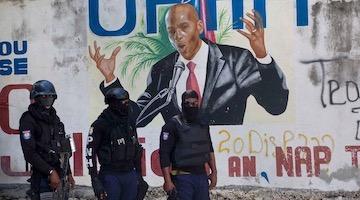 The United States playing any role in Haiti’s future is akin to the fox being left in charge of the henhouse.
 There is a lesson to be learned from the differences in recent U.S. and Chinese historical celebrations.
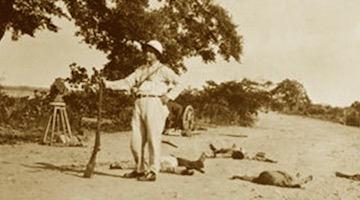 Published in 1920, Self-Determining Haiti remains a remarkable example of investigative journalism and advocacy and a damning testament to the perils and pitfalls of US military
 Three nations share the same water, but not the same foreign connections, which makes for a dangerous mix.



