by BAR editor and columnist Marsha Coleman-Adebayo
The US and the global community use workers as cheap, disposable commodities.” That’s certainly the case with the strategic mineral vanadium, the extraction of which in South Africa has led to the gruesome deaths of many miners. “The victims bleed from every orifice of the body, they defecate and urinate blood, develop cancers of the stomach- esophagus, in addition to kidney and liver failure.”
Vanadium, Green Crimes and the White House
by BAR editor and columnist Marsha Coleman-Adebayo
“South African vanadium mine workers are not considered as valuable as the vanadium they mine.”
Vanadium first came to the attention of Americans in 1905 when Henry Ford noted that French steel was lighter than that in the United States. He began using it in American cars and reduced their weight by half. Ford and other industrialist understood that the American industrial revolution was predicated on steel and that the metal needed an alloy, an additive, that allowed it to expand and contract when exposed to extreme temperatures. Cars, trucks, airplanes, silverware, surgical equipment needed vanadium to enhance their durability and utility.
Today, we all use products with vanadium. Just 0.1% vanadium content in steel can double its strength and in the coming years, U-Investor tells us, “significant increases in vanadium-alloy consumption are forecast as global industrial producers fiercely seek costs-saving measures while retaining quality.” President Barack Obama, speaking at an industry conference, said that vanadium redox batteries, "was one of the coolest things I've ever said out loud." Neither the 20th century American Industrial revolution nor the 21st century Green revolution would be possible without vanadium.
Most of the world’s vanadium reserves are found in just three countries: China, South Africa and Russia. Only three percent of the world’s supply is found in other countries. Little wonder, when union leader and environmentalist Jacob Ngakane and later South African occupational attorney Richard Spoor briefed me on the potentially lethal vanadium poisoning of South African mine workers by a United States multinational, the Environmental Protection Agency for which I worked as the EPA liaison to South Africa, at the time, ordered me to ignore these reports. The symptoms of vanadium poisoning are not only grotesque but other worldly: the tongues of the victims turn green, blue or black, a physiology indication of severe poisoning. The victims bleed from every orifice of the body, they defecate and urinate blood, develop cancers of the stomach- esophagus, in addition to kidney and liver failure.
“Neither the 20th century American Industrial revolution nor the 21st century Green revolution would be possible without vanadium.”
According to a 1998 NASA/ EPA "Database of Hazardous Chemicals," a probable oral lethal dose for humans is between five and fifty milligrams per kilogram or between seven drops and one teaspoon for a 70 kilogram - 150 pound-person. It is as toxic as some forms of arsenic.
Ultimately, vanadium poisoning can lead to chronic illness and death. Eighty percent of the vanadium mined in South Africa will find its way into our pots, stoves, refrigerators, satellites and the weaponry of the 1%. US multinational corporations pay South African vanadium miners relatively high wages in comparison to the GDP of most African workers, approximately $1.50 per hour (as compared to $1.00 per day in most African countries.) But the savings are quickly dissipated on medical and burial expenses leaving behind trails of broken and indebted families. South African vanadium workers make the same fundamental decisions as West Virginia coal miners, eating today for the inevitable death tomorrow. The cycle of green crimes stretches from South Africa to West Virginia.
Recently, I received an unexpected invitation to participate in a discussion at the White House on the topic: Women and the Environment. Although hesitant, my mentor and friend Noam Chomsky convinced me to accept this invitation. His advice turned out to be not only forward thinking but sage. One of the White House panels focused on EPA's international activities. As a former employee, working in EPA's Office of International Activities (OIA), I was particularly interested in this topic. During the question and answers period, I queried Michele DePasse, EPA's Assistant Administrator for International Activities, whether the Agency was prepared to meet its commitment under the Gore-Mbeki Commission (the flagship US/South Africa bilateral instrument during the Clinton-Gore Administration) to investigate the deaths of vanadium mine workers by a US multinational corporation. I explained that the US had promised to conduct an independent investigation of vanadium poisoning and that the investigation had been killed. After stating that she had no knowledge of the US commitment to investigate vanadium exposure, Ms. de Passe told the audience that the EPA would "look into" the investigation of vanadium poisoning in South Africa." Although, she quickly added that vanadium poisoning and, presumably, its victims were not among her top priorities.
“The cycle of green crimes stretches from South Africa to West Virginia.“
Nevertheless, issues of vanadium poisoning and its victims have now been raised at the highest level of government. The US can no long plead credible deniability around the vanadium tragedy. I also discussed my work experiences at the EPA as a whistleblower, the court trial that followed when I sued the EPA (and won), the congressional hearing and the passage of the No FEAR Act protecting whistleblowers as a consequence.
As Noam Chomsky said, endorsing the OccupyEPA demonstration held on March 30 in Washington D.C., big business and technocrats “are counting on our silence and apathy. We should not grant them that lethal gift. Over the past months, it has been impressive and heartening to see how people from all walks of life have joined the Occupy movement to engage in the struggle to free the country from corporate domination, government repression and subordination to private power.”
The issue of vanadium poisoning is another example of how the US and the global community use workers as cheap commodities that are treated as disposable. The reality is that neither the South African government nor the U.S. government are prepared to interfere with the production of this valuable and CIA-designated strategic metal, even at the cost of lives. South African vanadium mine workers are not considered as valuable as the vanadium they mine.
In 2003, two attorneys, an American and South African, asked then South African Minerals and Energy Minister Phumzile Mlambo-Ngcuka to support their litigation against Fluor Corporation. They also filed a lawsuit against the vanadium producer Vametco, which is a wholly-owned subsidiary of U.S. Strategic Minerals Corporation (a spin-off of Union Carbide before the Bopal disaster). The South African government spurned the lawsuits, saying the lawsuits could destabilize the economy and undermine its sovereignty.
“Neither the South African government nor the U.S. government are prepared to interfere with the production of this valuable and CIA-designated strategic metal, even at the cost of lives.”
The attorneys alleged and I personally witnessed that the employees were exposed to toxic gases while working at Vametco's open cast operations in Brits, 40 km west of Pretoria. South African medical doctors have reported that a significant number of vanadium miners suffer from upper respiratory illnesses, which have been linked to mine dust blown off the open vanadium dumps. I experienced a nose bleed within 40 minutes of being exposed to vanadium dust and sulfuric acid while on a South African union conducted investigation of a vanadium mine. There are reports of numerous illnesses and deaths since 1990.
Toxicology Data Network notes that: “Occupational exposure to vanadium containing dusts is encountered in the mining of vanadium bearing ores. In milling, exposure to vanadium containing dust can occur near the production sites of numerous vanadium compounds, particularly vanadium pentoxide and, to a lesser extent, the vanadates… Vanadium and its compounds are principally eye and respiratory tract irritants that result in conjunctivitis, coughing, wheezing, difficulty in breathing, and industrial bronchitis… Greenish discoloration of the fingers, scrotum, and upper legs may also be present. A greenish black discoloration of the tongue indicates heavy exposure. Vanadium compounds interfere with the metabolism of sulfur containing amino acids.
The production of steel is rising globally. The World Steel Association reported that global crude steel production reached 1,527 million tons in 2011 – a record. This year, demand is expected to increase an additional 6% to reach a new record over 1.6 billion tons. And the demand for vanadium will rise with it.
Over the past decade, the demand for vanadium in the United States has increased 56%. And estimates suggest that vanadium demand is expected to continually grow at a compound annual rate of 7.8% thorough to 2015, fueled by increasing demand for stronger and lighter steel alloys.
I look forward to receiving the White House and EPA's response to my question of when the US government will commence its investigation of South African vanadium poisoning at the hands of a US multinational corporation? Will you join me in holding them accountable?
See Chomsky’s narration of OccupyEPA at: http://youtu.be/eOetahVJEs0.
See Marsha on C-Span Book/TV at:www.marshacoleman-adebayo.org.
Dr. Marsha Coleman-Adebayo is the author of No FEAR: A Whistleblowers Triumph over Corruption and Retaliation at the EPA is available through amazon.com and the National Whistleblower Center. Dr. Coleman-Adebayo worked at the EPA for 18 years and blew the whistle on a US multinational corporation that endangered vanadium mine workers. Marsha's successful lawsuit lead to the introduction and passage of the first civil rights and whistleblower law of the 21st century: the Notification of Federal Employees Anti-discrimination and Retaliation Act of 2002 (No FEAR.)

 The online aggregation and coherence of Blackness online, absent Black bodies, is what inspired the author’s book.
 The very physical category of femaleness was articulated by feminists and non-feminists alike as the sole property of whiteness in the 19th century,
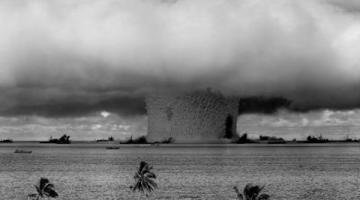 Seventy years after the civil preparedness film Duck and Cover, it is long past time to reckon with the way white supremacy shaped U.S.
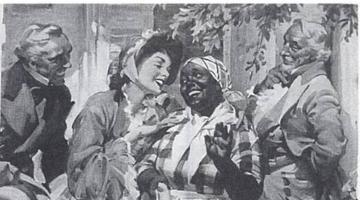 Textbooks are a battleground in which the humanity and status of black Americans are contested
 Amazon will not stop squeezing every drop from workers until those workers have more power.


