by Kenneth J. Cooper
When the so-called congressional “supercommittee” makes its decision by the 23rd of this month on how to cut the budget by thousands of billions of dollars, Blacks and Latinos will be disproportionately impacted. “Cutting Medicaid will likely hit hardest at communities of color and, in particular, those who depend on the program to manage and treat their chronic illnesses.”
Medicaid “A Vital Lifeline” for African Americans and Latino Americans
by Kenneth J. Cooper
This article previously appeared in The Defenders Online.
“Half of African American and Latino children get health care through Medicaid.”
A new report for the first time determines how many African Americans and Latinos depend on Medicaid, the state-federal program for the poor, to treat serious diseases or conditions.
Nationwide, a little more than a quarter of both racial-ethnic groups rely on the state-federal program for the poor, but 40 percent of Latinos with asthma and other chronic lung diseases do and 37 percent of African Americans so afflicted do, according to the report by Families USA, an advocacy group for health care consumers.
Those figures mean about 1.4 million of both Latinos and African Americans with lung diseases depend on Medicaid. Although there are more Latinos than African Americans in the country, the numbers are almost equal because fewer Latinos suffer from asthma.
About 23 percent of Latinos with heart disease or who have had a stroke are on Medicaid (1.4 million individuals), as are 22 percent of African Americans with those medical problems (1.9 million).
“About 1.4 million of both Latinos and African Americans with lung diseases depend on Medicaid.”
Nearly 25 percent of Latinos who have cancer depend on Medicaid (105,000 people), and 22 percent of African Americans with the life-threatening disease are similarly dependent (141,000 people).
For diabetes, the comparable figures are 26 percent of Latinos (692,000) and 24 percent of African Americans (778,000).
The report, titled “Medicaid: A Lifeline for Blacks and Latinos with Serious Health Care Needs,” warns against cuts in the program’s budget by state and federal governments. Declining revenues because of the slow-growing economy has put pressure on states to cut Medicaid funding and benefits.
But the timing of the report’s release last month suggests the study amounts to a preemptive strike against Congress in particular. A joint supercommittee has a Nov. 23 deadline to reach agreement on a deficit-reduction package, and Medicaid is one of the programs on the table in those House-Senate negotiations.
“Cuts to the Medicaid program would put blacks and Latinos with serious health care needs at risk—at risk of not being able to get the care they need when they need it, at risk of incurring higher medical costs when they do get care, at risk of getting sicker and even at risk of dying prematurely,” the report concludes.
“Nearly 25 percent of Latinos who have cancer depend on Medicaid (105,000 people), and 22 percent of African Americans with the life-threatening disease are similarly dependent (141,000 people).”
Ralph B. Everett, president and CEO of the Joint Center for Political and Economic Studies in Washington, says: “As policymakers consider sharp cutbacks in the Medicaid program, this report brings an important potential consequence of their actions to the table – that cutting Medicaid will likely hit hardest at communities of color and, in particular, those who depend on the program to manage and treat their chronic illnesses.”
The Joint Center was a cosponsor of the report along with the NAACP, National Council of La Raza, National Urban League, National Medical Association, American Lung Association and American Diabetes Association.
Ron Pollack, executive director of Families USA, notes that the “higher incidence and greater severity of chronic and serious health conditions” among African Americans and Latinos “means that Medicaid is a vital lifeline in protecting the health and well-being of these Americans.”
The report also argues that while Medicaid cuts would save governments money, they would not reduce overall health care costs. Medicaid patients who would no longer receive regular treatment for serious, chronic conditions would instead make more visits to emergency rooms and have more hospital stays than they otherwise would.
Those forms of health care are more expensive than the prescription drugs, health screenings and doctor visits that provide regular treatment for those diseases.
“Medicaid patients who would no longer receive regular treatment for serious, chronic conditions would instead make more visits to emergency rooms and have more hospital stays than they otherwise would.”
If low-income patients without Medicaid can’t pay for their hospital stays and emergency room visits, then hospitals would initially absorb the cost of what is called “uncompensated care.” But then hospitals in turn pass those costs to other people who have private health insurance and businesses who buy it for their workers. The report cites a 2008 estimate that cost-shifting for uncompensated care increased premiums for a family policy about $1,000.
The report also notes that half of African American and Latino children get health care through Medicaid. Losing that coverage, the report maintains, could adversely affect their schooling.
Using asthma as an example, the report notes that asthma, a manageable disease, is a leading cause of school absences. African Americans suffer from a high rate of asthma, though Latinos have a lower rate, except Puerto Ricans. Genetic researchers are trying to determine the reason for that intra-ethnic difference.
The report gives a state-by-state breakdown of African Americans and Latinos on Medicaid with lung disease, heart disease or stroke, diabetes and cancer. No age breakdown of sufferers within the two racial-ethnic minorities is given.
Kenneth J. Cooper, a Pulitzer-Prize winning journalist, is a freelancer based in Boston. He also edits the Trotter Review at the University of Massachusetts-Boston.

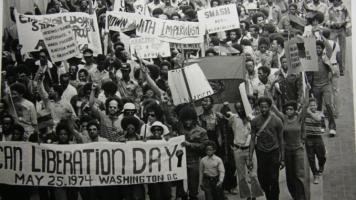 African Liberation Day is a reminder that African descended people make progress when joined together in international unity. Internationalism is essential.
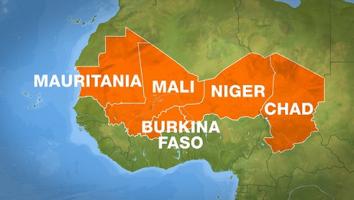 The west African Sahel region is described as "one of the poorest places on earth" and has suffered from French colonial interventions and austerity demanded by western financial institutions.…
 The US backed Ugandan government is responsible for looting the Democratic Republic of Congo's resources. They owe a debt but the crime was carried out with help from the US and UK governments and…
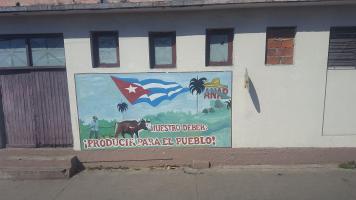 The author reports on her experiences with the May Day International Brigade in Cuba.
 The top vice presidential candidate for Colombia’s May elections, Francia Márquez, called out the US government for meddling in the electoral process. The left-wing activist criticized the war on…


