by Cynthia McKinney
“As the United States and NATO drop bombs on unsubmitting African people in Libya, the United States kills an innocent Black man in Georgia.” The execution of Troy Davis and the vicious Euro-American assault on Libya spring from the same historical source. “A new kind of perverse global plantation is being created.” Too many of today’s Black politicians are mere posers and seat warmers. “Leroy Johnson, alone in the Georgia State Senate, was more powerful in the 1960s than are the 55 Black members of the Georgia Legislature now.”
McKinney: The Art of Leadership and the Fight for Justice
by Cynthia McKinney
“Who among our elected officials today exercises the art of leadership in an engaged struggle for justice?”
After Georgia was forced by the United States Supreme Court to abandon its scheme to deny Black people the right to an undiluted vote and representation, Leroy Johnson became the first Black person elected to the Georgia State Senate since Reconstruction. The year was 1962. During his tenure, Johnson used his considerable influence inside the body to become the Senate's Chair of the Judiciary Committee. From this position, he was able to bottle-up legislation that was bad for the State of Georgia, especially its Black residents. Outside and inside the State Senate, Leroy Johnson practiced the art of leadership and engaged in the fight for justice. He produced solid results for a people who were hungry for justice. Who among our elected officials today exercises the art of leadership in an engaged struggle for justice? Sadly, the numbers are way too small. It is more expedient to exchange silence for merely "being there," in the end exercising no leadership at all and becoming a spectator to power in abandonment of those who need the effective use of power the most. The art of the struggle has veritably been abandoned for merely occupying a seat at the table when the purpose of the struggle for the seat at the table was to empower the struggle for justice. The only reason we send people to occupy that seat is to leverage the power of the community where power is exercised, on behalf of those who need it the most.
“The only reason we send people to occupy that seat is to leverage the power of the community where power is exercised.”
As I was commiserating over the Troy Davis situation with a former member of the Georgia Legislature who rose to the highest possible position within that body for his party, he lamented that for all of his years in the Legislature, he had not introduced a single death penalty bill. I quickly interjected that he was so busy putting out other fires and sticking his fingers in all the holes of the leaky dikes and schooling his colleagues on the effective use of the power of their elected positions that he couldn't do everything. It will be interesting to see what legislative actions his former colleagues will initiate in the face of this clear act of barbarism by my state.
Occupying these "seats at the table" is important. Engaging in the struggle for justice is important. And contrary to what many would have us believe, leadership is important. That's why so much effort is spent on co-opting or marginalizing the leaders of conscience that we do have and preventing authentic representatives of our values to occupy those seats at the table.
Therefore, more is required of us. We must hone the skill of discernment. We must not give our vote to just anybody to occupy these positions of power. We must not allow "posers" to represent us. Posers are those who wear the jackets of authority, who are put in positions of power by us, but who do not engage in the artful use of that power on our behalf. Discerning who is friend and who is poser has been difficult. But, is being made more possible by the arrogance now of those who do not have the interests of the people at heart. They seem not to care that their "neanderthal" is showing. But we can look at them and clearly see that they ain't us. Their actions are a clue that they do not share our values.
The violence sponsored by the United States abroad has its origins inside the United States.”
Unfortunately, posers exist all around us: and in the media, too. The job now of people of conscience is to make sure that we don't enable these posers by our own supportive behavior. My friend reminded me that Leroy Johnson, alone in the Georgia State Senate, was more powerful in the 1960s than are the 55 Black members of the Georgia Legislature now. We need to stop and think about that.
More is less? What role have we all had to play in such a circumstance? Is our leadership more of a reflection of who we are than we have acknowledged? What can we do differently in order to get a better result?
Abu Ghraib has its antecedents right here in the United States. The violence sponsored by the United States abroad has its origins inside the United States. As the United States and NATO drop bombs on unsubmitting African people in Libya, the United States kills an innocent Black man in Georgia. There is more to come unless we affirmatively take steps to stop it. Republican voters cheered at the prospects of more executions at a recent Presidential debate. In a recent article, AFRICOM commander Army Gen. Carter F. Ham, Africom brags on its lessons learned from Libya:
“The command had to define what effects it needed, and what specific targets would contribute to achieving those effects – a precise endeavor. If attacking a communications node, planners must ask themselves what does that particular node do? How does it connect to other nodes? What’s the right munition to use? What’s the likelihood of collateral damage? What’s the right time of day to hit it? What’s the right delivery platform? And finally, how to synchronize attacks.
“That level of detail and precision … was not something the command had practiced to the degree that we were required to do in Odyssey Dawn…. If we were to launch a humanitarian operation, how do we do so effectively with air traffic control, airfield management, those kind of activities?”
The United States has to craft those practices with African partners, he added.
U.S. allies in Libya are as barbaric as their sponsors. Despite youtube's efforts to dissuade it from being seen, please watch this video sent to me from France:
As committed Libyans valiantly resist the entire NATO arsenal of modern and old-fashioned killfare, a new kind of perverse global plantation is being created. There is a clear and present danger that Africa and Asia will become U.S. killing fields for the next decade or more while the United States, itself, becomes a police state--unless we stop this poser leadership that really stopped representing us a long time ago. If we fail to stop them, watch that video again--and welcome to the new America, hauntingly familiar to a place we never left.
Cynthia McKinney can be contacted at hq2600(at)gmail.com.

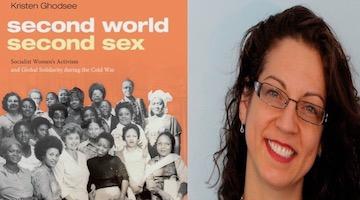 Socialist ideas about the inextricable links between class, race, and gender predate the concept of intersectionality.
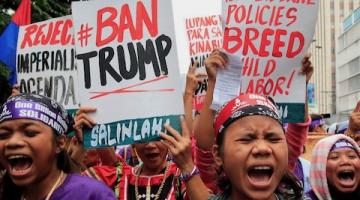 The struggle against systemic racism and the police state in the US is integral and linked to the struggle against US wars of aggression overseas.
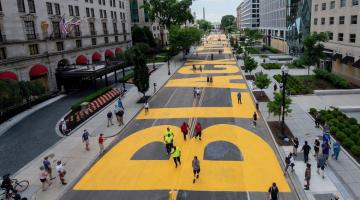 Community control of police and prison abolition have been completely removed from the conversations dictated by a mainstream and complacent narrative.
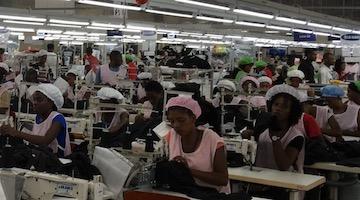 Global Displacements is an examination of the impact of the global organization of capitalist accumulation and exploitation on the life and labor of Haitian and Dominica
 It was agreed that dropping the federal charges and seeking no jail time in return for pleading to a very low-level DC Code charge was an important victory.


