by Stephen Gowans
In the mid-70s, the world’s two pariah states, Israel and South Africa, sought to seal their relationship with a nuclear kiss. A new book claims Israel tried to sell South Africa nuclear-tipped missiles – the price was too high. Israel denies the charge, but Tel Aviv has never told the truth about its atomic arsenal and activities, so why should anyone believe them.
Israel’s Secret Nuclear Alliance with Racist South Africa
by Stephen Gowans
This article originally appeared on Mr. Gowans’ site, What’s Left.
“Israel arranged to send Pretoria 30 grams of tritium, which South Africa later used to build a number of atomic bombs.”
Israel has been called an apartheid state. Now its links to the original apartheid state have been brought to light. In a new book, The Unspoken Alliance, Sasha Polakow-Suransky, a senior editor at Foreign Affairs, the principal journal of the US foreign policy establishment, cites declassified South African documents that reveal that Israel forged a secret military alliance with South Africa in the 1970s, and offered to sell the apartheid state nuclear weapons. (1)
From its founding in 1948 until the mid 1970s, Israel was critical of South Africa’s apartheid, and sought allies among the newly independent black African states. But for many African countries, Israel was the replication in Palestine of the same European colonial settler model they had struggled to break free from. They weren’t going to become allies of a colonial power.
Then Israeli defense minister (and now president) Shimon Peres, accompanied South African prime minister John Vorster, a Hitler-admirer who had been jailed during the war for supporting the Nazis and belonging to the fascist Ossewabrandwag, on a 1975 visit to the Holocaust memorial. Peres signed an agreement with Vorster’s government to establish a secret military alliance, and offered to sell Pretoria nuclear warheads.
South Africa, a white racist state, proved to be more amenable to Israel’s offers of alliance, seeing in the Zionist state a kindred country of European settlers “situated in a predominantly hostile world inhabited by dark people.”
The cementing of the alliance was helped along by an existing relationship: South Africa was already shipping yellow cake to Israel. Now, safeguards against nuclear proliferation were lifted, allowing the Israelis to divert the yellow cake to their nuclear weapons program.
The strength of the new relationship was signaled by the 1976 visit to Jerusalem of South Africa’s prime minister, John Vorster. Accompanied by Yitzhak Rabin and then defense minister (now president) Shimon Peres, Vorster visited the Holocaust memorial, a grotesque spectacle considering the South African prime minister was a Hitler-admirer who had been jailed during the war for supporting the Nazis and belonging to the fascist Ossewabrandwag.
“For many African countries, Israel was the replication in Palestine of the same European colonial settler model.”
In 1975, South Africa’s defense minister, P.W. Botha met with Peres to buy Israeli nuclear warheads. While the deal fell through – the South Africans thought the asking price too high – the two men signed an agreement to establish a secret military alliance. Israel also arranged to send Pretoria 30 grams of tritium, which South Africa later used to build a number of atomic bombs.
Alon Liel, a former Israeli ambassador to South Africa, told the British newspaper The Guardian that South Africa used its mineral wealth (based on the exploitation of oppressed black miners) to fund joint military projects while the Israelis provided the technical know-how. South Africa would soon become Israel’s largest arms customer. According to Liel, “After 1976, there was a love affair between the security establishments of the two countries and their armies. We were involved in Angola as consultants to the [South African] army. You had Israeli officers there cooperating with the army. The link was very intimate.”
Israel regarded the relationship as based on more than just convenience, but on a common position as colonial oppressor, under pressure from national liberation movements. The two countries shared “unshakeable foundations of…common hatred of injustice and…refusal to submit to it,” wrote Peres to South Africa’s information minister, Eschel Rhoodie. The “injustice” each refused to submit to was ending apartheid (South Africa) and reversing the Nakbah (Israel), in both cases the subordination of indigenous people to the interests of settlers from Europe. Rafael Eitan, Israel’s then military chief of staff and Ariel Sharon, a future prime minister, sympathized with the “plight” of the South Africa’s apartheid regime, presumably seeing in it a reflection of the difficulties faced by Israel in enforcing its own racist regime.
“The fact that Israel was willing to act as a nuclear proliferator 'undermines Israel’s attempts to suggest that, if it has nuclear weapons, it is a ‘responsible’ power that would not misuse them'.”
By the late 1980s, the apartheid regime in Pretoria was bleeding support, and it was no longer tenable to back South Africa. Israel decided that it would “have to switch from white to black.” The security estblishment balked, pointing out that South Africa, as Israel’s chief arms customer, had “saved Israel,” a conclusion Liel says is “probably true.”
Chris McGreal, a reporter at The Guardian who has written a series of articles on the revelations in Polakow-Suranky’s book, points out that the fact that Israel was willing to act as a nuclear proliferator “undermines Israel’s attempts to suggest that, if it has nuclear weapons, it is a ‘responsible’ power that would not misuse them, whereas countries such as Iran cannot be trusted.”
But how responsible was France? It probably played a role in Israel’s development of nuclear weapons, transferring technology to Israel in return for its role in the attempted 1956 British-French take-over of Egypt (the Suez Canal crisis.) (2) How responsible, for that matter, is the United States, which dropped atomic bombs on Hiroshima and Nagasaki during WWII, despite the reality that a Japanese surrender was imminent, and, even if it weren’t, could have been obtained easily without the use of atomic bombs? (3) What’s more, the United States continues to threaten to use nuclear weapons against non-nuclear states (4) – hardly the acts of a responsible nuclear power, and nothing less than nuclear terrorism.
Polakow-Suransky’s book, and McGreal’s reporting, reveal that Israel entered into a military alliance with an overtly racist regime – and aided South Africa in its attempt to smash Angola’s national liberation movement — the foundations of the alliance all the stronger for being based on shared problems related to the maintenance of oppressive rule over dispossessed indigenous majorities.
NOTES:
1. The bulk of this article is based on Chris McGreal’s articles for The Guardian: “Israel and apartheid: a marriage of convenience and military might” May 23, 2010; “Revealed: how Israel offered to sell South Africa nuclear weapons”, May 24, 2010.
2. See Richard Becker, “A turning point in the Middle East balance of forces”, PSLWeb.org, November 1, 2006.
3. See Jacques R. Pauwels, The Myth of the Good War: America in the Second World War, James Lorimer & Company Ltd., Toronto, 2002, p 172-173
4. Stephen Gowans, “Nuclear Posture Review 2010“, what’s left, April 10, 2010.

 For the 12th consecutive year, the Black Is Back Coalition for Social Justice, Peace and Reparations will march on the White House, November 7, this time under the themes “Black Power Matters,
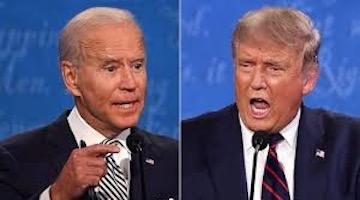 The incoherence of the Biden-Trump debate will be repeated every election cycle until Blacks and progressives break with the corporate duopoly.
 A majority of New York City cops are non-white, but their union endorsed the re-election of Donald Trump, with no loud protest from the darker ranks.
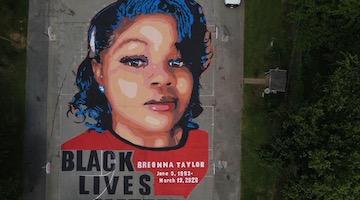 Reactions to the Breonna Taylor murder, settlement and verdict all have one thing in common: Black people’s inability to protect our lives.
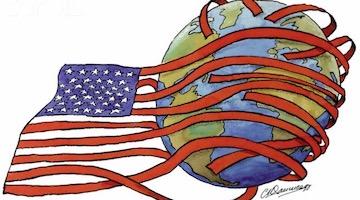 The US sows hysteria about China because Washington can no longer dictate global affairs without any significant challenge.



