A Black Agenda Radio commentary by BAR managing editor Bruce A. Dixon
Why is the only model of inner city economic development that anybody has tried in living memory amount to moving poorer urban residents out, and wealthier ones in? What happens to the people who are moved out, and why does our black business class leadership quietly ignore, or openly collaborate in the dispersal of the very communities which made many of their careers possible?
Black Business Class Leadership and the Crisis of Gentrification
by Bar managing editor Bruce A. Dixon
Are poor people the chief and principal architects of their own poverty? This sounds like, and is, a foolish idea. But the baseless and backward notions that poverty is the result of the moral and character flaws of poor people, and that persistent concentrations of poor people cause even more poverty, something like the way mold causes more mold have furnished the public justifications of the nation's housing policy for a generation.
If you are foolish enough to believe poverty is caused by poor people then demonizing, dispersing and demolishing public housing, privatizing the land upon which projects once stood and gentrifying poor urban neighborhoods in the name of solving poverty makes perfect sense. It also makes tons of money for well connected developers, their contractors, attorneys and investors, and provides them all with good reasons to make generous contributions to the politicians that open these doors to them. Nobody in the real estate game makes a nickel off stable neighborhoods. Hypocritical justifications aside, for too much of our black business class leadership, gentrification has never been about about economic justice. Gentrification is just one more way to get paid.
Unlike their fathers and mothers, the current and corporate-trained generation of black leaders do not aspire to alleviate, let alone eliminate poverty. They are unable and often unwilling to defend the interests of poor urban constituencies, even the ones that elect them, because like their white establishment counterparts, they simply do not value those communities and their inhabitants. They collaborate in depicting their own communities as toxic sinkholes of despair, so that any excuse to demolish and disperse such places, whether its the Olympics in Atlanta (and almost in Chicago) or man-made floods in the wake of Katrina, can be counted as a public good.
But exactly where the former residents of housing projects end up, and whether dispersing their communities actually begins to lift them out of poverty are questions that our corporate-trained black leaders in the public and private sectors, and even most academic researchers refuse to ask. Research is emerging, the University of Florida's Dr. Susan Greenbaum told us last spring, which indicates that many former public housing residents are doing worse, poorer, more isolated from family and formal and informal support systems, less secure in food and housing, with less access to health care, affordable transportation, education and job opportunities than they had in public housing. Their new neighbors, believing that former public housing residents were bringing the alleged character flaws and bad habits of poverty into their new surroundings, rejected and stigmatized them. Many former public housing residents, she told us, were thrown into the same neighborhoods that became ground zero for the foreclosure crisis. Absent some swift and profound changes they are likely to be uprooted again, as those foreclosures turn to evictions.
We have reached a point where the only model of development for inner cities is demolition and gentrification. Something is profoundly wrong with that, and with the black business class leadership which is not even looking for an alternative.
For Black Agenda Radio, I'm Bruce Dixon.
Bruce Dixon is managing editor at Black Agenda Report, and based in Atlanta. He can be reached at Bruce.Dixon(at)blackagendareport.com.

 The conspirators have accomplished their marathon disinformation mission. By Glen Ford So, here we are, finally, in a post-Russiagate world.
 ADOS stands for American Descendants of Slaves, a group founded by Yvette Carnell and Antonio Moore, supposedly advocates of reparations for the descendants of Africans enslaved in the US.
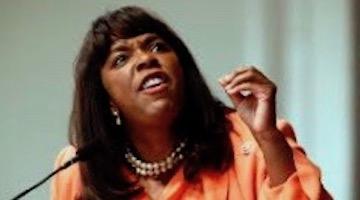 Selma, Alabama, has produced the most reactionary Black Congressperson in modern times, part of the Democratic Party’s increasing servitude to corporate interests.
 Hey Ayat, we were an odd couple, haunting the library for magical books, deciding how and where we wanted to work… Our symbiosis Your linguistic ticket to
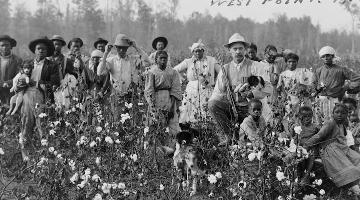 Glen Ford explores the possibilities of reparations, and the limits of the Democratic party's racial politics - as 2020 presidential hopefuls advance insufficient reparations schemes to court Black


