A Black Agenda Radio commentary by BAR columnist Jared Ball
Mulattoes are all the rage in some circles, for obvious presidential reasons. Deep political and social meaning is invested in the proliferation of luminaries of the 'two-worlds" kind - although little in the way of insight seems to emanate from the mixed parentage arena. The opposite is true. The rapper Drake's case, in particular, "is used to deny, deflect, omit or obscure underlying tensions and exploitation more than as a way to explore, challenge or correct them.
The Most Visible Mulattoes: Drake and Obama Match Hip-Hop and Politics
A Black Agenda Radio commentary by BAR columnist Jared Ball
"Obama, Drake and myself are not, as many like to say of us, 'parts of two worlds.'"
Lorraine Hansberry once cautioned against an artist seeking to ignore the specific nature of their racial categorization, history and experience. Her point was that to dismiss that particularity with the narrow, anecdotal tale of one's own success was to damage the potential to interpret the reality of a broader community. To separate the conditions of Black people broadly speaking from the individual success story of this or that individual is a grave mistake. She said that, "To destroy the abstraction for the sake of the specific is in this case in error." It continues in 2010 to happen regularly, where the individual experience is used to obscure the conditions of the rest and why I avoid public self-reference as much as possible. But recently I must admit this has become more and more difficult. Knowing a bit about me and my politics over the last couple of years I have received more questions from family, friends, colleagues, students and even strangers in the street about being a Black man whose mother is white or a Jew and it is all because of two popular abstractions, or as one author has recently called Barack Obama and the enormously popular rapper Drake, "two of the most visible mulattoes living and working today." My short answer is always the same and is always a series of questions regarding how, if at all, these people advance political discussions or the conditions of the communities they are said to represent. I now think my set of questions must expand and become more hostile.
Drake is the Canadian-born, former child actor and nephew of legendary funk bassist Larry Graham. He is also now a rap superstar whose mother is a Jew and father a Black man, who of course, is described as absent with no context, or serious exploration. He is just gone as are, apparently and pathologically, all Black fathers. Drake, who proudly proclaims his Judaism and openly hopes to portray Obama in film one day has also been anointed by establishment media as "Hip-Hop's New Religion," "The New Face of Hip-Hop," "The Bill Clinton of Rap," and even "Jew of the Year." But much like Obama's popularity and that of religion, imposed identity and even Bill Clinton, Drake's is similarly used to deny, deflect, omit or obscure underlying tensions and exploitation more than as a way to explore, challenge or correct them.
Instead much of the focus on Drake's Blackness or overall identity has been limited to his physical look, his mannerisms and his lyricism (or lack thereof). None is directed at his politics. Too many in Black America and hip-hop have lost this as the key variable in determining someone's overall identity. Just as the mistake was made with Obama, a mistake for which we continue to suffer, Drake's popularity leads us no further towards interpreting our political world and, more importantly, seizing control over it. Obama, Drake and myself are not, as many like to say of us, "parts of two worlds." No. We are at the nucleus of violently competing, antagonistic and woefully unequal political, racial and ethnic communities. We who should be best able to shed important and radical light on these issues are often forced to deny them.
"Will his being a Jew and Black help advance the relationship of those two communities?"
So I now add a few more questions in response to those asking my opinion of Drake based on my own similar (yet quite different) background: "Does Drake's being a Jew further connect that community to its own radical traditions? Do discussions of Drake's Judaism lead to increased socialist formation or criticism of Zionism as the Western European imperial project that Herzl himself claimed or the blunt instrument against the Jewish tendency toward Bolshevism as Winston Churchill said it was? Drake says he is going to Israel soon, does this mean he is breaking the anti-apartheid boycott of performances there that many have accepted in alliance with Palestinian liberation? Is that hip-hop? What happened to Sun City? Does his Blackness mean an adherence to the long-standing Black radical position which holds that the cause of the Palestinians is ours? Will his being a Jew and Black help advance the relationship of those two communities? Do discussions of Drake's Blackness help us better understand the dynamics of the latest publications from the Nation of Islam or why Michael Eric Dyson felt compelled to follow his interview with Farrakhan by ones with critics Abraham Foxman and Stanley Crouch?"
This is what I understand Hansberry to have meant. This is not about the particulars of Drake or Obama but the abstractions their examples seek to obscure. This is about the political astuteness of a Black and/or hip-hop community and its spokespeople. Not because we expect a young man with apparently no political experience to offer sound problem-solving solutions but because we are a community whose political acumen requires a price for our fandom. Nowhere in the articles reviewed for this commentary, those in praise or in critique, those that focused on his Blackness or his Judaism, were these issues raised. And this speaks volumes about where we are and why these issues persist as major problems for us today.
For Black Agenda Radio I'm Jared Ball. Online go to www.BlackAgendaReport.com.
Jared Ball can be reached via email at: freemixradio@gmail.com.

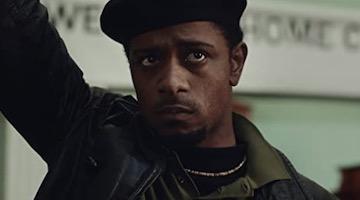 Let’s not allow our revolutionary wish-list to keep us from appreciating the ways this film intervenes—with force and clarity—in our present American political discourse.
 Once we are able to secure Community Control over Police and ensure that entire communities are empowered to exercise such control, we will be free to re-imagine and re-envision the very nature of
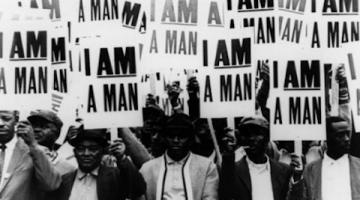 The author, a former corporate journalist like Hedges, reminds him that white workers betrayed Black workers and class solldarity, not the other way around.
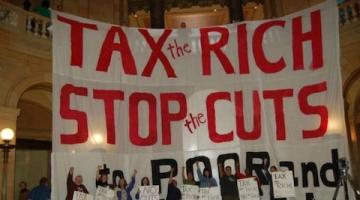 Together, we can demand that one of the wealthiest nations on earth upholds its responsibility to provide the basic necessities for its people.
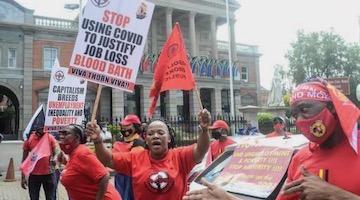 Millions of workers took part in the general strike on February 24, according to the South African Federation of Trade Unions which called for the labor action.



