Where most of us saw poor people reaching across lines that divided them to take a courageous stand against long odds, corporate media see something else....
Atlanta Journal-Constitution and New York Times Twist GA Prison Strike into a Fearful & Profitable Opportunity
by Hugh Esco
The Prison industry and their corporate media seem to be paying attention to the lessons to be drawn from last month's strike action in Georgia's prisons. They're just the wrong lessons. Where most of us are inspired by the idea of folks standing up together in solidarity for their own human rights, the media see a chance to jack the fear, and assist the prison industry in creating yet another new profit center.
Last week a commercial advertisement masquerading as a get-tough-on-prisoners op-ed appeared on the Editorial page of the Cox Communications's Atlanta area daily, the Atlanta Journal Constitution. It called smart phones in the hands of prisoners, “the most lethal weapon” inside the walls. The op-ed's author, a Mr. Bittner, is part of ITT Defense, a vendor that peddles cell-phone countermeasures to prisons, and which would like to expand its market. It was of course immediately picked and redistributed by the advertising supported prison industry CorrectionsOne.com website. That site exists to "provide Correctional officers with information and resources that enable them to keep their facility a safe and controlled environment"
This weekend, the New York Times joined the chorus, employing Mr. Bittner's “most lethal weapon” metaphor, and explaining that the system Bittner sells is being used in state prisons in Mississippi. Twisting the nonviolent strike of Georgia prisoners into a fearful threat to public security is quite a stretch, by the NY Times did just that. They barely acknowledge the economic interests of their sources for selling monopolized phone service which contraband cell phones compete with. The Times is nothing, if not about business, and this is, as the article says, "a pure business opportunity".
Prisons are accustomed to operating in the dark, abusing their captive population with impunity. If contraband cell phones in the hands of prisoners raise the possibility of bringing the abuses of the prison state to light, they are indeed a threat to business as usual. But it's bad business. The prisoners in this case are whistle blowers, exposing governmental wrongdoing that takes place in the name of all Georgia citizens, and standing up for their own human dignity in the bargain. The prisoners are challenging us to be more human, not less humane.
They stood up against fearful odds, reaching across lines of race and religion. The Atlanta Journal-Constitution and the New York Times would divide us along the same old lines. But it's not working as well as they'd like. More and more ordinary people are coming to see the Georgia 37, the prisoners identified by the state as possible leaders of the strike, as courageous whistleblowers. The state earlier agreed to grant access to these prisoners, and we hope they keep their word.
Where the Atlanta Journal-Constitution and the New York Times see a get-tough, crackdown opportunity to reinforce the ideology of mass incarceration, and where contractors see bigger profits, we can choose to see the humanity of prisoners and the growing inhumanity of mass incarceration. The prisoners, with their limited freedom of movement, of speech, and of action, with their limited education and means, did what they could. They are challenging us on the outside to be as courageous, as humane, as far-sighted as they are. The question is, whether we're up to it.
Hugh Esco is secretary of the Georgia Green Party, and one of the principals of Campaign Foundations, an internet telephony and strategic communications firm. He can be reached at hesco(at)greens.org.

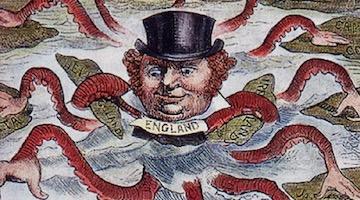 The craven fear of truth in imperial zones, bordering on psychopathic dread, has sustained systemic racism and hegemonic power domestically and globally.
 The not-yet-triumphant Sudan popular uprising was both sophisticated and thorough; it tried to learn from past mistakes and internalize lessons from revolutions of the first wave and elsewhere.
 The Cuban Revolution has shown that when limited resources are distributed equitably and with an emphasis on people and prevention, public health outcomes previously unimaginable can be achieved.
 Savannah is is trying to create a renaissance of profit with live bodies portraying Gullah Geechee, enslaved Africans or immigrant indentures plodding through a mod-gothic spook show.
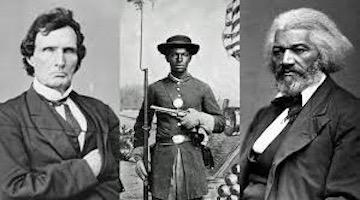 Rep Thaddeus Stevens was an unyielding proponent of the nationalization of the large southern plantations and the redistribution of that land to Black people.


