
by Benjamin Woods
The real Dr. Martin Luther King, Jr. remains quite accessible to us, through his writings and a wealth of other material. However, King’s political likeness is not to be found among the current Black leadership class. Therefore, “it is on those who believe in his vision today to build a real social movement for a revolutionary transformation of human society.”
Reclaiming Martin Luther King, Jr.
by Benjamin Woods
“Tell the children the truth, yeah, the truth tell them about Martin Luther King, tell them the truth.”
- “If I Were President,” Wyclef Jean
“Unlike some of today’s negro leaders, King didn’t describe our problems as laziness, poor morals, or lack of personal responsibility but as results of systemic forces.”
This Saturday was the 47th anniversary of the March on Washington for Jobs and Freedom. At this demonstration, Martin Luther King Jr. (MLK) gave his most well-known and, at the same time, misunderstood speech. However, over the past few decades a controversy has erupted over the true legacy of MLK. The proto-fascist far right wing represented by Glenn Beck and the Tea party movement, allegedly, supports the ideals of MLK. Similarly, the National Action Network and Al Sharpton sponsored a rally to “Reclaim the Dream.” The truth is, neither one of these groups represent MLK. As we are inundated with white corporate media propaganda on MLK, it is important to recall the final years of Dr. King’s life and legacy.
Following the passage of civil rights legislation such as the Civil Rights Act of 1964 and the Voting Rights Act of 1965, MLK began to focus more on issues of economic justice. The economic problems that existed in the urban North were not the same as the segregated South. King began to question the very economic system itself, stating “that something is wrong…with capitalism…there must be better distribution of wealth and maybe America must move towards a Democratic Socialism.”
His move towards socialism was also influenced by events in the so-called Third World. King joined the Anti-War movement and took a stance against the War in Vietnam. In 1967, at Riverside Church in New York in a speech titled “A Time to Break the Silence” he called the United States “the greatest purveyor of violence in the world” because of the destruction caused by napalm and other mass killing devices used by “his own government.” And finally, influenced by the anti-colonial movements occurring in Africa and Asia he started to refer to the slums and ghettos of America as a “a system of internal colonialism.”
“King began to question the very economic system itself, stating ‘that something is wrong…with capitalism.’”
As writers such as Frantz Fanon have shown, colonialism is not just economic but cultural and psychological as well. Centuries of oppression in the form of enslavement and segregation have had devastating effects on the self-image and consciousness of African people. Fanon noted that the assertiveness and confrontational style of the Civil Rights Movement helped to develop self-respect among Africans in the South.
Moreover, as Black Power advocates such as Malcolm X and the Black Panther Party gained ascendancy, King rejected complete assimilation into American society and strove for community empowerment. King stated, “we must use every constructive means to amass economic and political power. This is the kind of legitimate power we need. We must work to build racial pride and refute the notion that [B]lack is evil and ugly.”
After the civil right victories and his move to advance community empowerment, Dr. King prophetically warned of the rise of the right-wing in the United States. “The line of progress is never straight,” he said. “For a period a movement may follow a straight line and then it encounters obstacles and the path bends….we are encountering such a period today. The inevitable counterrevolution that succeeds every period of progress is taking place.” In 1968 Republican Richard “tricky dick” Nixon won the Presidency and by 1980 the counterrevolution was complete with the election of Ronal Reagan.
These two elected officials would usher in a period of fiscal conservatism, state repression, color blindness, and personal responsibility. Unlike some of today’s negro leaders, King didn’t describe our problems as laziness, poor morals, or lack of personal responsibility but as results of systemic forces. He stated “true compassion is more than flinging a coin to a beggar; it understands that an edifice which produces beggars needs restructuring” and “the roots of [economic injustice] are in the system rather than in the faulty operations of men.”
“By 1980 the counterrevolution was complete with the election of Ronal Reagan.”
At the end of his life Rev. Dr. Martin Luther King Jr. argued for a “radical restructuring of society” and “a revolution of values.” Before his assassination, he was in the process of building a multi-racial Poor People’s campaign for economic and racial justice. Any march that claims to follow in his tradition should continue where he left off. His political and economic program included: a guaranteed annual income, free housing, free education, free healthcare, and an end to all wars of foreign aggression. He believed this could be achieved by a massive civil disobedience campaign in major urban centers that causes the political and economic life of this country to come to a halt until issues affecting the poor are completely eliminated. Unfortunately, neither of this past weekend’s marches represents the real MLK, therefore, it is on those who believe in his vision today to build a real social movement for a revolutionary transformation of human society.
Forgotten MLK Quotes
“We must rapidly shift from a ‘thing’-oriented society to a ‘person’-oriented society. When machines and computers, profit motives and property rights are considered more important than people, the giant triplets of racism, materialism, and militarism are incapable of being conquered.” “Although genuinely popular [Negro] leaders are now emerging, most are selected by white leadership, elevated to position, supplied with resources and inevitably subjected to white control.”
“I contend that the debate over the question of self-defense was unnecessary since few people suggested that Negroes should not defend themselves as individuals when attacked. The question was not whether one should use his gun in his home was attacked, but whether it was tactically wise to use gun while participating in an organized demonstration.”
Benjamin Woods is a PhD Candidate in political science at Howard University. He can be contacted at benjaminwoods1@yahoo.com. or through his web site at www.free-the-land.blogspot.com.
NOTES:
Cone, James. (1992). Martin & Malcolm & America: A Dream or a Nightmare. New York: New York, Orbis Books.
“Martin Luther King Jr. and the Third World.“ The Journal of American History. Vol. 74, No. 2 (Sep., 1987), pp. 455-467.
Dyson, Michael. (2000). I May Not Get There With You: The True Martin Luther King Jr. New York: New York, Free Press.
Washington, James (ed). (1986). A Testament of Hope: The Essential Writings of Martin Luther King Jr. New York: New York, Harper One.

 The U.S. kidnapped Venezuela's envoy Alex Saab in Cabo Verde in 2020 and rendered him to Miami without a court order or extradition treaty in violation of international law.
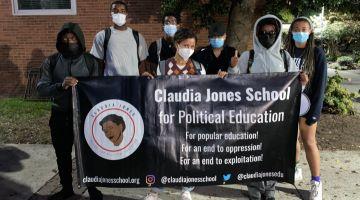 Students at Howard University have historically been in the forefront of movement struggles.
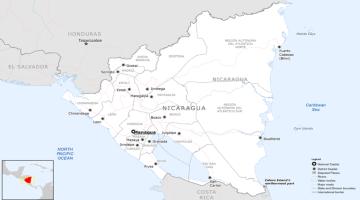 The Organization of American States (OAS) is a U.S. puppet organization that is poised to delegitimize Nicaragua's upcoming election and attack that nation's sovereignty.
 In a cruel act of revenge, the U.S. government sent Daniel Hale, who exposed U.S.
 Unstable property rights mean Black southerners may survive a flood but lose their home, and it’s causing the racial wealth gap to grow larger.


