by Benjamin Woods
The crisis of Black American leadership is rooted in 1830s and 1840s political strategies designed to convince whites of Black people’s “humanity and worthiness” – an elitist approach that cut the masses of Blacks out of the picture. “In 1920 Harlem radical Hubert Harrison referred to the NAACP as the National Association for the Advancement of Certain People.”
The Failure of Negro Leadership
by Benjamin Woods
This article originally appeared on Mr. Woods’ web site, FreeTheLand.
“These leaders began to appeal to the liberal values of the U.S. founding documents and ‘moral uplift.’”
The New York Times printed a revealing article on February 13, 2010 titled “In Black Caucus, A Fund-Raising Powerhouse.” The article discusses the large donations the Congressional Black Caucus receives from corporations, foundations, and wealthy individuals. Moreover, it demonstrates the ongoing intergenerational failure of negro leadership in the United States.
I assert there are three crucial periods in African leadership: 1) the emergence of a “free” northern based leadership in the early 19th century 2) the white appointment of Booker T. Washington as the leader of African America in the late 19th century and 3) the cooptation and incorporation of negro politicians in the post-Black Power era. This essay uses a theoretical framework of domestic colonialism. According to this theory, within a colonized nation, such as Africans in the United States, a portion of the indigenous colonized population is recruited to collaborate with the imperial power.
At the turn 19th century, a free primarily middle class northern African leadership emerged in the United States. At the same time, a new debate among African leaders developed concerning the identity and direction of the African community in the U.S. Unlike previous periods of the movement which advanced militant resistance such as maroons, insurrections, and emigration these leaders began to appeal to the liberal values of the U.S. founding documents and “moral uplift.” Dr. Leslie Alexander, who examines this issue in her book, African or American? Black Identity and Political Activism in New York City, 1784-1861, recently stated on Jazz and Justice radio:
“Black leadership in the 1830s and 1840s embraced a particular political strategy known as moral uplift…which states the way for Black people to gain freedom justice equality citizenship etc. is to present to white society the best possible face of the Black community to convince white people of their humanity and worthiness.”
A few decades later, Booker T. Washington echoed these statements preaching a doctrine of political passivity, moral uplift, and industrial education. Schools that taught industrial education such as Tuskegee Institute were funded by the leading Northern industrialists such as the Rockefeller, Carnegie, and Vanderbilt for the explicit purpose of producing a conservative negro leadership class.
“Booker T. Washington preached a doctrine of political passivity, moral uplift, and industrial education.”
By the late 1960s and 1970s, African leadership in the U.S. boldly moved in the direction of Black Nationalism, Pan Africanism, and Socialism. Unfortunately, due to their uncompromising stance several visionary leaders were assassinated, imprisoned, and forced into exile by the F.B.I.‘s COINTELPRO. During this same period, philanthropic foundations such as the Ford Foundation under the leadership of McGeorge Bundy financed a moderate to conservative negro leadership.
Today, the result are negro leaders such as President Barack Obama and Mayor Adrian Fenty in Washington D.C. Obama received $745 million in campaign financing, more than any other candidate for U.S. President in history. Although he is virtually silent in response to state terrorism against Africans (ex: police brutality), Obama is vocal in the defense of racist Zionist Israel who murders known pacifists delivering aid to poor, colonized people in the Gaza Strip. Furthermore, Fenty, who raised $3.9 million as of March for his upcoming mayoral race, breaking his own campaign donation record, promotes privatization of schools (charters) and homeless shelters in the U.S. capitol. Privatization has been shown to assist elites, who financed his campaign, to accumulate more capital.
“Obama is virtually silent in response to state terrorism against Africans.”
The utter failure of negro leadership in the U.S. not only affects political leadership but also African America’s most revered civil rights organizations. Although the NAACP was primarily started by white liberal jews and, at one point, was used to watch “negro dissidents“ by the U.S. government during World War I, it is known more for its numerous civil rights victories.
Today they collaborate with companies such as Wells Fargo that target Africans in the U.S. for unaffordable home loans thereby causing one of the single biggest loses of wealth in the African community’s history due to home foreclosures. For example, although the NAACP initially sued the lending company for targeting African borrowers, they later dropped the lawsuit and made Wells Fargo a lead sponsor for their 101st national convention in July of this year. For this and other reasons, in 1920 Harlem radical Hubert Harrison referred to the organization as the National Association for the Advancement of Certain People.
Several scholars such as Jacob Caruthers, Cedric Robinson, and Sterling Stuckey have discussed the intergenerational failure of negro leaders. However, the U.N.I.A. in the 1920s and the Black Power Movement were periods when Africans had an ideologically and financially independent leadership. In the 21st century the African Freedom Movement must adopt three principles espoused by the esteemed African freedom fighter Ella Baker: 1) working class leadership 2) youth leadership and 3) participatory democracy. These three principles can help us to overcome our current crisis of negro leadership and move in the direction of national liberation and self determination.
Benjamin Woods can be contacted at benjaminwoods1@yahoo.com.
NOTES
Alexander, Leslie. (2008) African or American: Black Identity and Activism in New York City, 1784-1861. Chicago: University of Illinois Press.
Allen, Robert. (1992) Black Awakening in Capitalist America. Trenton, NJ: African World Press.
Lipton Eric & Lichtblau, Eric. “In Black Caucus, a Fund-Raising Powerhouse.” New York Times. Febryary 13, 2010. http://www.nytimes.com/2010/02/14/us/politics/14cbc.html
Ransby, Barbara. (2005) Ella Baker and the Black Freedom Movement: A Radical Democratic Vision. Chapel Hill, NC: University of North Carolina Press.
Robinson, Cedric. (1997) Black Movements in America. New York: Routledge.
Stewart, Nikita. “D.C. Mayor Adrian Fenty surpasses 2006 fundraising record.” Friday March 12, 2010. http://www.nytimes.com/2010/02/14/us/politics/14cbc.html
Stuckey, Sterling. (1987) Slave Culture: Nationalist Theory and the Foundations of Black America. New York: Oxford University Press.
Watkins, William. (2001) The White Architects of Black Education: Ideology and Power in America, 1865-1954. New York: Teachers College Press.

 Stephanie Morales, Portsmouth, Virginia’s 34 year-old top prosecutor, succeeded in sending a cop to prison for two and a half years for shooting an unarmed suspected Black shoplift
 “I’m running against 20 rich white folks,” veteran activist Coffee Wright told the crowd at the Black Is Back Coalition’s national Electoral School, in St. Louis, Missouri.
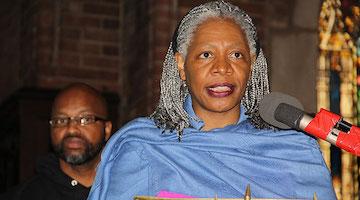 “We should hear about these killings every day, because they happen every day,” said Margaret Kimberley, editor and senior colu
 "...you will search in vain for a statement condemning this or the previous Israeli massacres in Gaza from the Congressional Black Caucus or for the most part, its individual members...
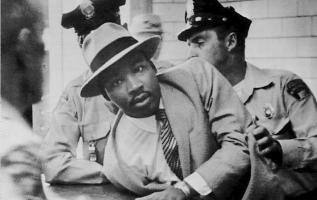 “There is no reason to believe that Dr. King would have abandoned his pro-peace (and “democratic socialist”) principles if he were alive today.”



