 by Seth Sandronsky
The United States has historically been, in the actual words of the original quotation, a "melting pot for all the races of Europe...." In reality, the evolving process was aimed at transforming immigrants from various European nationalities into generic "whites" - and to keep the "unmelted" races in their place. A new book by scholar David R. Roediger explores how the American marketplace became "cutthroat" and rigidly racialized, and how "the idea of whiteness developed in the context of white supremacy for the newly arrived and their children."
How America's Immigrants Became White
by Seth Sandronsky
"The nexus of capitalism, racism and sexism empowered central and eastern European immigrants' white-skin privilege."
The upsurge of immigrant workers in the U.S. this spring and last spring were watershed events. In response to them, some activists, politicians and pundits noted that America is a nation of immigrants. Such an assertion conceals more than it reveals. For instance, what does this say about the country's first inhabitants and enslaved blacks? And what did their historical reality mean for the newcomers who departed Europe between 1890 and 1945 for a kind of freedom in the U.S.?
Author and scholar David R. Roediger delves deeply into the history of the 55-year period that ends with the close of World War II in Working Toward Whiteness: How America's Immigrants Became White: The Strange Journey from Ellis Island to the Suburbs (Massachusetts: Basic Books, 2005). Roediger develops the concept of eastern and southern European immigrants as "inbetween people" who occupied an unclear point on a racial spectrum of skin color. One of the fascinating threads he explores is what these immigrants knew about race, and when they knew it. This line of inquiry sets the stage for their U.S. experience over time and between gendersduring a period of capitalist industrialization.
"The idea of whiteness for the newly arrived and their children developed in the context of white supremacy."
He lays out the scope of his book in the first of its three parts. Working Toward Whiteness asks what happens when we think of assimilation as whitening as well as Americanizing, and when we view the deeply gendered clash between first-generation immigrant parents and second-generation children as being in part about who commanded knowledge of the U.S. racial landscape. It seeks to change the whole story of a crucial period in U.S. history without losing track of the wrenching dimensions of race experienced by the new immigrants who were at its center.
Roediger references them in part through the lens of fiction and social science. This is a stimulating process of discovery, thanks to his use of dialectics, or the study of change. In this way, he helps readers to understand how the idea of whiteness developed in the context of white supremacy for the newly arrived and their children. Eastern and southern European immigrants had to wrestle with what black author and scholar W.E.B. Du Bois called the "color line" in theU.S. That is the racial division which is a part of - not apart from - labor conditions of a market economy. In doing so, Roediger examines the hateful words some whites used to describe Hungarian and other immigrants from the oppressed classes.

Two famous examples of immigrants targeted by such racial bigotry were the executed Italian radicals, Bartolomeo Vanzetti and Nicola Sacco. Some racists of the time slurred them as being not-quite-white. This racial language had similarities to popular descriptions of longtime black residents of the U.S., generations removed from their ancestors' forced migration from Africa.The book's strength is its close attention to national and racial identities within the class structured society of the U.S. Roediger writes: "The ways in which capital structured workplaces and labor markets contributed to the ideas that competition would be cutthroat and should be racialized." Capitalism, racism and sexism are intertwined, and are reinforced with state backing. This nexus empowered central and eastern European immigrants' white-skin privilege. State policy helped them to see and use this as a ticket to private property, a point that Roediger takes pains to explain.
"The GI Bill that made a college education available to five million veterans of the Second World War largely excluded returning African American soldiers."
The Immigration Act of 1924 and Deportation Act of 1929 were milestones that divided the U.S. working class. These bills fortified whites only housing segregation patterns, but only with the consent of second-generation immigrants. Here are the roots of FDR's New Deal of racialized white nationalism in the 1930s and 1940s, according to Roediger. His narrative of the New Deal runs counter to those who depict it as a high water mark of U.S. democracy. That stance ignores or minimizes the gendered and racialized roots of FDR's legislation. A case in point is the barring of domestic and farm workers, mainly brown and black people, from coverage by the Social Security Act of 1935. Later, the GI Bill that made a college education available to five million veterans of the Second World War largely excluded returning African American soldiers.
Working Toward Whiteness builds on Roediger's groundbreaking scholarship in History Against Misery (2005), Colored White: Transcending the Racial Past (2002), Towards the Abolition of Whiteness (1994) and his classic work The Wages of Whiteness (1991). People of all ages and backgrounds inside and outside U.S. borders should read Working Toward Whiteness for the light it casts on the conflicted and conflicting paths (not) taken at critical junctures in the development of the American nation.The material in this compelling book can help to inform a new generation of political activism, part of an emerging U.S. mass movement for social justice. Now, as a century ago, immigrants play a pivotal part.
Seth Sandronsky is a member of Sacramento Area Peace Action and a co-editor of Because People Matter, Sacramento's progressive paper www.bpmnews.org/. He can be reached at: bpmnews@nicetechnology.com.

 This week, we hear from the co-authors of a new book about the growth of militarized policing facilities. Also, we revisit commentary from 2018, which explains that Washington’s support for apartheid…
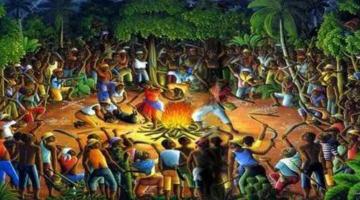 Dahoud Andre, with KOMOKODA, joins us for a conversation about Bwa Kayiman, the ceremony that launched the Haitian revolution, and its lasting legacy.
 Joy James and Kalonji Changa join us to talk about their new book, Cop Cities: Dismantling State and Corporate-Funded Armies and Prisons, which examines militarized policing illustrated by the…
 We revisit this piece from the late Bruce Dixon, BAR Managing Editor and co-founder, where he explained that there is no difference between the Democrats and Republicans on the issue of Palestine and…
 The allegation that only Trump threatens democracy is a useful ruse for the Democratic Party. They continue their support for genocide and ethnic cleansing and fiercely attack anyone who dares to…


