Click the flash player below to listen to or the mic to download an MP3 copy.
A headless Nigerian state braces for renewed civil war in the Niger River Delta, where guerillas threaten “all-out” assaults on oil facilities. Attacks on vessels off the Nigerian coast are already comparable to Somalia.
War Looms in Nigeria's Oil Fields
A Black Agenda Radio commentary by Glen Ford
“More than 15,000 fighters could be mobilized, skilled in amphibious guerilla tactics including assaults on off-shore facilities.”
The umbrella guerilla group battling for control of Nigeria’s main oil-producing region has broken a three-month ceasefire, vowing an “ all-out onslaught ” against oil companies and personnel. “Nothing will be spared,” said a spokesman for the Movement for the Emancipation of the Niger Delta, or MEND. These are not idle threats. MEND fighters have succeeded in cutting Nigeria’s oil and gas production by at least 25 percent since the guerilla war began in earnest in 2006, at a cost of about $1 billion a month in revenues to the Nigerian state. The Nigerian state is in disarray. Its president, Umaru Yar’Adua, has been absent from the scene and largely unheard from since late November, under medical care for a heart problem in Saudi Arabia. A court has ordered the president’s cabinet to decide within 14 days whether he is any longer fit to hold down the office.
His absence has been blamed for the breakdown in efforts to resolve the conflict in the Niger River Delta, an environmentally devastated region where the vast majority of people gain no benefit from the oil pumped from their land. Following a brutal government offensive in the Delta, the main guerilla groups agreed to lay down their arms in return for amnesty and more regional control of oil resources. But then the president all but disappeared. No one is quite sure who is running the government, and Delta leaders say there has been no movement on negotiating “the fundamentals” of the conflict.
“Western news media are already comparing attacks on vessels and off-shore facilities in Gulf of Guinea waters with piracy in Somalia.”
Shell Oil, a major producer in the Delta, may already be cutting back its Nigerian operations. The Dutch and British corporation has put three of its off-shore licenses up for sale, and recently announced that it no longer relies on Nigeria for its corporate growth. But the U.S. stake in Nigerian oil grows by the year. Nigeria supplies 12 percent of U.S. oil imports. The Gulf of Guinea region, which includes Nigeria, produces five million barrels of oil a day, and is a particular concern of the U.S. Africa Command, AFRICOM. Western news media are already comparing attacks on vessels and off-shore facilities in Gulf of Guinea waters with piracy in Somalia. According to the Christian Science Monitor , the Nigerian Navy reports 10 to 15 attacks on vessels per month – more than the usual for Somalia. U.S., British and French naval vessels have stepped up joint patrols with local navies in the region. If the Niger Delta conflict returns to full-scale warfare, more than 15,000 fighters could be mobilized, skilled in amphibious guerilla tactics including assaults on off-shore facilities. Those who doubt the United States would ever dare attempt a military occupation of oil fields in Nigeria, with a population of 150 million people, should consider American behavior in Pakistan, an even larger country of 170 million. The U.S. violates Pakistani sovereignty every day – and it has no significant oil resources. Five years from now, West African oil will make up one-quarter of U.S oil imports. The resources of the Niger River Delta are more than enough reason for imperial war.

 In this episode of El Taller, hosts José Luis Granados Ceja and Kurt Hackbarth sit down with Ajamu Baraka, national organizer and spokesperson for the Black Alliance for Peace, a former vice-…
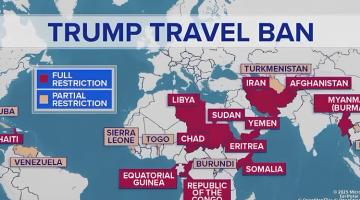 There is nothing mysterious about Trump’s effort to curb legal immigration. White supremacy is the explanation.
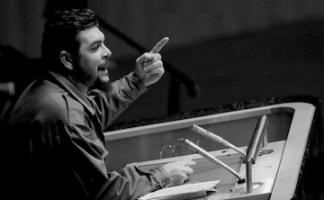 “Cuba ... a free and sovereign state with no chains binding it to anyone...with no proconsuls directing its policy, can speak with its head held high.”
 Minnesota pushed back against ICE until its visible presence seemed cut in half, but Trump does not forgive or forget, and it’s a time to be organized.
 The party that installed its presidential candidate without a primary vote now blames its 2024 loss on everything except its own contempt for its base and allegiance to neo-liberal policies.


