Black Agenda Report
Black Agenda Report
News, commentary and analysis from the black left.

  • Home
  • Africa
  • African America
  • Education
  • Environment
  • International
  • Media and Culture
  • Political Economy
  • Radio
  • US Politics
  • War and Empire

U.S. Starves Children in Somali War
Glen Ford, BAR executive editor
11 Nov 2009
🖨️ Print Article
somali kidsA Black Agenda Radio commentary by Glen Ford
Click the flash player to listen to or the mic to download an audio in MP3 format.

Three years after creating the “worst humanitarian crisis” in Africa by encouraging Ethiopia to invade Somalia, the U.S. now unleashes the food weapon on starving people. “Forty million pounds of American-donated food is sitting in warehouses in Mombasa, Kenya, but U.S. officials won’t allow aid workers to deliver the food to the Somalis that need it.”
U.S. Starves Children in Somali War
A Black Agenda Radio commentary by Glen Ford
“The Americans are blatantly using food as a political weapon.”
The United States is waging a war of starvation against the people of Somalia. According to United Nations officials, Washington has interrupted the flow of desperately needed food to Somalia, on the grounds that some of it might find its way into the hands of the Shabab, the Islamists the U.S. calls “terrorists,” but who are winning the war for control of southern and central Somalia.
Forty million pounds of American-donated food is sitting in warehouses in Mombasa, Kenya, but U.S. officials won’t allow aid workers to deliver the food to the Somalis that need it. The Americans are blatantly using food as a political weapon, holding starving people hostage to U.S. political objectives – much like ancient armies did when they laid siege to cities to starve the inhabitants into surrender.
It’s now going on three years since the Americans imposed a living hell on Somalia. In December 2006, the U.S. encouraged Ethiopia to invade Somalia to crush an Islamist government that had brought a modicum of peace to the country. The invasion created what the United Nations called the “worst humanitarian crisis in Africa” – worse than Darfur. This U.S.-made crisis was worsened by a devastating drought, leaving half the population totally dependent on outside food aid, the largest part of it from the United States. By locking the food up in Kenyan warehouses, “the U.S. government is holding the Somalia relief enterprise…hostage to its counterterrorism policy,” according to a recent issue of Foreign Policy magazine.
“The Americans cannot win in any conventional military sense, so they resort to a war of starvation.”
The American puppet government in Somalia controls no more than a few neighborhoods of the capital city, Mogadishu, and its airport. Were it not for massive U.S. arms aid and the protection of Rwandan and Burundian soldiers, the U.S.-backed government would disintegrate. The Americans cannot win in any conventional military sense, so they resort to a war of starvation.
According to a New York Times article, Somali elders report that many children who had been kept alive by food relief are now dying because of the American aid cutoff. The situation is so dire, that only the U.S. food stores in Kenya can reach Somalia in time to stave off a disastrous famine. There are simply no other resources available.
The drought in East Africa has affected U.S. allies and enemies, alike. Ethiopia has made a plea on behalf of 23 million people threatened by drought in the region. And “the worst drought in ten years” has been exacerbated by a huge, artificial rise in food prices caused by speculators, most of them based in the United States and other rich countries.
Thus, Somalia's hungry are battered from three sides: by artificially high food prices, by drought, and by a deliberate U.S. war of starvation. The Obama Administration is determined to make the Somali people scream as punishment for resisting American domination. But starving babies cannot scream. They can't even cry.
For Black Agenda Radio, I'm Glen Ford. On the web, go to www.BlackAgendaReport.com.
BAR executive editor Glen Ford can be contacted at Glen.Ford@BlackAgendaReport.com.


Do you need and appreciate Black Agenda Report articles? Please click on the DONATE icon, and help us out, if you can.


More Stories


  •  Black Is Back Coalition: “Black Power Matters”
    Black Agenda Radio with Margaret Kimberley and Glen Ford
    Black Is Back Coalition: “Black Power Matters”
    16 Nov 2020
    “The struggle has to be more than simply a declaration of our significance as human beings, as in the term ‘Black Lives Matter,’” said Omali Yeshitela, chairman of the Black Is Bac
  •  BLM National Leadership Focused on Money and Careers
    Black Agenda Radio with Margaret Kimberley and Glen Ford
    BLM National Leadership Focused on Money and Careers
    16 Nov 2020
    Breya Johnson, co-chair of Black Youth Project 100 (BYP100) in Washington, DC, said her organization enjoys a “working relationship” with the local Black Lives Matter chapter, but
  • Black Voters: “Contrarian” Men and “Communal” Women
    Glen Ford, BAR Executive Editor
    Black Voters: “Contrarian” Men and “Communal” Women
    12 Nov 2020
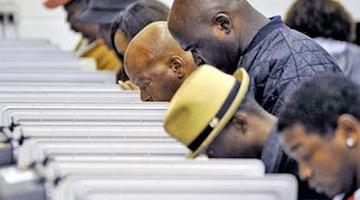
    A significant portion of Black males are “contrarians” that take positions at odds with the general Black political consensus – while Black women tend to take the communal approach.
  • Freedom Rider: The Real Resistance Begins
    Margaret Kimberley, BAR senior columnist
    Freedom Rider: The Real Resistance Begins
    11 Nov 2020
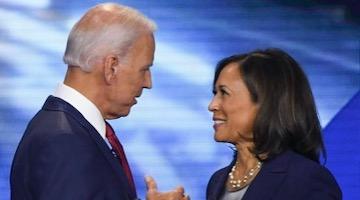
    “Kamala Auntie” and Joe from Scranton will do as little as possible so that “nothing will fundamentally change” that would halt endless wars and the Race to the Bottom. 
  • Joe Biden’s Victory is Still a Loss for Humanity
    Danny Haiphong, BAR Contributing Editor
    Joe Biden’s Victory is Still a Loss for Humanity
    11 Nov 2020
    The Biden-Harris administration is good news for corporations, cops, war profiteers and banks too big to fail, but offers nothing to save the people and planet from multiple rises.
  • Load More
Subscribe
connect with us
about us
contact us