by Steve Rendall
Enrique Ortez Colindres may be a coup plotter from the original “banana republic,” but as a white man he feels comfortable calling the president of the United States a “little black sugar plantation worker” and other Spanish variations on “nigger.” Ortez's comments were not deemed newsworthy by most of the U.S. Media.
U.S. Press Misses Honduran Official's Racist Assault on U.S. Prez
by Steve Rendall
This article was previously published in the blog of FAIR, Fairness and Accuracy in Reporting.
“Ortez referred to Obama as 'that little black boy who knows nothing about nothing.'"
On June 29, the day he was installed by Honduran coup leaders as the country's new interim foreign minister, Enrique Ortez Colindres repeatedly used racist slurs to describe U.S. president Barack Obama.
Using the word "negrito," a well-recognized and profoundly racist epithet, whose literal translation means "little black man" or "little black boy," Ortez referred to Obama as "that little black boy who knows nothing about nothing" ["ese negrito que no sabe nada de nada"] and "a little black man who doesn't know where Tegucigalpa is" ["el negrito, no conoce donde queda Tegucigalpa"]. In another case, he told the Honduran newspaper El Tiempo (translation from DailyKos):
“I have negotiated with queers, prostitutes, leftists, blacks, whites. This is my job; I studied for it. I am not racially prejudiced. I like the little black sugar plantation worker who is president of the United States.
For more than a week after they were uttered, Ortez's slurs were a big story in Latin American and around the world: The Chinese and French wire services Xinhua and Agence France Presse covered them, among others . But besides online sites like Daily Kos and the Huffington Post, the story was mostly ignored by U.S. journalists, who otherwise freely quoted Ortez about Honduras' coup and constitutional crisis.
“Ortez's slurs were a big story in Latin American and around the world.”
That wasn’t the case when Hugo Chavez called George W. Bush the devil in an address at the U.N. in 2006. Then the arguably lesser insult was discussed for days in the U.S. media.
Wednesday, July 8, offered big new developments in the story when a U.S. diplomat in Honduras complained about the slurs and Ortez offered a brief apology. Then, later that afternoon, Ortez was fired and replaced by the coup government's president.
But today, two days later, the New York Times has yet to mention any aspect of the story, and the Washington Post only ran a brief 120-word Associated Press report about the apology (though nothing about the resignation) on July 9--its readers only then learning about the original slights.
And so it would appear that, at least in this case, few U.S. journalists think it's much of a story when a high-ranking foreign official, otherwise in the news, launches a racist attack, even one that targets the president of the United States.
BAR Editors' Note: The New York Times belatedly reported the story of Ortez's blatant slurs on July 11, following the FAIR piece. The Times noted that Ortez was installed in a new job - as minister of justice and government of the majority non-white country!

 This week’s featured author is Cristina Mejia Visperas. Visperas is Assistant Professor of Communication at the University of Southern California. Her book is Skin Theory: Visual Culture and the…
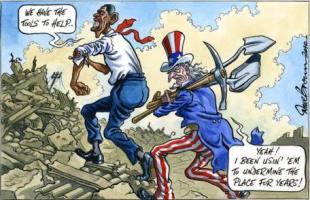 If Haiti is "the poorest country in the hemisphere" it is because imperialist policies continue to impoverish and destabilize that nation.
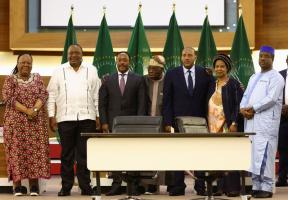 The people of Ethiopia are understandably relieved that a peace agreement now exists between their government and the TPLF. But aspects of the agreement may allow the U.S. to continue the conflict…
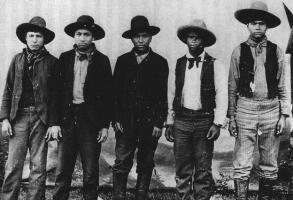 The day known as Thanksgiving is an opportunity to remember how the settler colonial state began its genocide against both indigenous people and enslaved Africans.
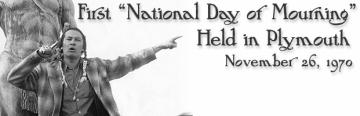 Glen Ford wrote many powerful essays, but his unflinching analysis of the history of the holiday we call Thanksgiving endures nearly 20 years after he wrote it.


