A
Black Agenda Radio Commentary by Glen Ford
Click the flash player below to listen to or the mic to download an mp3 copy of this BA Radio commentary.
If you're Black and tired of getting stopped by the police on the streets of New York City and elsewhere in the United States, then Paris isn't the city for you. “A new study of the Paris police shows that...persons the police consider Black are stopped six times as often as whites.” And Arab-looking people are stopped even more frequently than that. Although racial profiling is illegal in France, the police studiously avoid keeping records on race. French Cops are Racist, Too
A Black Agenda Radio commentary by Glen Ford
“Researchers interviewed 500 people whom they observed being stopped by police at two mass transit stations.”
Police in Paris practice racial profiling against non-whites at least as vigorously as their counterparts in New York City – and that’s saying a great deal. A new study of the Paris police shows that people that appear to be Arab are stopped by police for identity checks 7.5 times more often than whites. Persons the police consider Black – meaning, of sub-Saharan African origin or from the Caribbean – are stopped six times as often as whites. And Blacks and Arabs that are stopped by French police are much more likely to also be frisked. The sheer volume of people stopped, questioned and frisked by New York City police is awesome. By the end of the year, cops will have stopped 628,000 people , about half of them Black, and most of the rest Latino. Whites make up about 45 percent of New York’s population, but only 10 percent of those stopped by police. Paris is a much whiter place. In creating the new study, called “Ethnic Profiling in Paris,” researchers interviewed 500 people whom they observed being stopped by police at two mass transit stations. Although Black- and Arab-looking people only constituted about ten percent of the crowds at the two stations, they accounted for 47 percent of those who were stopped by police – a higher rate even than in New York.
“In 1961, the cops went on a killing spree, murdering at least 210 Arabs on the streets of Paris.”
Paris police have a long and murderous history, especially in dealing with Algerians. In 1961, the cops went on a killing spree, murdering at least 210 Arabs on the streets of Paris. One would have to go back to the police riots in New Orleans and Memphis after the Civil War for an historical comparison with the United States.
The French keep their racial minorities out of the central cities, when possible, shunting them off to rings of poor suburbs. In 2005, riots erupted in 300 cities, suburbs and towns across France. The current French President, Nicolas Sarkozy, was then Minister of the Interior with his eye on the top job. Sarkozy played the riots like a French version of Bull Connor, head of the Birmingham, Alabama police in 1963 – the villain who set the dogs on Dr. Martin Luther King’s young demonstrators. Sarkozy tapped deeply into white French racism, calling Arab and Black young people “scum,” “riff-raff,” “thugs,” and “hoodlums.” He declared “zero tolerance” towards violence and sent in companies of riot police to arrest what he called “gang leaders, drug traffickers and big shots.” Apparently the white French electorate enjoyed Sarkozy’s racial antics, and elected him President in 2007.
Racial profiling is illegal in France, as it technically is in much of the United States. But the police get around the law in the same ways on both sides of the Atlantic, claiming they stop and frisk based on where criminal activity takes place, not on the racial characteristics of the citizens on the street. The results of the new study give the lie to police claims. In France, the government conveniently hides and denies racism by refusing to keep data on race. The police leave no paper trail on the ethnicity of who they stop. No data, no legal basis for complaint.
BAR executive editor Glen Ford can be contacted at Glen.Ford@BlackAgendaReport.com .

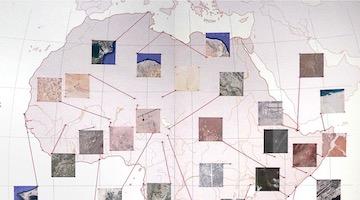 Neither the Organization of African Unity nor the African Union have been able to realize the two most important principles of pan-Africanism: political unity and territorial sovereignty.
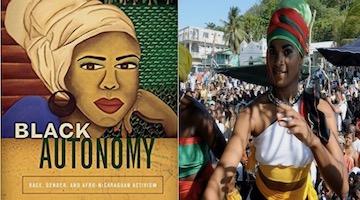 The author examines postwar violence through the activism of Afro-Nicaraguan women and men from the Caribbean coast of the country.
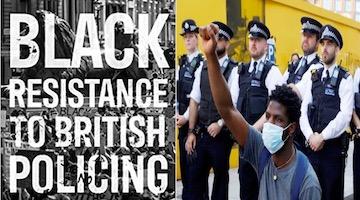 Historically, most of Britain’s policing hasn’t taken place on the British mainland – it has taken place in its colonies.
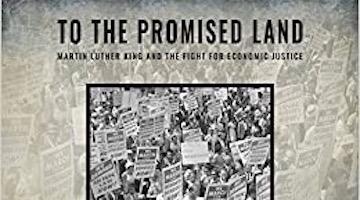 King said the best anti-poverty program is a union, where you can fight for your own agenda — somebody doesn’t have to hand it to you.
 Motherhood often served as a catalyst for attempted escape during the American Revolution.



