 by Paul Porter
Black radio owners and those who depend on them for publicity and profits are waging a propaganda offensive against a bill to compensate artists for airplay. Radio One founder Cathy Hughes “and her staff have done a great job of concealing the facts” of the legislation, HR 848, sponsored by Detroit Congressman John Conyers. Hughes has been joined by syndicated hosts Tom Joyner and Michael Baisden, and Rev. Al Sharpton, who is also a radio personality. Radio One is crying economic hardship, but the firm recently awarded CEO (and Hughes' son) Alfred Liggins “a 10 million dollar bonus.”
Black Radio Speaks with Forked Tongue
by Paul Porter
“Performers should be paid for radio airplay.”
It is time that broadcasters start telling the truth. The recent flood of one-sided information by radio on the pending "HR 848 - Performance Rights Act" is uncovering a much larger problem. The First Amendment calls for "Freedom of Speech," but unfortunately broadcasters continue to feed misinformation to millions of Americans, without a murmur of opposing opinion.
Radio One founder Cathy Hughes has rediscovered her microphone after a ten year hiatus. While shaping the Performance Rights Act as an end to Black Radio, Hughes and her staff have done a great job of concealing the facts.
In a series of public service annoucements, Hughes has framed HR 848 as the end of Black radio. Broadcasters, in this difficult economy, have denied airtime to supporters of this Bill.
In Detroit, Congressman John Conyers held a hearing on HR 848 at Wayne State University. While Tom Joyner, Michael Baisden and Hughes have continued to deliver blatant lies on air, the forum was the perfect situation to finally hear both sides.
Although invitations were extended to the entire broadcast community, only one representative stepped up to the mic. Rev. Al Sharpton, who's syndicated Radio One show airs nationwide, presented his side and left without listening to the audience that pays his check.
“Tom Joyner, Michael Baisden and Hughes have continued to deliver blatant lies on air.”
Sharpton, on his show later that day, only mentioned the forum as "one-sided" and failed to mention any of the stories shared by a short list of living legends: Dionne Warwick, Mary Wilson of the Supremes, Sam Moore, Duke Fakir, George Clinton and writer performer Rhymefest informed those in attendance of the simple facts on why performers should be paid for radio airplay.
Maybe if Sharpton, Baisden, Hughes and Joyner stop talking they might take the time to listen to some alarming facts.
*Performers are paid in over 30 countries, for radio airplay. Only the U.S., China, Iran and North Korea do not pay performers for radio airplay.
*Performers are paid for television, satellite radio, cable stations and Internet radio but not paid for terrestial (AM & FM) radio airplay.
*An additional $70 to $100 million will be paid to American artists for airplay from foreign countries.
What Black Radio is not telling you:
*Urban radio continues to be the most syndicated music format. While limiting voices and local issues, Black adults are 25 times more likely to hear syndication than Whites. Eliminating the messengers, by limiting the voices.
*Radio One, the nation's largest African American broadcaster, has cut staff and 401k benefits for staffers, while awarding CEO Alfred Liggins a 10 million dollar bonus.
*Radio consistently makes millions from the recording industry, requiring Free promotions, Free product and Free performances that get charged back to the artist bottom line.
No matter what the color of radio ownership, serving local audiences with better music, information and content is the key to a thriving business model. American radio must finally catch up with the rest of the free world and pay performers their just due.
It is time that radio broadcasters allow audiences to hear both sides of this important issue.
Paul Porter is a founder of Industry Ears (www.IndustryEars.com), a “nonpartisan think tank aimed at addressing and finding solutions to disparities in media that negatively impact individuals and communities.”

 In this series, we ask acclaimed authors to answer five questions about their book. This week’s featured author is Atiya Husain. Husain is Associate Professor of Africana Studies at Williams College…
 The Black Radical Tradition is the rich legacy passed down by revolutionaries. It is an important tool today as we struggle to turn the Americas into a Zone of Peace.
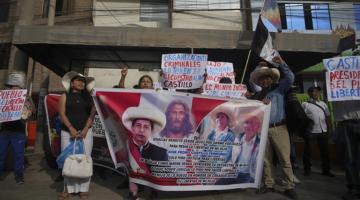 The trial of former Peruvian president Pedro Castillo, the victim of a 2022 lawfare-style coup, has begun. The legal process used against him is a sham covering up the human rights abuses…
 Trump administration interference in Panama has brought about a reckoning on migration and human rights throughout the region. These issues can no longer be ignored.
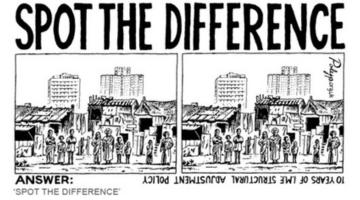 Presenting new research, Dylan Sullivan and Jason Hickel mount a devastating critique of the impact of structural adjustment in Africa in the 1980s and 1990s. Drawing on recent data on Africa’s…


