When Haiti held its first democratic elections in the 1990s after decades of occupation and US sponsored dictatorship, optimistic voters waited all night to cast their ballots and turnout was in the 90 percent range. Much has changed in the years since. Haiti's popular president, John Betrand Aristide has been kidnapped and exiled by the United States and France. The country has been brutally re-occupied by a multinational UN force. Lavalas, the party which gets better than 85% of Haitian votes every time it is permitted to compete, is banned, and its militants hunted by the occupiers. Another election, this one for the Haitian senate, occurred last week. By all accounts, almost nobody voted. Since the American press didn't cover it at all, we here reprint this April 20 dispatch from Al-Jazeera.
Haitians shun senate elections
by Al Jazeera Engli sh
Haiti's long-delayed senate elections have been marred by extremely poor voter turnout.
Official results are still days away but Al Jazeera's Teresa Bo, reporting from the capital, Port-au-Prince, said only eight per cent of registered voters cast ballots on Sunday.
Most cited poverty, disenchantment with the current government and resentment over the banning of a popular party as reasons for not voting, she said.
The polls, delayed since 2007 and held under the watch of 9,000 UN peacekeepers on Sunday, were seen as an important step in the country's return to democracy.
It was also critical to the efforts of Rene Preval, the president, to retool the constitution and implement economic projects.
Edward Joseph, an observer with the Haiti Democracy Project, a Washington-based think tank, said voter apathy or fear of election violence could be behind the meagre turnout.
"When you see this kind of low turnout, you have to wonder how interested people are in an election," he told The Associated Press news agency.
Boycott urged
Fanmi Lavalas, a party widely supported by the country's poor, was barred by Haiti's provisional electoral council from fielding candidates, for not fulfilling legal requirements.
It urged the estimated four million registered voters to boycott the elections and has vowed to take action if the government insists on the legitimacy of the polls.
The populist party is led by Jean Bertrand Aristide, the president who fled into exile after being ousted in a 2004 coup.
But there was also violence, with protesters raiding polling stations and destroying ballots in Mirebalais, causing voting to be halted in the central plateau city, Radio Metropole said.
"The people stole the ballots, they destroyed the ballots. People were with guns," Charles Messier, a United Nations spokesman, said.
"So, we had some violence yesterday night and even this morning." In the northern town of Marchand Dessalines, police and UN forces exchanged fire with civilians leaving at least one member of the security forces injured, local officials said.
Civil right
Police in the capital, Port-au-Prince, banned vehicles from the streets and shut down public transportation to keep order, a move that exacerbated the poor turnout.
A total of 79 candidates were vying for 12 seats in the country's 30-member senate.
Preval sought to defend the low turnout as he cast his ballot.
"Voting is a civil right but in this country it is not mandatory ... I know the Haitian people, they vote only if they feel like voting," he said on Sunday.
"I'm aware they say the participation rate is going to be low but tomorrow the results will come out and we will know who wins and how many people voted."
The elections were postponed from 2007 after the electoral council was dissolved amid infighting and an alleged assassination attempt on one of its members.
Riots then toppled Haiti's government.

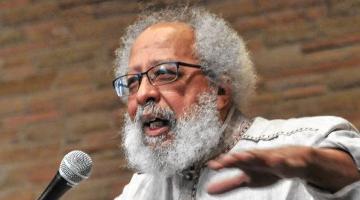 The late John H. Bracey, Jr. argued that Black Studies should be wedded to African liberation, not to the corporate-bureaucratic structure of the university.
 The U.S. has declared China to be an adversary, but its economic prowess cannot be eclipsed by a nation that is addicted to provocation and war making.
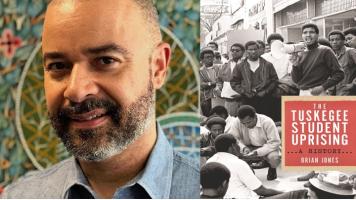 This week’s featured author is Brian Jones. Jones is Director of The New York Public Library’s Center for Educators and Schools. His book is The Tuskegee Student Uprising: A History.
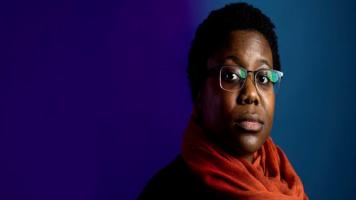 This week’s featured scholar is Moya Bailey. Bailey is an associate professor in the Department of Communication Studies at Northwestern University. Her article is “The Ethics of Pace.”


