 by Dr. Ron Daniels
“The fact that America has progressed to the point that a Black family can occupy the White House has not eradicated the myriad maladies of race and class that continue to constrain the aspirations of millions of Black people in this nation,” says veteran political organizer Ron Daniels. “The idea of a Black Agenda is not only relevant, it is imperative if Africans in America, as a group, are to enter the ‘promised land’ that Martin Luther King envisioned from his view from the mountaintop in Memphis.” Dr. Daniels praises the National Urban League’s recent State of Black America report on racial disparities for “implicitly making the case for the ongoing need for a Black Agenda.”
In the Era of Obama, Is There a Need for a Black Agenda?
by Dr. Ron Daniels
"Our cities are crime-haunted dying grounds. Huge sectors of our youth...face permanent unemployment... Neither the courts nor the prisons contribute anything resembling justice or reformation. The schools are unable - or unwilling - to educate our children for the real world of our struggles. Meanwhile, the officially approved epidemic of drugs threatens to wipe out the minds and strengths of our best young warriors."
When people ask me whether we need a Black Agenda in the era of Obama, I am reminded that much about this quotation, from the Preamble to the National Black Agenda adopted in Gary, Indiana in 1972, is the reality today for vast numbers of Blacks.
President Barack Obama speaks proudly of his days as an organizer on the South Side of Chicago where his wife Michelle was also raised in a working class family. There are certainly sections of Chicago's South Side which are still "crime-haunted dying grounds." And, when Mark Morial, President/CEO of the National Urban League, recently threw down the gauntlet after releasing the annual State of Black America Report, which continues to show troubling disparities between Blacks and Whites in education, health care, income and wealth, he was implicitly making the case for the ongoing need for a Black Agenda.
The conditions prevalent in Black America thirty-seven years after the Gary Convention, coupled with this year's State of Black America Report, tempts me to say that "the more things change, the more they stay the same." But things have changed for Africans in America. Indeed, because of the Black Political Convention in 1972, we now have thousands of Black elected officials occupying positions as local school board representatives, sheriffs, mayors, congresspersons and of course the President of the Untied States. We have a greatly expanded Black middle and upper class with an abundance of Black professionals, high paid artists, athletes, entertainers and heads of Fortune 500 Corporations. No one can deny that the Black freedom struggle has produced significant gains for the sons and daughters of Africa in America.
”Institutional/structural racism remains a roadblock to "freedom" particularly for Black working class and poor people.”
But, far too many Black people are mired in conditions similar to those we faced in the 60's. According to a study released by the Community Service Society of New York a couple of years ago, some 50% of Black and 40% of Latino youth are unemployed in this city when you include those who have dropped out of the labor market. Bronx County New York, with a predominately Black and Latino population, is the poorest urban county in America! Schools that fail to educate Black children are the prevailing reality in Black poor and working class neighborhoods, creating a pipeline to an exploding prison-jail industrial complex where the dominant complexion of the prisoners is black and brown. That these debilitating conditions persist for large numbers of Blacks in the 21st century clearly indicates that the "colorline," institutional/structural racism remains a roadblock to "freedom" particularly for Black working class and poor people.
Here again, that faded document from the Gary Black Political Convention is still relevant and instructive: "The crises we face as Black people are the crises of the entire society. They go deep to the very bones and marrow, to the essential nature of America's economic, political and cultural systems. They are the natural end product of a society built on the twin foundation of white racism and white capitalism." As a veteran social and political activist, with this analysis informing my assessment of the condition of Black working class and poor people, it does not occur to me that we are somehow in a "post-racist" society. The fact that America has progressed to the point that a Black family can occupy the White House has not eradicated the myriad maladies of race and class that continue to constrain the aspirations of millions of Black people in this nation. Therefore, the idea of a Black Agenda is not only relevant, it is imperative if Africans in America, as a group, are to enter the "promised land" that Martin Luther King envisioned from his view from the mountaintop in Memphis.
”The fact that America has progressed to the point that a Black family can occupy the White House has not eradicated the myriad maladies of race and class.”
In the first instance a Black Agenda is imperative because promoting and defending one's interest is fundamental to achieving your aspirations within a pluralistic, competitive process in this Capitalist political-economy. The Hispanic leadership that recently met with President Obama were not there to show they have "access," to have tea and crumpets or to have a photo op; they were there to discuss how their 67% vote for the President must translate into tangible gains for Latinos. The Obama administration's refusal to participate in the forthcoming U.N. Conference on Racism, because of fears that Israel may be attacked for its human rights violations during the invasion of Gaza, is a direct reflection of the power of the Israeli lobby in the U.S.
”Marc Morial's action in demanding that President Obama do something about the gross disparities between Blacks and Whites in education, health, income and wealth was courageous and exemplary.”
It is foolhardy for any African American to think that by simply electing a Black president the intractable problems facing Black poor and working people will miraculously disappear. They will only be resolved under this president or any president if we identify those issues that are of critical interest to our people and demand that they be solved. That's why Marc Morial's action in demanding that President Obama do something about the gross disparities between Blacks and Whites in education, health, income and wealth was courageous and exemplary. I'm certain Mr. Morial admires our President, as I do, but in the world of politics, that's beside the point. We need symbols and substance not symbols without substance; otherwise those "crime-haunted dying grounds" are where the dreams of many Black people will continue to be buried!
Dr. Ron Daniels is President of the Institute of the Black World 21st Century and Distinguished Lecturer at York College City University of New York. He is the host of An Hour with Professor Ron Daniels, Monday-Friday mornings on WWRL Radio 1600 AM in New York and Night Talk, Wednesday evenings on WBAI 99.5 FM, Pacifica New York. His articles and essays also appear on the IBW website www.ibw21.org and www.northstarnews.com . He can be reached via email at info@ibw21.org.

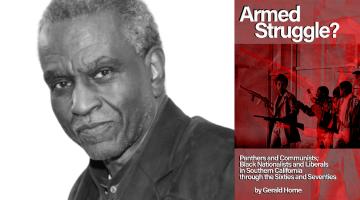 Dr. Gerald Horne talks to us about his latest book, “Armed Struggle: Panthers and Communists, Black Nationalists and Liberals in Southern California, Through the Sixties and Seventies.”
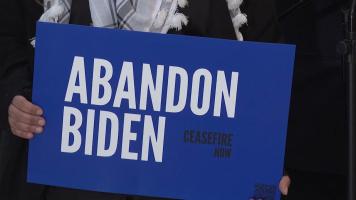 Hudhayfah Ahmad joins us to discuss how and whether the Abandon Biden campaign will change in the wake of Biden’s departure from the race and the elevation of Kamala Harris to the role of…
 Ajamu Baraka, Chair of the Coordinating Committee of the Black Alliance for Peace, and columnist and editor at the Black Agenda Report, is on the ground in Venezuela and joined The Kim Iversen Show…
 Sonya Massey’s brutal murder at the hands of the police has resulted in anguish and anger but no difference in how state violence is protested. Instead, we see surrender to the crumbs of condolences…
 For the late Dr. Bernice Johnson Reagon, Black music was a tool in the struggle for Black liberation, and not what it has mostly become today: a retrograde appendage to neoliberalism and white power.


