Black Agenda Report
Black Agenda Report
News, commentary and analysis from the black left.

  • Home
  • Africa
  • African America
  • Education
  • Environment
  • International
  • Media and Culture
  • Political Economy
  • Radio
  • US Politics
  • War and Empire

Priced Out of Shelter: The Decline in Affordable Housing
Bill Quigley
04 Mar 2009
🖨️ Print Article

Click the flash player above to hear this Black Agenda Radio commentary, or click here to download an mp3 copy.

housing A Black Agenda Radio Commentary by Glen Ford

While “most public policyattention has been directed at the plight of home owners, one-third of all Americans pay rent” and their quest for affordable housing has long been “the neglected step-child of federal housing policy.”

Priced Out of Shelter;  The Decline of Affordable Housing

A Black Agenda Radio Commentary by Glen Ford

“The United States has never achieved national goals in creation of affordable housing.”
 
One of the great engines of the current economic disaster was the relentless push by finance capital to inflate the price of real estate – and therefore, housing – to levels far in excess of what the average family could reasonably afford to pay. The United States has never achieved national goals in creation of affordable housing – not in a single year since the federal government began setting goals. The real estate industry has always seen to that. However, under the Bush administration, housing prices zoomed into the stratosphere, based on an unsustainable bubble of debt that has now burst catastrophically. Those who were barely able to find shelter for their families in the pre-Bush era found themselves in a truly desperate situation, even before the crash, as detailed in a new study issued by the Center on Budget and Policy Priorities.
 
Although most public policy attention has been directed at the plight of home owners, one-third of all Americans pay rent, including about half of low income households. Their options shrank dramatically during the years that George Bush was in office. The study shows that, by 2007, eight million rental households were paying more than half their income to the landlord and for utilities. Federal guidelines say that households should pay only 30 percent of income to keep a roof over their heads. And we’re not talking about families that foolishly splurge on housing. Two-thirds of those that pay more than half their income for rent are living at or below the federal poverty line. Because of the lack of affordable housing, these households have no other choice.

The current housing crisis may cause rents to come down in some areas. But wages will also go down, and unemployment is rapidly rising, putting increased pressures on the poor and the soon-to-be poor.

“Wholesale destruction of public housing stock continues under local  administrations of both parties.”
 
The Center on Budget and Policy Priorities calls affordable housing “the neglected step-child of federal housing policy,” constantly squeezed out of the Washington budget by competing demands for subsidies for home owners.housing
 
Public housing is worse off than a step-child. The Bush administration’s hostility to public housing was manifested dramatically in New Orleans, where the feds used Katrina as an excuse to demolish every public housing unit they could aim a bulldozer at. But disdain for public housing is a bipartisan affair. Since 1995, 165,000 units of public housing have been lost and not replaced, nationwide. This wholesale destruction of public housing stock continues under local  administrations of both parties, including in cities with Black majorities and Black mayors.
Section 8 rental assistance was supposed to take up the slack for public housing. But each year, 10,000 to 15,000 units of Section 8 housing disappear and are not replaced. Only one out of every four households that are eligible for federal housing assistance, gets it. The need is well documented, but the funds are consistently withheld.
 
The new stimulus package provides a one-time cash infusion, but there still exists no long term commitment or national plan for affordable housing in the United States.
 
For Black Agenda Radio, I’m Glen Ford. On the web, go to www.BlackAgendaReport.com.
 
BAR executive editor Glen Ford can be contacted at Glen.Ford@BlackAgendaReport.com.

Do you need and appreciate Black Agenda Report articles? Please click on the DONATE icon, and help us out, if you can.


More Stories


  • Black Agenda Radio, Week of December 17, 2018
    Nellie Bailey and Glen Ford
    Black Agenda Radio, Week of December 17, 2018
    18 Dec 2018
    Keisha Lindsay: Questions about black all male schools; Chris Duran & Concerned 44 demand reform of African Studies at Seton Hal; Zayid Muhammad of Newark Concerned Communites on documenting po

  • U.S. Presidents Kill for Empire
    Black Agenda Radio with Nellie Bailey and Glen Ford
    U.S. Presidents Kill for Empire
    17 Dec 2018
    US presidents may seem different from one another, in terms of rhetoric, “but they all have in common being committed to empire,” said Anthony DiMaggio,a political scientist a
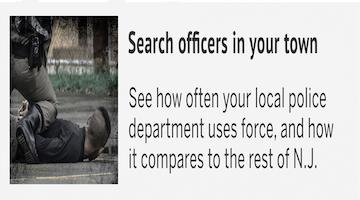
  • Report Documents Police Use of Force in New Jersey
    Black Agenda Radio with Nellie Bailey and Glen Ford
    Report Documents Police Use of Force in New Jersey
    17 Dec 2018
    Zayid Muhammad, of Newark Communities for Accountable Policing, was pleasantly surprised at the scope of a NJ Advanced Media report on police use of force in every city and town in

  • Seton Hall Students Will Renew Push on Africana Studies
    Black Agenda Radio with Nellie Bailey and Glen Ford
    Seton Hall Students Will Renew Push on Africana Studies
    17 Dec 2018
    Students with the Concerned 44 movement, representing the 44 percent of students that are ethnic or gender minorities, plan to renew their protests after the holidays at Seton Hall University, said

  • Mixed Bag at All-Boys Black Schools
    Black Agenda Radio with Nellie Bailey and Glen Ford
    Mixed Bag at All-Boys Black Schools
    17 Dec 2018
    The movement for all-male Black schools is both “good and bad,” said Keisha Lindsay, author of In a Classroom of Their Own.

  • Load More
Subscribe
connect with us
about us
contact us