U.S. Risks Catastrophic Defeat in Pakistan
A Black Agenda Radio commentary by Glen Ford
"The Americans dare to
violate the territory and insult the dignity of a nuclear-armed nation of 170
million people, most of whom despise the United States."
From the moment the United States decided to remove the
Taliban regime from Afghanistan, Washington has been in a twilight kind of war
with Pakistan. Now, with American troops openly violating Pakistani territory
in direct defiance of explicit warnings from the Pakistani military high
command, the U.S. risks provoking a crisis in the Pakistani armed forces and
society that may well force the Americans to evacuate the entire region in
disarray.
The Americans seem to think that if Pashtun tribesmen who
live on both sides of the Afghan/Pakistan border can cross back and forth to
fight the Americans, then the Americans have the right to do the same thing.
Wrong. Once again, the Americans show only contempt for those who choose to
become allies of Washington - against the wishes of their own people. The U.S.
thinks it has bought the permanent obedience of the Pakistani military through
decades of multi-billion dollar weapons deals and bribes. The Americans delude
themselves into believing that their alliance with the Pakistanis and the
Saudis in the jihad against the Soviets in Afghanistan two decades ago is a tie
that binds more tightly than blood, language, culture and Pakistani national
self-interest. The Americans, in their fatal, racist arrogance, dare to violate
the territory and insult the dignity of a nuclear-armed nation of 170 million
people, most of whom despise the United States.
"The Pakistani people
would doubtless approve of their soldiers standing up to the U.S."
The Taliban was
created by Pakistan's intelligence services so that Pakistan would be the
dominant influence in Afghan affairs. After 9/11, the U.S. gave Pakistan an
ultimatum: join in a new jihad against Al Qaida and its Taliban protectors, or
become a target of the "War on Terror" - an offer the Pakistanis felt they
could not seem to refuse. But the Americans were actually demanding more than
the Pakistani military could possibly give. Pakistan's generals ruled, not by
popular consent, but through constant deal-making and intrigue among the country's
many ethnic and class constituencies. Its Inter Service Intelligence (ISI)
component is the chief mechanism of intrigue among the various military
factions. The ISI fathered the Taliban, and engineered its rise to power in
Afghanistan. The Americans were asking the Pakistani military to kill its own
political offspring.
As events have shown, the Pakistani military were
unwilling to sacrifice their own creation on Washington's demand. The Pushtun
tribesmen on both sides of the border were quite willing to fight both the
Americans and the Pakistani Army, if need be. The harder the Americans pushed,
the bigger Pakistan's Taliban problem became.
Now the Americans push across the border. The Pakistani
military says, No, and some units have reportedly fired on U.S. troops. The
Pakistani people would doubtless approve of their soldiers standing up to the
U.S. The Pew Research organization reports that only
15 percent of Pakistanis have a favorable view of the United States, and
just 13 percent support America's so-called "War on Terror." Osama bin Laden is
infinitely more
popular than George Bush.
If the United States provokes Pakistan any further, the
consequences are incalculable. At the very least, the U.S. may wind up being
run out of South Asia on a rail - and soon.
For Black Agenda Radio, I'm Glen Ford.
Broadcasters
and others who need a downloadable MP3 copy of this Black Agenda
Radio commentary may get it from the Black Agenda Radio archive
page.
BAR executive editor Glen Ford can be contacted
at Glen.Ford@BlackAgendaReport.com.

 A book by Dominican politician and historian Juan Bosch explains the connections between U.S. foreign policy, permanent war, and the defense industries.
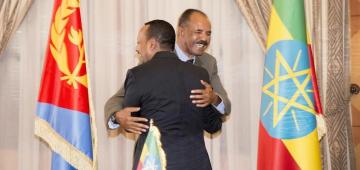 The US seems willing to accept Ethiopia’s defeat of its former puppet, the Tigray People’s Liberation Front (TPLF), if it can just drive a wedge between Ethiopia and Eritrea.
 Music in Montreal: Our song, “The Internationale!”
 This week’s featured author is Cristina Mejia Visperas. Visperas is Assistant Professor of Communication at the University of Southern California. Her book is Skin Theory: Visual Culture and the…
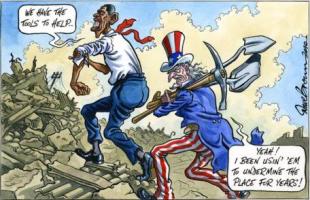 If Haiti is "the poorest country in the hemisphere" it is because imperialist policies continue to impoverish and destabilize that nation.



