A Black Agenda Radio commentary by executive editor Glen Ford The man who presides over the largest prison population in the world, a system that is still holding political dissidents captured a half century ago, has the nerve to demand – or have his flunkies in the corporate press demand – that Cuba account for who it puts in jail, and why. It would never even occur to the White House press corps to inquire on the status of U.S. political prisoners.
Raul Castro Should Ask Obama: What About U.S. Political Prisoners? A Black Agenda Radio commentary by executive editor Glen Ford “The United States is holding scores of political prisoners, many of them captured in the 1960s and 70s.”
President Obama knew it was impolitic to play his hypocritical human rights game while in the presence of Cuban President Raul Castro, in Havana, this week. So Obama had one of his kiss-up White House reporters do the sneak attack for him. CNN’s Jim Acosta, the son of a Cuban exile, asked President Castro why his country kept political prisoners. Castro replied, “What political prisoners? ” and asked Acosta to provide a list of such people. It was an awkward moment – not diplomatic at all – but Obama was clearly enjoying it. And, well he might, because neither Jim Acosta nor any of the other corporate mouthpieces in the White House press corps would dare, or even think, to ask a U.S. president about the plight of American political prisoners.
The U.S. media traveling with Obama have easy access to all sorts of lists of Cubans who are supposedly in prison for opposition to the their government – although even Amnesty International says that the Cubans released their last political prisoner , back in September.
The United States, on the other hand, is still holding scores of political prisoners, many of them captured in the 1960s and 70s. Their numbers are decreasing only because they are dying of old age – accelerated by the inhuman conditions and practices of the world’s largest prison system. If the corporate media were really concerned about political prisoners, they could go to the web site of the Jericho Movement and see the pictures of 50 of them . Eighteen were members of the Black Panther Party , the Black Liberation Army or the Republic of New Africa , including Mumia Abu Jamal , whose life hangs by a thread because the State of Pennsylvania refuses to treat his Hepatitis C. Black Panther Romaine “Chip” Fitzgerald has been incarcerated since 1969. There are men and women from the MOVE organization, all with the last name “Africa ,” whose children were killed and their home bombed by the Philadelphia police. There are Native American activists from the First Nation group and American Indian Movement, including Leonard Peltier , who has been behind bars since 1976. There are white Class war , Anti-imperialist and Anarchist Hacker political prisoners, and, Marie Mason , a white Earth Liberation Front woman and Black female community activist Rev. Joy Powell .
No Truce in This War
There are prisoners who became political after they were imprisoned – which is why they are still there . There are Chicano political prisoners and the great Puerto Rican independence fighter, Oscar Lopez Rivera . There is the former H. Rap Brown, who’s doing life without parole as Imam Jamil Al-Amin . There are members of the Portland 7 and the Virgin Island 5 and the Ohio 7 . There is the brilliant Mutulu Shakur , father of Tupac Shakur, who the feds say masterminded the escape and exile to Cuba of Assata Shakur . If Obama could somehow get her back behind bars in the U.S., he’d claim she wasn’t a political prisoner, either.
The Jericho Movement’s pictures do not include lots of other political prisoners, like Rev. Edward Pinkney, who’s serving up to ten years in prison for non-violently standing up for the people of Benton Harbor, Michigan.
President Obama this week told the Cuban people, “I Have Come Here To Bury The Last Remnant Of The Cold War.” But he won’t end the long war against Black people in the United States, a war that has sent millions to prison under a political policy of mass Black Incarceration. In that sense, they are all political prisoners.
For Black Agenda Radio, I’m Glen Ford. On the web, go to BlackAgendaReport.com.

 "Operation Piracy or Pedophile Protection, mates?" is the latest from BAR's Poet-in-Residence.
 Jake Paul’s ascent in boxing is a cultural symptom of an empire in decline. It reflects a country that now prefers empty spectacle over real strength, both in sports and on the world stage.
 To dismiss revolutionary theory is to choose permanent defeat, reducing the movement to a hamster wheel of reaction and co-opted rage.
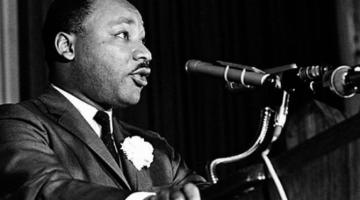 Preserving the Black Radical Tradition demands struggle not only against white supremacists, but also against the co-opted Black political class who actively support the very evils Dr. King named.
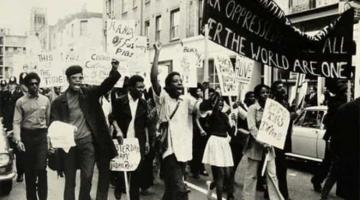 Africans in the U.S. must weaponize their position and sabotage imperial projects from the inside. Black revolutionaries must modify traditional strategy.


