A Black Agenda Radio Commentary by BAR managing editor Bruce A. Dixon The newest wave of so-called movement activists have lots to say about institutional racism, but as Glen Ford has pointed out, they have few concrete demands beyond their own inclusion in the pantheon of recognized black leadership. With 3 of every 8 black children in the US live in poverty, black family wealth a tenth what it was a decade ago, isn't it time to confront the corporate power, the government, the state?
What Good Are Our Black Politics When 3 of Every 8 Black Children Under 6 Are in Poverty? A Black Agenda Radio Commentary by BAR managing editor Bruce A. Dixon
There have never been more black elected and appointed officials, more black corporate and military functionaries, more black faces on TV and in the movies than there are right now. There's been a black family in the White House for seven years already and the first lady is from the south side of Chicago. But what does it really mean to black children in places like Chicago's south side all around the country?
The plain and simple answer is not a whole lot. Current census data pegs the percentage of African American children under 6 who are growing up in poverty at 38%. That's three out of every eight black children in the US. It's been just a little higher once or twice in the several decades that particular statistic has been kept, but never by much, and not since the early 1980s.
Why? Politics isn't just about voting, elections and political parties. Politics broadly speaking is about how we humans arrange our collective affairs. And black politics, as far back as anybody can recall, black politics has never been aimed at confronting those who wield power, or contesting for that power. Black politics has always been about representation, about which black faces would best serve as designated spokespeople for the rest of us, which of them might best broker for our interests. Brokers don't contest power.
The current waves of mass incarceration and gentrification would have been impossible without the active collaboration of large groups of black preachers, black business leaders and black politicians, the kind of black political class which views its own glittering careers as the indisputable proof that something great is being accomplished on behalf of the oppressed.
So far, the newest wave of so-called “movement activists” are walking down that same well-traveled road. They're asking for more representation, with themselves as the brokers this time. They want town hall meetings and to their own presidential debates. But as Glen Ford points out, they don't have demands.
They're not proposing abolition of the crushing burden of student and consumer debt.
They're not championing laws that would make the kinds of mortgage fraud perpetrated by the big banks illegal, or which would let cities snatch underwater homes from the speculators.
They're not educating or organizing parents and communities to resist the wave of school privatizations or to opt out of the standardized testing which provides the fake justification for them.
They're not speaking or mobilizing against the permanent warfare state which swallows fully half the nation's revenue, money which could be spent transforming cities, industries, economies, and tens of millions of lives.
They're not building new political organizations that value and practice democracy internally, that prefigure the world we deserve.
This new movement crowd has lots to say about the slippery nebulous demons of white supremacy and institutional racism, but almost nothing against the state and corporate actors who exercise real power. Like the classes of broker-leaders before them, they don't have answers to gentrification, or the housing crisis or mass incarceration, or much to say to the three out of every eight black children in poverty, except to point to their own careers, while declaring how they love their blackness, and that of the pretty first lady in the White House. And yours too.
For Black Agenda Radio, I'm Bruce Dixon. Find us on the web at www.blackagendareport.com.
Bruce A. Dixon is managing editor at Black Agenda Report and a partner in a technology firm. He lives and works near Marietta GA and is on the state committee of the Georgia Green Party. Contact him via email at bruce.dixon(at)blackagendareport.com.

 “The chickens have come home to roost,” one resident said. “Our exact fears have come true.”
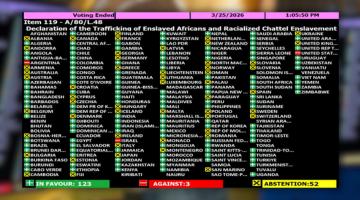
 In this week’s segment, we discuss the impact on the voting rights of Black people if the SAVE Act is signed into law. But we begin with a discussion of an historic vote at the United Nations which…
 Kwesi Pratt Jr. is General Secretary of the Socialist Movement of Ghana.
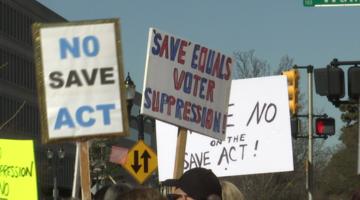 The SAVE Act would require proof of U.S. citizenship to be presented in person in order to register to vote in this country and would disenfranchise millions of people who are currently able to vote…
 Russia finally makes good on promises to help Cuba, but its level of commitment is unclear. The left are clearly immobilized, even as Iran demonstrates how to fight back.


