A Black Agenda Radio commentary by Glen Ford
The United States wants to drag Africa into its drug wars – on top of Washington’s War on Terror. Since drugs always follow American “anti-narcotics” activity in the world, the inevitable result will be an explosion of drug networks in targeted African countries. “Liberia and Ghana will soon emerge as hubs of the African drug trade – just as happened in Colombia and elsewhere in Latin America.”
U.S. Steps Up Militarization of Africa Through “Drug Wars”
A Black Agenda Radio commentary by Glen Ford
“Washington has its eyes on Liberia and Ghana.”
When a high U.S. government official says Africa is “the new frontier,” it’s time for everyone that cares about the continent to watch out, because something really dangerous is afoot. A top guy in the D.E.A. recently described Africa
According to mythology, everything King Midas touched turned to gold. It appears the United States has the Narcotics Touch; everything the Americans touch turns to dope. American allies in the developing world quickly become narco-states.
The pattern has not changed in 60 years, since the Italian and French mafias were rewarded with international drug franchises in return for their assistance against socialists and communists. Southeast Asia’s Golden Triangle became the center of the global heroin trade during the Vietnam War – a project of the CIA. When the U.S. shifted its focus to suppressing leftist movements in Latin America, cocaine became the region’s biggest export. The United States has never waged war against drugs – quite the opposite. Washington rewards its political friends with drug franchises and monopolies, in return for service to American corporate interests. That’s why most of America’s friends in the developing world are criminal regimes.
“Washington hopes to embed commando-style teams of specially vetted police for an American-run war on drugs.”
The U.S. Drug Enforcement Administration is most proud of its work in Honduras, where a U.S.-backed coup two pregnant women
Now it’s Africa’s turn. Washington has its eyes on Liberia and Ghana, where it plans to train elite police units after first “vetting” their personnel – a euphemism for making sure that the commandos are willing to act as de facto U.S. operatives. You can be sure that Liberia and Ghana will soon emerge as hubs of the African drug trade – just as happened in Colombia and elsewhere in Latin America. With Washington’s “vetted” operatives in charge of the African drug networks, the U.S. will vastly increase its ability to buy influence among the greedy classes all across the continent, both in and out of uniform. Just as in Colombia and Honduras and Panama and Guatemala, the Drug Wars become indistinguishable from the War on Terror, which used to be called the War on Communism. It's really a war against the poor.
For Black Agenda Radio, I'm Glen Ford. On the web, go to BlackAgendaReport.com.
BAR executive editor Glen Ford can be contacted at Glen.Ford@BlackAgendaReport.com .

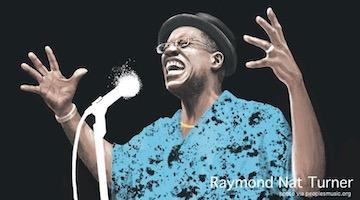 P.O.E.T. are the only letters behind my name— So you scowl; scold; spank my hands with rulers and switches worn smooth from serial beatdowns, dare I use the F-word…
 Oprah gushes that this book by the latest darling of the ruling classes might “save us,” but all it’s really trying to save is capitalism.
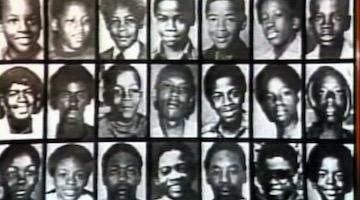 The docu-series reveals not only the ongoing predation against the Black community, but that policing is about social control, not crime control.
 This week climate change, US foreign policy, and Mexico’s new government were on your minds.
 This book locates the struggles, wins and losses of young Black lives in a structural, institutional and historical context.


