A Black Agenda Radio commentary by BAR editor and columnist Jared Ball
Mumia Abu Jamal’s life and work is testament to the need to put political prisoners at the top of the agendas of movements for change. “Political prisoners have much experience with the legal system, the police, the entire apparatus of surveillance and incarceration, all of which is essential knowledge for those now entering political activism for the first time.” Besides, “We wouldn’t do half bad by replacing some of the Dysons, Simmons and Sharptons with folks like Ashanti Alston, Mutulu Shakur and Russell ‘Maroon’ Shoats.”
Political Prisoners: Lessons for Occupationists and Us All
A Black Agenda Radio commentary by BAR editor and columnist Jared Ball
“We need to encourage a renewed focus on the politically incarcerated because we are likely to see those ranks increase.”
After this week's rally
There are at least three reasons for aggressively including the politically incarcerated: 1) Their experience, 2) their analysis and 3) the standard they establish for the rest of us. Their experience as conscious actors for liberation, as activists, journalists and soldiers needs to be studied and incorporated by the emerging campaigners in and out of these occupations. Their analyses having gone through decades of political struggle can only help shape the evolving activities here and around the world. And as long as they remain locked up political prisoners serve as permanent reminders of an absence of real change. Especially now as the current president worsens denying
To the first point, political prisoners have tremendous reservoirs of knowledge regarding struggle with the state. They have decades worth of time to reflect on their successes and failures, on what did and did not work and why. Political prisoners have as much experience with the legal system, the police, the entire apparatus of surveillance and incarceration, all of which is essential knowledge for those now entering political activism for the first time. Mumia has himself penned a number of books, including a recent one dealing particularly with jailhouse lawyering
“As long as they remain locked up political prisoners serve as permanent reminders of an absence of real change.”
Secondly, the analyses that come out of all this experience are essential. Who better to guide us through the web of radical thought and organization than political prisoners? Who better than they to offer guidance in grappling – on an organizational level – with issues of race, class, gender, sexuality and radical implementation of radical theories? And especially for this still largely White occupation effort, there is simply no reason for people like Michael Moore and Naomi Klein to speak on their behalf while Claude Marks, David Gilbert and Laura Whitehorn are still here. And while these folks should and do speak to the rest of us we wouldn’t do half bad by replacing some of the Dysons, Simmons and Sharptons with folks like Ashanti Alston, Mutulu Shakur and Russell “Maroon” Shoats.
And again, lastly, their standard of commitment, action, study and continued incarceration allows political prisoners to serve even further as liberation guideposts. Let theirs be the standard upon which we determine success and upon which we judge ours or their actions. And let their lack of freedom be genuine reminders of our own.
So even in death former political prisoner Safiya Bukhari
For Black Agenda Radio, I’m Jared Ball. On the web find us at BlackAgendaReport.com.
Dr. Jared A. Ball is the author of I Mix What I Like! A Mixtape Manifesto and is an associate professor of communication studies at Morgan State University in Baltimore, MD. He can be reached via IMIXWHATILIKE.ORG .

 The attorney general’s theory rests on the premise that there is a set path by which one radicalizes into becoming violent.
 Does the belatedness and ubiquity/banality of allyship echo an anxiety about the enormous restraint that African Americans have exercised?
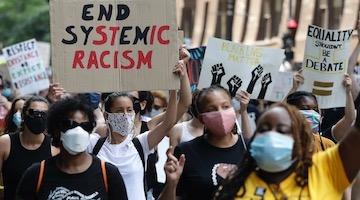 White labor leaders are failing to understand non-traditional organizing that has developed from viral social media movements.
 The Democrats are likely to put forward a Black woman prosecutor to legitimize the mass incarceration plague that Joe Biden helped inflict on Black America.
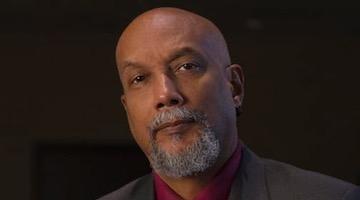 Black Alliance for Peace national organizer Ajamu Baraka urged vigilance against US “attempts to control the narrative” of the Black Lives Matter movement.



