A Black Agenda Radio commentary by Glen Ford
Over the past 40 years, income inequality and housing segregation within the Black community has bee far more pronounced than in white America. A new study paints a picture of volatile Black neighborhoods pushed and pulled by income inequalities that have also wreaked vast changes on the larger American landscape, as “affluent people cluster in gentrified areas where lower income people cannot live, and poor people also become more concentrated.”
Massive Growth of Segregation by Income Among Blacks
A Black Agenda Radio commentary by Glen Ford
“Housing segregation among Blacks and Hispanics has, in fact, increased much more sharply than among whites since 1970.”
A new report
The New York Times did an article
“The biggest jump in Black income inequality occurred between 1970 and 1990.”
Until the 1970s, there was less income inequality among Blacks than among white families, but since then intra-Black inequality has grown four times as much. The biggest jump in Black income inequality occurred between 1970 and 1990. It was during this same period that discrimination against Blacks in housing declined, allowing those families that could afford to leave ghetto neighborhoods, to do so. What the study shows is a very volatile Black community, with neighborhoods undergoing much more economic change than their white counterparts.
In the 1990s, the trend towards greater income inequality among Blacks slowed. That’s probably because the 90s was the most generally prosperous decade for Blacks of all incomes, which tended to moderate the growth of high density poverty in lower-income Black neighborhoods.
Then, something strange happened. When the first decade of the 21st century came along, economic data showed little reason to expect increased income segregation among Blacks. Nevertheless, a rapid increase did occur, despite a bad economy for African Americans. The authors believe the increase was due to more lenient mortgage lending practices, the spread of sub-prime lending targeting Black and Latino neighborhoods. This, of course, was the bubble that is still bursting, which has led to the most catastrophic loss of Black wealth in history.
This story, of heightened African American mobility and volatile Black neighborhoods over the past 40 years, has no interest to the New York Times , even when they are handed a study that is chock-a-block with the facts.
For Black Agenda Radio, I'm Glen Ford. On the web, to to www.BlackAgendaReport.com .
BAR executive editor Glen Ford can be contacted at Glen.Ford@BlackAgendaReport.com .

 The war industry brags that five top weapons corporations are headed by women.
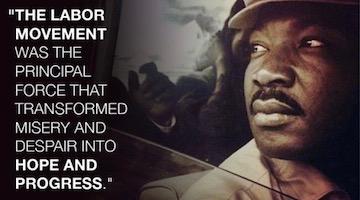 Dr Martin Luther King, who was killed supporting Memphis garbage workers, often noted that most Black people are working class, said labor historian Peter Cole.
 The fishermen of Kabarole District appear to have blown the whistle on an audacious act of bio-piracy.
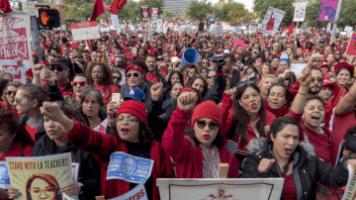 Corporate media absolutely won’t tell you this, but this year’s Los Angeles teachers strike is the latest chapter in the long running struggle against the privatization of public education in the U
 The best thing that can happen in 2020 is for Bernie Sanders to do fantastically in the primaries and be cheated out of the nomination, once again, thus giving millions of leftish Democrats a



