Every movement has its symbols and icons. But when these are separated from their context and content they become mere brands. Brands are symbols used to short circuit critical thinking and evoke manufactured desires, imagined memories or convenient attitudes in an audience. The invocation of Dr. King by corporate hip hop, like the corporate sponsorship of the DC King Memorial aim to erase his revolutionary context, to excise his transformative content, to rebrand Dr. King in their image and for their purposes, not ours.
Sponsorship Matters! Of Name Drops and Memorials: Dr. King Gets Love from Hip-Hop
A Black Agenda Radio Commentary by Jared Ball
“King has his life reduced to one-liners and to childish distinction from Malcolm X”
According to Thomas Conner and the Washington Post, you know, that veritable clearinghouse of Black history, radical politics and cultural expression, hip-hop has finally found a place for Dr. King. The newspaper said this week that finally, after long-last, King’s “dream has a place in hip-hop” and that this has not always been the case. Where once upon a time rappers chose Malcolm X as their singular icon today King finds more room on that mantle. For the Post this piece is meant to connect to the resurgence of King’s name in popular media due to the now postponed corporate memorial dedication and, perhaps more importantly, the article means to assign to this transformation a sense of progress or maturity. The once hostile art form is now over 40 and is showing signs of its age. It is now pragmatic, thoughtful and able to see past its own radical nose to the bright, liberal and corporate future. Now that companies sponsor everything from memorials to the greatest of cultural expressions their versions must now be branded as legitimate whether or not we agree.
Conner and the Post do precisely what they must given the very nature of media generally speaking and that of the paper in particular. That is, they return both King and hip-hop to their own very narrowly constructed views of each. King has his life reduced to one-liners and to childish distinction from Malcolm X. Rap music is reduced to a handful of corporate rappers whose own brilliance isn’t evidenced precisely because it wasn’t sought. In each case the subjects are used to re-tell an important – albeit entirely inaccurate – narrative of political struggle and cultural expression. King, from the perspective of the Washington Post, is distorted into the anti-Malcolm X and an acceptable sign of progress should he be adopted today by rappers who traditionally – naturally – tended toward Malcolm X, the one these emcees perceived as more radical. The new trend is conveyed as a microcosm of the more generally encouraged shift among Black people away from unsanctioned revolutionary politics and toward the more responsible assimilationist ones which, of course, are most realized in Barack Obama. It doesn’t matter if the true politics of King or Malcolm are actually ever discussed or described. This is about brand and sponsorship. It has nothing to do with reality.
And the Post knows they are full of it. They know they are complicit in what was a total pre-assassination hit job in the national press where in their very own pages King went quickly from a civil rights hero to an anti-capitalist villain. Less than 90 days before he was killed it was the Washington Post calling him a “Leninist” who was too friendly with Stokely Carmichael and ultimately a threat to national security. The Post also knows it has participated in an annual re-assassination of King as he has been returned to his hero status by a press bent on denying any real discussion of his politics or his assassination. So when rap music itself equally sponsored by the corporate world is applauded for now being more willing to adopt King’s “dream” it is a cry of the victory of brand, the victory of sponsorship.
“That which delivers your worldview must be interrogated. Corporations don’t want radical change.”
So the same racist, war-mongering corporations who now bring us King’s memorial also bring us the rappers the Post cites as advancing toward King. To ignore the messenger is to ignore the political context in which communication occurs. In a kind of twist of Marshall McLuhan, the sponsor is the medium and, therefore, the message. Who cares if Lil’ Wayne, Common or Lupe Fiasco drop King’s name in a verse without context? Jah Rule once appropriated George Jackson and Wiz Khalifa named a song Huey Newton. K’Naan’s anthem lost any bite once Sony and Coca-Cola bought it. Once a message is sponsored by its political enemy it goes immediately limp. And this, of course, is why sponsors sponsor.
Sponsorship matters. That which delivers your worldview must be interrogated. Corporations don’t want radical change. They want references to radicalism that actually claim change has occurred or deny that it is still necessary. Hence the corporate memorial to King and the corporate promotion of mostly empty musical references to him. It, by the way, is also why the corporate-sponsored Barack Obama would happily dedicate the similarly sponsored memorial but would not allow his administration to honor a recent request to pardon Marcus Garvey. Garvey’s image is not so easily reconciled.
For Black Agenda Radio I’m Jared Ball. On the web go to BlackAgendaReport.com.
Dr. Jared A. Ball is an associate professor of communication studies at Morgan State University in Baltimore and is the author of I Mix What I Like! A Mixtape Manifesto (AK Press). He can be found online at: IMIXWHATILIKE.COM.

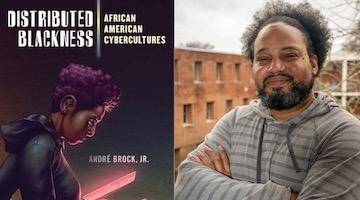 The online aggregation and coherence of Blackness online, absent Black bodies, is what inspired the author’s book.
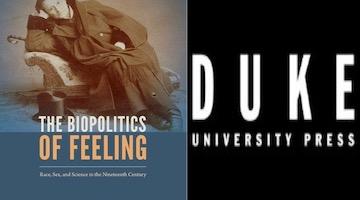 The very physical category of femaleness was articulated by feminists and non-feminists alike as the sole property of whiteness in the 19th century,
 Seventy years after the civil preparedness film Duck and Cover, it is long past time to reckon with the way white supremacy shaped U.S.
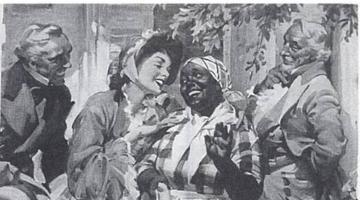 Textbooks are a battleground in which the humanity and status of black Americans are contested
 Amazon will not stop squeezing every drop from workers until those workers have more power.


