Click the flash player to listen to or the mic to download an audio in MP3 format.
The 60 signatories to a letter denouncing racism in Cuba seem to consider themselves extensions of Barack Obama's State Department. The logic of their action, as articulated by Dr. Ron Walters, is to encourage the United States to “make the Black condition in Cuba 'part of any negotiations on the normalization of relations between the U.S. and Cuba.'” Then maybe the Cubans can negotiate with the U.S. on behalf of African Americans.
The Insanity of the African American Racial ‘Critique’ of Cuba
A Black Agenda Radio commentary by Glen Ford
“They have allowed themselves to become tools of U.S. foreign policy, in the age of Obama.”
Late last year, a group of 60 prominent African Americans circulated a letter denouncing racism in, of all places, Cuba. I say, of all places, because almost any other country on the planet would be a better target than Cuba for a scathing and very public racial critique by African Americans. The letter claims that Cuba treats its Black population with “callous disregard.”
It is true that lines of color continue to exist in Cuba 50 years after Fidel Castro proclaimed the triumph of the revolution. Cuba had once been described as the most racist country in Latin America, a Spanish slave colony later subjected to 60 years of U.S. occupation and domination. It would be idiotic to think that such deep layers of racial oppression could be easily peeled away, or made to disappear by decree. But Cuba has made miraculous progress, helped in great measure by the fact that so many of its most racist citizens moved to Miami. Cuba’s solidarity with African liberation is unequaled among nations, both militarily and in support of African civil society. Cuba has offered its life-saving medical services to people of all nations, including the United States. And Cuba has been a haven, a home in exile, for Black American freedom fighters since the early days of the revolution.
So why would a celebrity list of Black Americans single out Cuba for special criticism? They have allowed themselves to become tools of U.S. foreign policy, in the age of Obama. The signatories include Dr. Ron Walters, a veteran activist and distinguished political scientist at the University of Maryland. In an article explaining his actions, Dr. Walters himself noted that there is only a one-year gap in life expectancy between Cuban whites and Blacks and mulattoes, and Cubans live slightly longer than the average for the United States. In the U.S., whites live more than six years longer than Blacks. Black Cubans live five years longer than African Americans. Dr. Walters also notes that Black and mulatto Cubans graduate at higher rates than white Cubans. These kinds of data are clear indications that the Cuban racial divide is far less pronounced than in the United States.
“Black Cubans live five years longer than African Americans.”
The signatories cite figures that purport to show that people of African descent are more likely to be incarcerated than whites. But those same figures show a much lower rate of Black incarceration in Cuba than in the United States, and a far lower percentage of Blacks among Cuban political prisoners. Still, Dr. Walters wants to make the Black condition in Cuba “part of any negotiations on the normalization of relations between the U.S. and Cuba.” In that statement, Walters is saying that the United States – of all nations – should negotiate with Cuba on the status of Cuba's Black citizens, before the U.S. lifts its illegal embargo and otherwise starts behaving like a civilized neighbor. I must assume that means the Cubans will have the same right to negotiate the treatment of Black Americans: an end to mass Black American incarceration, freedom for Black American political prisoners, a lowering of Black unemployment – and all the rest of our problems. But of course, Dr. Walters and the other signatories aren't suggesting that. They're just making themselves useful to the Empire, and saying to Hell with solidarity.
BAR executive editor Glen Ford can be contacted at Glen.Ford@BlackAgendaReport.com.

 American policing is defended as good despite its unmatched amounts of lethal violence.
 Richard Wright’s 1942 novel was testing the limits of what the white novel-reading public would have found imaginable.
 Writers, artists, community organizers and scholars have all contributed their analysis of the resource documents listed, below, and how they might be useful in assessing anti-Black structures arou
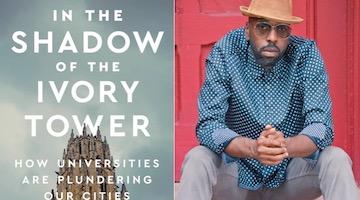 Universities have become today’s companies and our cities their company towns.
 The Age of Revolution (1770–1850), bookended by the American and French Revolutions on the one side and the Revolutions of 1848 on the other, is widely viewed as the progenitor of the modern Euro-A



