“Black watchdogs are most effective in unmasking and shaming the culprits within our own ranks.” We “tip our hats” to Color of Change for exposing the Congressional Black Caucus’s abysmal collective record on Internet neutrality. “Those who are most trusted by Black America are positioned to do the most serious harm to African American interests.”
“Color of Change enhances its own moral authority as a watchdog that is willing to hold Black institutions accountable to Black people.”
The Congressional Black Caucus Legislative Weekend has always been heavy on networking. The question is: networking for whom? Is one networking to make a self-serving deal, or for the purpose of sharing information and ideas for the advancement of the common good.
Based on their legislative records, it is clear that much of the networking done by members of Congressional Black Caucus is contrary to the interests of their own constituents. Since 2006, large majorities of the Black Caucus have sided with those who seek to turn the Internet into a private network for giant telecommunications corporations. Today, only a small fraction of the Black Caucus can be counted on to support the people’s interests in the fight for Internet neutrality.
At Black Agenda Report, we tip our hats this week to Color of Change, the online activist organization that has challenged those Black congresspersons that have sided “with their corporate donors…in an effort to undermine Internet freedom and give the telephone and cable companies control over what you can see and do online.” It is significant that Color of Change, with its impressive emailing list and valuable experience in mobilizing African Americans through the Internet, is taking on the Black Caucus. What’s sorely missing in Black America, today, are mechanisms that force Black institutions, like the Congressional Black Caucus, to be accountable to the masses of African American people. The Caucus claims it is the “conscience of the Congress,” but on the issue of Internet neutrality, the Black lawmakers have acted unconscionably, selling their votes to corporate monopolizers whose ambition is the corner the global market on information, ideas and human consciousness, itself.
“Only a small fraction of the Black Caucus can be counted on to support the people’s interests in the fight for Internet neutrality.”
The only moral authority the Congressional Black Caucus can claim is that which it earns through service to its core Black constituency, whose interests are antithetical to those of the giant telecom companies. In focusing the spotlight on the Black Caucus’s collective betrayal of African American interests, Color of Change enhances its own moral authority as a watchdog that is willing to hold Black institutions accountable to Black people. The internal political battle within the Black community is, in many ways, the most critical arena of struggle, since those who are most trusted by Black America are positioned to do the most serious harm to African American interests.
Color of Change zeroes in on the most shameless Black congressional servants of AT&T and Verizon, by name, singling out New York’s Greg Meeks and Chicago’s Bobby Rush. The handful of Black lawmakers that have championed a corporate-free Internet are appropriately applauded. They are Barbara Lee, Maxine Waters, John Conyers, Donna Edwards, Keith Ellison, and Donald Payne.
It is difficult to embarrass the filthy rich, who have no shame. And racist media companies like FOX TV, which Color of Change campaigns against, are supported by huge constituencies of whites who crave their hateful messages. Black watchdogs are most effective in unmasking and shaming the culprits within our own ranks. In the case of the Congressional Black Caucus and Internet Neutrality, Color of Change has performed a vital service. For Black Agenda Radio, I’m Glen Ford. On the web, go to www.BlackAgendaReport.com.
BAR executive editor Glen Ford can be contacted at Glen.Ford@BlackAgendaReport.com.


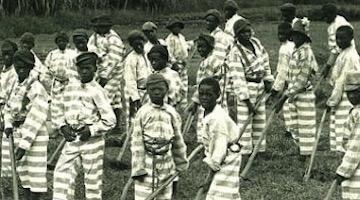 The ‘slavery clause’ made the passage of restrictions targeting Black people like the Black Codes possible as well as convict leasing of the late 19th century.
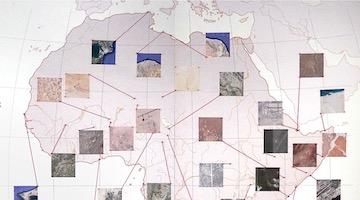 Neither the Organization of African Unity nor the African Union have been able to realize the two most important principles of pan-Africanism: political unity and territorial sovereignty.
 The author examines postwar violence through the activism of Afro-Nicaraguan women and men from the Caribbean coast of the country.
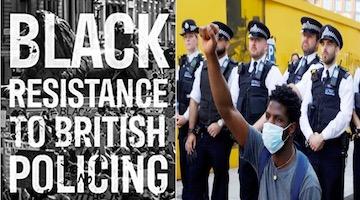 Historically, most of Britain’s policing hasn’t taken place on the British mainland – it has taken place in its colonies.
 King said the best anti-poverty program is a union, where you can fight for your own agenda — somebody doesn’t have to hand it to you.


