A Black Agenda Radio commentary by Glen Ford
It is right to howl at the indignities inflicted on airline passengers – but hypocritical, if the howls come from folks who applaud or remain silent while police in big cities across the country subject hundreds of thousands of Black and Latino males to arbitrary stop and frisks. “As a Black male who is often perceived as Latino or Middle-Eastern, I expect to get stopped and questioned, pulled from the crowd and patted down.”
If the Airport is a Police State, What is the Ghetto?
A Black Agenda Radio commentary by Glen Ford
“The police state has long been in effect in Black America – so long, it is experienced as routine.”
Critics of the Obama administration’s escalating intrusions on the dignity and violations of the privacy of air travelers are certainly correct in raising holy hell with the voyeurs and bullies that run the homeland’s security apparatus. The president’s men are a nasty little bunch, who seem to respond to every hint of danger by shouting “strip!” and fondling everyone within reach. But I must admit that I’m not personally overly upset at the government’s deployment of machinery that electronically renders one naked, or the prospect of more frequent and intrusive pat-downs.
As a Black male who is often perceived as Latino or Middle-Eastern, I expect to get stopped and questioned, pulled from the crowd and patted down. My teenage and young adult years coincided with the frequent hijacking of flights to Cuba. I fit the profile. That coincided with the war on drugs that never ended, a war that treated me like an enemy combatant, and still does. A pair of narcotics detectives used to stop me without fail, among thousands of other train passengers, each week, same time, same day, as I passed through Union Station commuting from New York to Washington.
“La Migra,” the immigration authorities, have challenged me in DC, all dressed up for an expensive business lunch at nigh noon on K Street, demanding to know if I was a citizen. I’ve been pulled off a bus full of other journalists on the tarmac at the airport in Vienna, Austria, by machinegun-toting police, for no other reason than my physical type. My hometown neighborhood is a designated drug zone – like every Black neighborhood in Jersey City, New Jersey – where anyone can be stopped and questioned about their reasons for being in the area; where one is presumed guilty until the police decide you might not be.
“If Philly were New York-sized, the cops would be stopping and frisking 1.2 million people on the streets each year.”
I spend much of my time in New York City, where about 600,000 pedestrians, the vast majority of them Black or Latino and male, will be accosted by cops, by the end of this year. There is an eight-block area in Bedford-Stuyvesant, Brooklyn, where 50,000 stops were made over two years, many if not most involving the same Black, male neighborhood residents over and over again.
But it gets worse. In Philadelphia, a city one-sixth the size of New York, at least 200,000 mostly Black, male pedestrians are stopped each year. That means, if Philly were New York-sized, the cops would be stopping and frisking 1.2 million people on the streets each year, twice as many as in the Big Apple. This is stop-and-frisk gone wild, used as a weapon of racial bullying and control, and as an intake valve for Black mass incarceration, sending huge proportions of Black makes into institutions where they don't render you naked electronically, but up close and personal, at any and all times the prison authorities see fit, and where visiting family members are subject to have their bodily orifices explored.
So, Yes – federal search policies at airports are a sign of a growing police state. But the police state has long been in effect in Black America – so long, it is experienced as routine. I fear that some of those who recoil at heightened airport security also believe that the people in the Bed-Stuys of America get what they deserve.
For Black Agenda Radio, I'm Glen Ford. On the web, go to www.BlackAgendaReport.com.
BAR executive editor Glen Ford can be contacted at Glen.Ford@BlackAgendaReport.com.

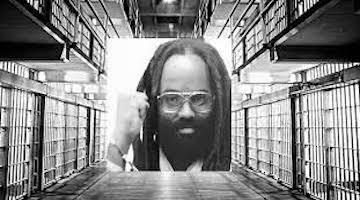 Activists gathered in Philadelphia to march, attend teach-ins and demand freedom for Mumia Abu Jamal, who has spent 35 years behind bars in the death of a policeman.
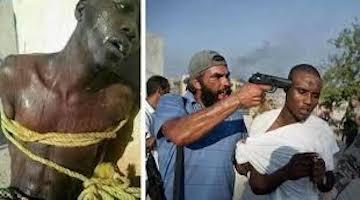 It should have come as no surprise that the same “rebels” the US supported in its 2011 war against Libya are now selling Blacks into slavery at auction, said Robin Philpot, who pub
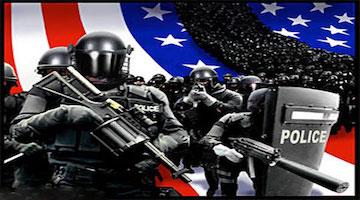 Maria Hamilton, mother of Dontre Hamilton, a mentally challenged young Black man who died in a hail of Milwaukee police gunfire in 2014, was among those that testified at hearings
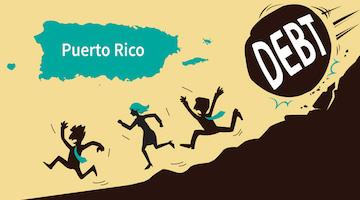 Harsh austerity measures imposed by a federal financial oversight board set Puerto Rico up for disaster, said Lara Merling, a researcher for the Washington-based Center for Economi
 A group of Black students at the University of Chicago is demanding the institution acknowledge its financial roots in the slave system and make reparations to the Black community.



