Black Agenda Report
Black Agenda Report
News, commentary and analysis from the black left.

  • Home
  • Africa
  • African America
  • Education
  • Environment
  • International
  • Media and Culture
  • Political Economy
  • Radio
  • US Politics
  • War and Empire

Malcolm X Would Wage Righteous Struggle Against Black America’s “House Negro” Leaders
20 May 2015
🖨️ Print Article

A Black Agenda Radio commentary by executive editor Glen Ford

Malcolm X “made it legitimate and virtuous to engage in full-throated, soul searching, icon-searing debate” about the internal workings of the Black American polity, setting the stage for the most productive decade in African American history. He “wielded his ‘House Negro’ analogy like a sword, shaming and delegitimizing those Blacks who indentify with and serve oppressive institutions.”

Malcolm X Would Wage Righteous Struggle Against Black America’s “House Negro” Leaders

A Black Agenda Radio commentary by executive editor Glen Ford

“Malcolm broke with the taboos against criticizing Black leadership within ear or eye range of white people.”

Malcolm X would have been 90 years old on Tuesday if he had not been assassinated at the age of 39, on February 21, 1965. His impact on Black America, the African Diaspora, and on human history, is inestimable, but I believe Brother Malcolm’s greatest contribution to the struggle for human dignity lay in his unrelenting critique of the political structures and behavior of Black America. Malcolm X made it legitimate and virtuous to engage in full-throated, soul searching, icon-searing debate about the past, present and future of those who were then called Negroes. Most importantly, he did not give a damn if white people heard all the Black-on-Black commotion, or not – because they were not his audience, even when his arguments were broadcast on white corporate media.

Malcolm broke with the taboos against criticizing Black leadership within ear or eye range of white people, which in the late Fifties and early Sixties was viewed as airing dirty linen in public. Malcolm’s position was that many of these Black leaders were actually creatures of the white power structure and its media. He questioned their loyalties and very legitimacy, and challenged Black folks to choose their own leaders, who would fight uncompromisingly for Black interests.

Malcolm took on the so-called “Big Six” – the NAACP, the National Urban League, CORE, SNCC, Dr. Martin Luther King’s SCLC, and the legendary A. Philip Randolph – who had gained the cooperation of the Kennedy administration to hold the 1963 March on Washington. Malcolm was not impressed. He called it the “Farce on Washington,” and derided the Big Six for diluting Black people’s power by putting “cream in the coffee.” This was not a cat-call for racial exclusion, but a demand for independent Black politics. Millions of Black people, especially the young, understood Malcolm’s meaning, and acted upon it.

“He questioned their loyalties and very legitimacy.”

There is no doubt that Malcolm was a Race Man. But, when it came to his analysis of Black America, he was a “class” man, too. His elevation of the “Field Negro” over the fawning, obsequious “House Negro” was an admonition to resist cooptation into what even Dr. King later recognized was a “burning house.” Malcolm wielded his “House Negro” analogy like a sword, shaming and delegitimizing those Blacks who identify with and serve oppressive institutions, rather than the interests of the masses of the people. Malcolm’s harsh, but lucid, juxtapositons gave clarity of vision to a movement that would shake America to its foundations.

What would Malcolm say, if he were returned to us? His critique would begin with the present sorry state of the Black America, where the House Negro has held sway for the past two generations, with disastrous results. But he would also hear the voices of his great grandchildren stirring among the Field Negroes of Ferguson and Baltimore, and he would say, “Show me a capitalist, and I’ll show you a bloodsucker.” And then he would immediately set about denouncing and organizing against those Black people that have sided with the bloodsuckers.

For Black Agenda Radio, I’m Glen Ford. On the web, go to BlackAgendaReport.com.

BAR executive editor Glen Ford can be contacted at Glen.Ford@BlackAgendaReport.com.


Your browser does not support the audio element.

listen
http://traffic.libsyn.com/blackagendareport/20150520_gf_MalcolmBday.mp3

More Stories


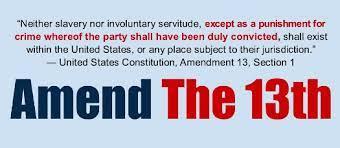
  • Involuntary Servitude in the Prison System
    Black Agenda Radio with Margaret Kimberley
    Involuntary Servitude in the Prison System
    24 Jun 2022
    Savannah Eldrige is the founder of Coaliton to Abolish Slavery in Texas, an organization devoted to ending involuntary servitude in that state. She is also the founder of Be Frank 4 Justice which…
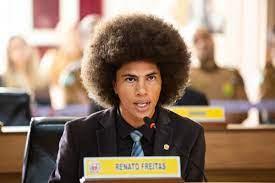
  • Impeachment of Renato Freitas in Brazil
    Black Agenda Radio with Margaret Kimberley
    Impeachment of Renato Freitas in Brazil
    24 Jun 2022
    Renato Freitas is a Black City Councillor in Curitiba, Brazil. He and others joined in national protests over the killing of Congolese immigrant Mugenyi Kabagambe, who was beaten to death after…
  • Fascism and Fake Resistance
    Black Agenda Radio with Margaret Kimberley
    Fascism and Fake Resistance
    24 Jun 2022
    In 2018 the late Glen Ford wrote about the election of Jair Bolsonaro to the Brazilian presidency, and the nature of fascism in Brazil, the U.S. and around the world. Margaret Kimberley reads…
  • The January 6th Scam
    Margaret Kimberley, BAR Executive Editor and Senior Columnist
    The January 6th Scam
    22 Jun 2022
    Democrats are using the hearings investigating the January 6, 2021 attack on the Capitol as one long campaign commercial. They believe that saying the name Trump often enough will ins
  • INTERVIEW: Mrs. Fannie Lou Hamer by Jack O’Dell, 1965
    Editors, The Black Agenda Review
    INTERVIEW: Mrs. Fannie Lou Hamer by Jack O’Dell, 1965
    22 Jun 2022
    A 1965 Freedomways interview with Mrs. Fannie Lou Hamer provides an unvarnished and unsentimental portrait of Mississippi – and of the tasks of the Freedom Movement.
  • Load More
Subscribe
connect with us
about us
contact us