“The U.S.A. decided to annex Cuba economically and Cuba made history by becoming the first country in the world to be a victim of neocolonialism.”
There is a clip circulating on social media from the Fox News program, “The Five,” that provides a brutally succinct statement on the United States’ endgame in Cuba. In the clip, the racist, rightwing host Jesse Watters states: “My banking buddy told me that after we topple Castro, we’re going to be able to buy 100 acres of pristine Cuba coastline for like 50 Gs.” The other hosts snort and guffaw like an inebriated drove of swine. Then the clip ends.
That’s it. That is the entire clip. And that is the US endgame. Watters is right, unfortunately. The end goal of US policy is to deliver the Caribbean republic back to the US business interests that owned all aspects of the Cuban economy before 1959. It is the reason that the US has tried to strangle Cuba by imposing a full economic blockade against the country for sixty-five years, while constantly threatening military action.
In case you don’t remember – or you don’t know – what the Cuban economy looked like before the Revolution, you should read “How U.S. Imperialism Ruled Cuba.” This was a 1965 lecture by Amando G. Entralgo, the Cuban Ambassador to Ghana, delivered at the School of Law in Accra and printed in The Spark: A Socialist Weekly of the African Revolution. Entralgo eloquently describes the US’s continuous attempts, since the end of the 19th century, to control Cuba politically and economically, while throttling its sovereignty. The US used the struggle of Cuba’s Liberation Army in its first war of independence against Spain to both defeat Spain and take over Spain’s colonies, Puerto Rico, Philippines, and Cuba. And it was able to maintain this control for more than sixty years – until the successful people’s Revolution in 1859.
Regrettably, Entralgo’s analysis affirms Jesse Watters’ remarks: the U.S. goal in Cuba is, quite simply, about theft of land and resources; about bankers and cash; about counter-revolution. We reprint “Amando G. Entralgo’s lecture “How U.S. Imperialism Ruled Cuba” below.
How U.S. Imperialism Ruled Cuba
Armando G. Entralgo
The U.S.A opposed the independence of Cuba from the Spanish yoke throughout the first part of the XIX Century. During the 30 years from 1868 to 1898 its position did not change. When the first Liberation War of the Cuban people against Spanish colonialism started in 1868, the U.S.A. government refused to grant belligerent rights to the Cuban freedom fighters.
In October 1871 the U.S.A. President Ulysses S. Grant proclaimed all those who were fighting for independence of Cuba criminals. In 1895 Cuba’s second war of liberation started; again the U.S.A. Government declared its neutrality and refused belligerent rights to the Cuban liberation movement.
Cleveland, the U.S. President, negotiated with Spain for the sale of Cuba to the U.S.A. President Mackinley, elected with the backing of the most powerful U.S. monopolies, was more active than his predecessor on matters pertaining to Cuba.
TWO ALTERNATIVES
While the U.S. Press was daily insulting Spain, McKinley offered two alternatives to the Madrid Government: either sell Cuba to the U.S. for 300 million dollars or war.
Spain accepted neither.
It was at this time that the American warship Maine was very badly damaged by a mysterious explosion in the harbour of Havana, and 266 sailors died.
The origins of the explosion are still unknown, but it provided a pretext for the U.S. Congress to approve the famous Joint Resolution, saying on the one hand that “the people of Cuba must be free and independent” and on the other requesting Spain to renounce its sovereignty over Cuba.
The resolution allowed the U.S. President to employ the whole of the American Army for any purpose. Naturally, a few days later, Spain was at war with the U.S.A.
The U.S. military plan consisted of a naval blockade of Cuba to prevent entry of food and materials,; the landing of troops near the city of Santiago de Cuba (capital of Oriente Province); the neutralization or destruction of the Spanish Navy and then the landing of troops in Havana.
INSTRUCTIONS
General Miles in charge of the operation received the following instructions from the U.S. Under-Secreaty of War Mr. J. C. Breckenridge:
The island of Cuba is formed by white people, blacks, Asiatics and their mixed races. It is quite clear that to annex such a people within our Union would be sheer madness and before we carry out such an action we must clear the country, even although we use the same methods used by God in the cities of Sodom and Gomorrah…
We must destroy everything within the range of our artillery. We concentrate the blockage in order that hunger and its eternal companion, the plague come to decimate the population and waste away the Cuban Liberation Army…
“This army must be used constantly in scouting operations and actions in the rearguard of the enemy in order to expose it to crossfire and we must try that the most dangerous and desperate operations are given to them.
In July, American troops landed near Santiago de Cuba, protected by the Cuban troops of General Calixto Garcia. Cuban assistance enabled the U.S. General Shafter to take the city and compel the Spanish to surrender.
The Spanish fleet was destroyed in the Bay of Santiago de Cuba by the Americans. More or less about the same time, another Spanish fleet was destroyed in the Philippines and the U.S. Army landed in Puerto Rico.
PARIS TREATY
Spain was unable to keep up the struggle and at the beginning of August asked for a peace settlement. On December 10, 1898 the Treaty of Paris was signed without the participation of the representatives of the Cuba Liberation Forces who had never been officially recognised by the U.S.A.
On January 1, 1899, Spain handed over Cuba, Puerto Rico, Guam and the Philippines to the U.S. Sixty years had to elapse before one of these islands, Cuba, was able to free herself from U.S. domination. The other islands are still suffering from the consequences of the Paris Treaty: Puerto Rico is a colony, the Philippines a neo-colony.
U.S. HANDS
Thus the government of Cuba fell into the hands of the U.S.A. instead of into the hands of the Cubans who had fought two bloody independence wars.
The U.S. military Government in Cuba was under the absolute control of a U.S. officer who drafted decrees and ruled the country by military law.
Each province (six in all and one for Havana) was declared a military zone, each ruled by a U.S. general. U.S. troops occupied the whole of the country. The vacuum left by the Spanish colonialism was filled by U.S. imperialism.
The U.S.A. remained for four years. During that time they introduced changes to prepare the way for permanent domination.
Every job within the Civil Service was given to conservatives who had never fought against Spain. The people, the soldiers and the officers of the Army of Liberation, who had fought against Spain, for 30 years were excluded, especially the black Cubans.
A bitter enemy of the Cuban independence was appointed Minister of Agriculture, Trade and Public Works, despite popular protest. North American civil servants and military men surrounded themselves with the most stubborn and anti-Cuba Spanish bourgeoisie, and “annexationists” who for 30 years called for the annexation of Cuba to the U.S.A
In May 1889 the U.S. Military Government ordered the disbanding of the Cuban Liberation Army and the surrender of its arms and war material to the Government. They proposed to organize a mercenary body organized by U.S. military men to carry out repressive operations.
POLICE FORCE
The New York Chief of Police came to Havana to organize a U.S. type police force. In country areas a rural guard was formed to protect U.S. investments in the sugar industry.
UNITED STATES EXPLOITATION
Between 1898 and 1902 enormous areas of Cuban land passed into the hands of Americans, and part of Cuba’s mineral resources came under the control of American firms.
North American capital started building a railway crossing the Oriente province. In October 1899 the newspaper Times from Minnesota said:
There is not much left for the inhabitants of Cuba except to become paid workers for North America investors…soon they will be more in debt than they have ever been previously.
That is how U.S. imperialist exploitation of Cuba started. We are going now to explain its origins, development and consequences.
THE FIRST STEP
Cuba was only the first step in the U.S. expansionist process. In 1928 the North American sociologist Harry Elmer Barnes said:
From Cuba we expanded our economic and political penetration to other parts of Central and South America, specially to Mexico, Haiti, Santo Domingo, Nicaragua, Honduras and Panama. During the same period we took to the Pacific Ocean and we occupied the Hawaii Islands, the Philippines and China. The 1914-18 World War provided us with very good investments in the Allied countries and the European loans made us a powerful factor in the European Banking system. When oil was discovered in Mesopotamia and the Middle East our interest spread to the Middle East as well. Rubber and other products brought us to Latin American and other parts of the world. Looks like there is no limitation to the diversity and expansion of our future economic investments in the world.
Before 1898 economic relations between Cuba and the U.S.A. were basically commercial and centered on the control of sugar markets. U.S. investments were not more than 50 million dollars. The railways were in the hands of British companies. Many other firms were Spanish and not a single U.S. bank operated in Cuba.
But as soon as the Hispano America War ended, a veritable plague of Yankee adventurers, investors and speculators came to Cuba. It is estimated that in 1905 13,000 North Americans were in Cuba engaged in trade and business.
They had already brought land worth more than 50 million dollars. One single firm bought more than 50,000 acres in Oriente Province and built the biggest sugar mill known at the time, together with other purchases led to the formation, much later of the monopoly Cuban American Sugar Company.
The North American investments ranged from sugar to tobacco, railways, public services and mining. Already by 1906 investments totaled 200 million dollars. At that time North American capital had to compete against Spanish, English, French and German capital.
The sugar boom and the economic and financial crisis after the war allowed the whole of the financial system in Cuba to fall into the hands of the U.S. banks: land, sugar mills, cattle, buildings –everything came under the control of the North American monopolies; U.S. imperialism became master of the Cuba economy.
IN U.S. HANDS
In 1927, out of the 175 sugar mills in production, not less than 75 were U.S. owed and the 62.5 per cent of that year’s harvest was in their hands. More than 40 percent of Cuba was controlled by U.S. companies like the American Sugar Co. (Over 230,000 acres) and the United Fruit Co. (224,000 acres)!
Before 1930 gas and electrical services belonged to an American company, the Electrical Bond and Share. The telephone system was owned by the International Telephone and Telegraph Co. Half the railways were under the control of the National City Bank. The mineral wealth was monopolised by the Bethlehem Steel Corporation and other firms.
The first loan to the Republic of Cuba was of 35 million dollars at 5 percent. By the time it was finally repaid, the Cuban people had paid about 180 million dollars.
Then more and more loans were negotiated by the Morgan Bank. At that time the investments of monopolists Yankee capital in Cuba were, according to conservative estimates, about 1,500 million dollars.
Official U.S. figures give only book value of the direct investments for major firms showed 774 million dollars of U.S. capital in Cuba up to 1956.
In 1959, at the time of the victory of the Revolution, one single U.S. company, Atlantica del Golfo, controlled about 476,000 acres of land; the Cuban American Sugar Mills controlled about 280,000 acres; the United Fruit Co. about 218,000 acres and the General Sugar Estates a similar amount.
American companies controlled areas potentially rich in oil as well as the whole system of distribution and sales, on behalf of the Standard Oil Co. and other firms. The key sectors of the Cuban economy were under the control of U.S. monopoly capital.
In fact, the colonialist exploitation of Cuba was carried out to the extreme.
Eighty per cent of the imperialist capital was invested in sugar and in the colonial sectors of the economy which are usually the most profitable and the safest from the capitalist point of view, although they do not serve the interests of a healthy and balanced development.
This had important consequences. The tendency to invest in sugar distorted the Cuban economy, making it dependent upon the ups and down of the U.S. and world sugar markets.
The amount of land given over to sugar or held in reserve prevented the development of agricultural production and rural full employment, and also prevented the creation of an appropriate internal market beneficial to the development of an urban industry..
The internal market was monopolized by U.S. exporters. Cuba – an agricultural country – had to import not only industrial consumer goods but even up to 30 percent of food stuffs.
Capital re-invested in the sugar industry, for instance, was spent in the U.S.A. not in Cuba, because it was in the U.S.A. that everything was produced, from screws to the most complicated machine.
Imperialist capital was able to make large profits because wages and working conditions were lower in Cuba than in the U.S.A. U.S. capital was able to develop under conditions in which the labour market was always in its favour. There was always a surplus of labor. Such a situation depressed the labour market and lowered the wages paid by U.S. companies, especially sugar.
Furthermore, the U.S. companies, with the cooperation of weak Cuban Governments, between 1912 and 1925 brought to Cuba at least 252,000 Jamaican and Haitian labourers to employ in the cutting of sugar cane, paying them starvation wages.
These labourers were exploited even more than the Cuban workers themselves and became a reserve army used by the U.S. monopolist to depress the wages and further increase the profits of the imperialists.
At this point I should say that although the typically imperialist methods of capital export became the basic means for the exploitation of the Cuba people, this did not preclude the old one: extortion through trade.
The high level of productivity of U.S. capitalism ruled out any possibility of Cuban competition. Furthermore, the U.S.A imposed a preferential tariff system which not only kept any other foreign competitors out of the Cuban market but also prevented the growth of Cuban industries.
Two “Reciprocity” treaties signed in 1902 and 1934 accelerated the process of the concentration of the external trade of Cuba in U.S. hands.
No Cuban Government prior to the Revolution led by Fidel Castro was able to oppose Yankee imperialism in order to defend the interests of Cuban industry.
TRUE CUBA
The unprecedented exploitation of the working class, the structural distortion of the national economy of production and export of a single product, and the lack of an intensive and balanced development of the Cuba economy clearly demonstrate the dramatic consequences of sixty years of U.S. imperialist domination on Cuba.
Cuba in 1958 was not just the Cuba of its capital Havana, full of skyscrapers, villas, avenues and luxury shops. The true Cuba was the Cuba which had 33 per cent unemployed, semi-employed or employed without any payment.
That is to say, out of a total of 2.2 million 738,000 did not have a proper job. In the Oriente Province, the cradle of the Revolution, the annual unemployment average was of 29 per cent of the total labor force.
FIRST CONSTITUTION
A 1953 census proved that 62.5 per cent of the rural population was living in huts with guano roofs and beaten earth floor; 52.8 per cent of these huts did not have toilet facilities; 87.9 per cent did not have piped water or bathrooms; 84.1 percent did not have electricity.
In 1957, another study carried out amongst Cuba rural workers gave the following results; 14 per cent of the workers in the survey had or had had tuberculosis; 36 percent were suffering from parasites and 4 percent were illiterate.
This situation in the economic field had a political counterpart; when Cuba was granted her formal independence in 1902 she saw her sovereign rights set out in the First Cuban Constitution curtailed by the inclusion of the notorious Platt Amendment, brain-child of President Theodore Roosevelet and Senator Orville Platt, by which the U.S.A. reserved the right to intervene directly in Cuban internal affairs, and even to establish an occupation Government.
NEO-COLONIALISM
The Platt Amendment was the best way for U.S. imperialism to dominate Cuba without the difficulties of direct rule or annexation. For a time the U.S.A. considered the latter possibility, but rejected it. Why?
Firstly, because between 1898 and 1902 the balance of forces and contradictions between the imperialist forces were not favorable to the U.S.A.
Secondly, even among the American people there was sympathy and admiration for the Cuban people who had so courageously fought for independence. Annexation would have created internal political complications within the U.S.A.
Thirdly – and this is very important – the U.S. imperialists well knew that the Cuban people after fighting two wars and shedding their blood for 30 years to achieve the independence would not tamely accept a merce change of colonial ruler after all their sacrifice.
They knew that it was possible to achieve the same ends without so much risk. Pure and simple annexation is never an end in itself for imperialism. This is only the cheapest, easiest, and safest method available.
But there are many other methods to carry out economic annexation, which in fact is the main objective of imperialism.
It is possible to obtain economic control over a country without political annexation. Therefore, the U.S.A. decided to annex Cuba economically and Cuba made history by becoming the first country in the world to be a victim of neocolonialism– a system of hidden exploitation used on a great scale by the imperialist powers after the second World War in Africa and Asia.
THE VICTORY
The Cuban experience enabled U.S. Big Business to perfect the system in order to use it in other Latin American Republics.
So the regime of U.S. Military occupation ended on May 20, 1902 and the Republic of Cuba was officially established. A year later according to the Platt Amendment, the U.S.A. were granted a 99 years lease to install a naval base in Cuba territory, Guantanamo.
U.S. imperialism was able to organize an ultra-reactionary alliance with the big land-owners, the importers and some sections of the national bourgeoisie, which kept Cuba under neo-colonialist rule up to the victory of the Revolution, led by Fidel Castro in 1959.
Armando G. Entralgo, “How U.S. Imperialism Ruled Cuba,” The Spark: A Socialist Weekly of the African Revolution, 9 July 1965

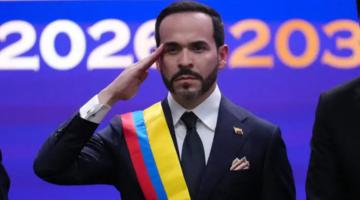 Colombia's new president has ties to paramilitaries and drug traffickers, but Trump's endorsement swept his crimes aside as he embraces Washington's agenda, including enhancing relations with Israel…
 The American's lawyers, led by Baltasar Garzón, denounce a "political persecution" by Trump for his support of Palestine. The government will have to decide whether to extradite him.
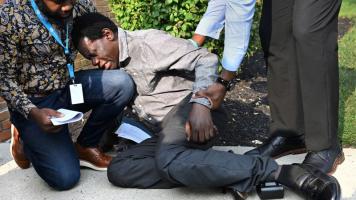 The Supreme Court ruled in favor of the Trump administration cancellation of Temporary Protected Status (TPS) for more than 350,000 Haitians in the U.S. TPS holders can no longer work legally, are…
 In this week’s segment we discuss how the U.S. controls other nations in the hemisphere such as Guyana, which become de facto US colonies and assist in imposing imperial policies in the region. But…


