The U.S.-EU-NATO axis remains intact, and its commitment to militarism represents an existential threat to the world.
Margaret Kimberley: This is Margaret Kimberley, Black Agenda Report Executive Editor. I'm joined by Ajamu Baraka, Black Agenda Report contributing editor. We'll be discussing the renewal of the U.S. war against Iran, but also the larger connections with U.S. actions worldwide, and analyze the U.S.-EU-NATO axis of domination and its continued commitment to war and to militarism. Thanks for joining me again, Ajamu.
Ajamu Baraka: It's my pleasure to be here. Thank you, Margaret.
MK: As you know, the U.S. first attacked Iran on February 28 and did so underestimating Iran's ability to defend itself. Iran then closed the Strait of Hormuz. The U.S. was forced to enter into talks with Iran, which ended with a Memorandum of Understanding. And I think anyone who is serious realized that this was something not to be trusted, and that the U.S. commitment to regime change and control of the region was going to continue. So, we see now that the U.S. attacks on Iran have begun again, and Iran is responding again, and also against U.S. allies in the region, like Saudi Arabia. Talk to us about why this the claims of wanting peace, of wanting an agreement, are false, and why the U.S. and its partner Israel are continuing this conflict.
AB: The U.S. is committed with the full support of Israel to dominating West Asia, or what is referred to as the Middle East. Control of this area is seen as key to maintaining the material foundations for continued global Western hegemony. The only nation positioned to undermine that objective is Iran and that is why it has been in the crosshairs of U.S. and Israeli aggression for the last four decades. The kinetic war that was launched by the U.S. and Israel was the culmination of the systematic attempts to undermine and subvert the Iranian state. From the brutal eight-year war with Iraq, illegal sanctions, direct and indirect physical attacks, Iran was never allowed to operate as a "quote unquote" normal state.
However, with the direct military attack on February 28, it became clear after the decapitation strikes and initial regrouping that the Iranian leadership was forced into, it became dramatically clear that the advice from Benjamin Netanyahu, Israeli intelligence and more idealistic elements of U.S. intelligence, had trapped the Trump into one of the worst foreign policy miscalculations in U.S. history.
The Iranians had been preparing for this eventual conflict for more than four decades. Absorbing the initial assault, the leadership brilliantly executed their decentralized plan for defending the nation with a horizontal defense and offensive plan that seemed to catch both Israel and the U.S. off guard. That led, of course, as you indicated in your question, to these various pauses first from the first 12-day war, then from this latest war launched on February 28th, and so now we're back into the kinetic phase again.
Many of us agree with your assessment that the MOU was only going to be a pause, that the MOU which was being framed as a surrender document by the liberal idealists that kelp popping up on all of the increasingly monetized “alternative press,” was missing not only the imperative for the U.S. not to abandon its attempt to maintain control of the region but the mindset of the white male decision-makers in the U.S. and Israel - which has now become part of the collective white West.
There were elements in that MOU that we knew were never going to be implemented. Like, for example, the $300 billion investment fund, a cynical incentive for the still more naive elements of the Iranian process who still believed or hoped that peaceful coexistence was possible with an adversary that didn’t see them as equal human beings. The language around the control of the Straits of Hormuz was, I think, purposely ambiguous. It was mainly just a pause to regroup and to prepare themselves for the next phase of the conflict, and that's where we are today. It's important that people understand that and are reminded that this war has been a significant departure from Western practice since the end of the second imperialist war or WWII. The violence of the white West to reclaim control over their colonial territories or to imposed its will was usually framed in grandiose terms related to white saviorism, the struggle to defend democracy, anti-communism etc. The attack on Iran did not bother to justify itself in those terms. The attack on Iran has been defined as a war against peace, a war of choice which makes all aspects of the war, war crimes. These are the elements that came out of the Second World War reflected in the Nuremberg principles that were the basis for a number of Nazis facing the ultimate penalty, which was in fact the death penalty.
This was how serious the international community was taking this kind of action coming out of the carnage of the Second World War. But yet, the U.S. has engaged in this war of choice in the midst of hosting the World Cup and pretending like everything was normal as it was engaging in this international criminal activity with no consequences, no real response from the UN Security Council because of the U.S. ability to veto, no condemnation from European nations. In fact, the only condemnation that took place was when the Trump administration condemned the European nations for not falling in line and being more aggressive in their support for this illegal conflict.
And so this is why we say that it was premature for people to suggest that the U.S. was in irreversible decline, that it could not assert itself physically, militarily, and that there was some kind of split between the European nations and the U.S. that would result in the U.S. not having the ability to advance its interests by any means necessary. What we see is, in fact, the U.S. EU NATO axis of domination is still in place, and still able to produce a tremendous amount of suffering and damage against peoples around the world, and in this case specifically against the Iranians, and with impunity.
MK: And what does this mean for the U.S. allies? They're called allies but I consider them vassal states, such as Saudi Arabia. They are in a complicated position now, having tied their fortunes to the U.S. and now they are under attack. What have U.S. actions done? How have they impacted these countries, which are thought to be U.S. allies?
AB: Well, those vassal states are making some very serious strategic miscalculations on their own. It seemed like the right-wing Gulf monarchies had discovered that outside of their money the U.S. did not respect them at all because not only did the U.S. military presence not provide them any real security but when the missiles started to fly it appeared that the U.S. was more concerned with providing defense for Israel than the Gulf States that were housing U.S. bases and being used as launching pads for the assaults on Iran.
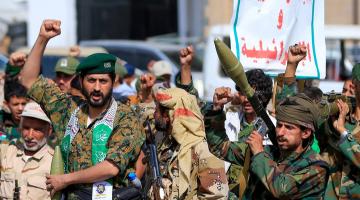
Yet, despite that, we have witnessed some strange behavior from the Gulf states. It seemed like up until a few days ago the Saudis were moderating their positions somewhat on the new power configurations emerging in the Gulf. The Saudis even sent a representative to the massive funeral for the leader in Iran, Ayatollah Khamenei, but in the last few days, we see that the Saudis launched attacks again in Yemen and have provoked the response from the Ansar Allah movement signifying that the Saudis have joined the U.S. in a national suicide mission by regionalizing the conflict, which could end up with the closure of the Bab al-Mandab Strait and with the possibility of an intensification of the conflict in Yemen itself. It makes no strategic sense for a nation that will have to live in the region once the U.S. is forced to withdraw at some point in the near future.
We know that the UAE moves in conjunction with Israel and the U.S., but the Saudis have been a little bit ambiguous, recognizing the precarious situation that they have found themselves in, the Saudis and even the Qataris. So what appears to be unfolding now, Margaret, is something that seems to be almost irrational. The strategic objective of it is not obvious at all. It seems that the Trump administration has entrapped itself on this ladder of escalation that it can't get off of and the Saudis and Qataris have joined him.
MK: And what are the connections with U.S. actions against Iran with U.S. actions elsewhere in the world? I'm thinking specifically about this hemisphere, the Americas. The U.S. kidnapped the president of Venezuela, is in the process of consolidating an occupation after an earthquake, allegedly helping provide aid to Venezuela, but actually consolidating their occupation, and stealing their oil revenues. The ramping up of the blockade against Cuba, depriving it of oil, and, of course, we know all the humanitarian effects of that action. What are the connections? We also have to mention the interventions in other countries in the region in their elections in Colombia and recently in Peru. What are the connections with what the U.S. is doing in this hemisphere with its actions in West Asia?
AB: The connection, Margaret, from my perspective is the advancement and consolidation of a global fascist agenda on the part of the U.S. on behalf of Western capitalist interests, using militarism as the instrument to counter their decline in economic power, with the fantasy that they are going to be able to maintain Western European hegemony. The psychopathology of white supremacy prevents them from seeing the new realities that they are facing. This makes the West and specifically the U.S. the existential threat to global humanity that they are. The U.S. and Europe are caught, immersed in a fantasy where they are still operating in the late 19th century, consolidating their colonial empires, and white imperial power was unchallenged.
We see that in Europe, there's been now a commitment to a form of military Keynesianism to try to address the economic crisis that most of the European nations find themselves in. That is, they're going to now utilize increases in military spending to try to revive their economies, with the Germans being the most dramatic in this new move, and so we see the same thing happening with the request on the part of the Trump administration to increase the military budget of the U.S. by another $500 billion for 2027 and on top of the emergency requests that the administration is still attempting to secure for their ill-advised war in Iran.
So this commitment to militarism, this commitment to the recolonization process on the part of the U.S. in the Americas are all interconnected. They are interconnected because the global economy is interconnected, because the political structures and institutions are now interconnected globally, and so therefore, the ability of a state like the U.S. to project a fascistic response to the crisis of capitalism now has this global manifestation, and so this is what we are seeing unfolding, Margaret, that they have decided to wage war, and they have again decided that war globally and repression domestically are the tools that they're going to deploy in order to attempt in the fantasy that they can stave off historical development and continue with the hegemony, the Western hegemony that they have experienced over the last 500 plus years. It is a dangerous fantasy that is plunging the entire world into conflict.
MK: I touched briefly on Venezuela. We and others at Black Agenda Report have pointed out the increasing control that the U.S. is exerting against the interim president Delcy Rodriguez and the Venezuelan state, and there's a lot of debate about that, and some I'll just call denial about that situation, wishful thinking if you will, that the Bolivarian Revolution exists, which I don't think is possible if you have Israelis, if you have the IDF allegedly helping with earthquake recovery, but also meeting with the president, among other things. What are your thoughts about the left, who've always been in support of Venezuela, and the reluctance of many people to acknowledge what has happened since the January 3rd kidnapping.
AB: Well, like yourself, I believe that of course the primary focus should be on these imperialist machinations that created the conditions that the Bolivarian process is facing in Venezuela. The movement we just discussed related to how the U.S. is attempting to reestablish itself throughout the region and the different modalities that it is using: direct intervention, destabilization, a siege of Cuba, and this attempt in Venezuela to use a different approach by seizing critical infrastructure, by persuading through force the current government to cooperate with what appears to be for many of us a surrendering of national sovereignty. It is a very painful thing to watch unfold, but it is absolutely critical for those of us who are involved in anti-imperialist struggle, those of us who are representing oppressed communities, who engage in struggles against these same oppressive forces, that we have no room for sentimentality. We've got to look at things as they are to the extent that we can understand them.
And so, when we look at what is unfolding in Venezuela, we have to center a perspective informed by issues of class, the state and international balance of forces in the struggle for socialist revolution. We understand that imperialism is the cause of the internal pressures that are shaping and sharpening internal contradictions. Yet, we also have to understand that while imperialism represents the external forces shaping subjective and objective forces, it is the internal class and political conditions and contradictions that serve as the real basis of change, a methodological approach that seems to have been forgotten by many.
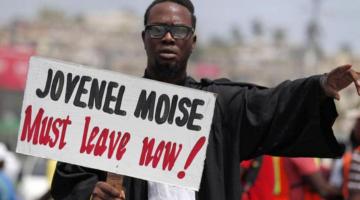
And so, when we look at what is happening in terms of the nature of the leadership in that country, there are legitimate questions to be raised in terms of the kinds of policies being pursued. When you look at the fact that utilizing a kind of shock doctrine that we saw deployed into Haiti with the earthquake there more than a decade ago, we see that the same kinds of opportunities are being taken advantage of by the U.S. in Venezuela.
Just the other day, we found that the U.S. is now taking over one of the main ports in Venezuela, it has, in essence, taken over control of the international airport. It has continued to exercise control over Venezuela's main source of revenue, which is the petroleum industry. And so, one wonders that if the U.S. is controlling the main source of the economy, if it's now controlling, it appears without, I guess, permission. I guess they were given the international airport, one of the main ports. If it's true that U.S. helicopters are flying around unencumbered by any kind of requirement to get permission or cooperation from the Venezuelan government one has to raise the question to what degree does sovereignty still exist in Venezuela? It's not a question that suggests that one will turn against the process in Venezuela, but one has to be sober in the analysis of what may, in fact, be unfolding.
We understand the objective of U.S. policy, and we understand the key role of Venezuela for the entire socialist oriented liberatory process in the Americas; therefore, the control of Venezuela would be very, very important. The very fact that even the right wing oppositional leader, Maria Carina Machado, was not allowed to travel into Venezuela, both by the current government, but also importantly by the U.S. You know, it says a lot in terms of who is actually making the calls in that country. So it is not undermining or questioning the Bolivarian process by raising these questions, but these questions have to be raised, and we don't need to get off into a whole long and painful discourse around what is unfolding.
Our responsibility for those of us in the imperial core, is, in fact, to continue to agitate against interventions on the part of the U.S., to defend Venezuela's self-determination and sovereignty, but at the same time we have to keep our eyes wide open, and not allow ourselves to be manipulated into not recognizing that there are forces in the country who define themselves as patriotic servants of the revolutionary people who are not in alignment with what is unfolding in the country. That is a process that they are going to have to work out themselves, but it is indeed troubling and does not bode well for the immediate future of the Bolivarian process. In the meantime, we will continue in the imperialist core to build our forces and struggle to liberate this region and world from the grip of the U.S./EU/NATO Axis of Domination.
MK: Thank you again, Ajamu
AB: My pleasure.
Ajamu Baraka is an editor and contributing columnist for the Black Agenda Report. He is the Director of the North-South Project for People(s)-Centered Human Rights and serves on the Executive Committee of the U.S. Peace Council and leadership body of the U.S.-based United National Anti-War Coalition (UNAC).
Margaret Kimberley is the author of Prejudential: Black America and the Presidents. You can support her work on Patreon and also find it on Twitter, Bluesky, and Telegram platforms. She can be reached via email at margaret.kimberley@blackagendareport.com.



 "Find me another 11,780 votes?" is the latest from BAR's Poet-in-Residence.
 The Yemeni attack involved dozens of ballistic missiles and drones, targeting sites from which Saudi warplanes took off to strike Yemen.
 Responsibility for Haiti's deteriorating conditions does not rest on the Haitian masses. A population does not rise up spontaneously but depends on political movements and organizations to build it.
 “DHS needs to be dismantled and held accountable for this complete inhumanity,” said Rep. Pramila Jayapal.


