Louisiana Gov. Jeff Landry, shown on Jan. 15, 2024, signed eight bills on crime passed during a special legislative session last month. POOL PHOTO BY MICHAEL JOHNSON
Louisiana is one of several states passing punitive measures in response to fears stoked by orchestrated crime panics.
Originally published in The Marshall Project.
For decades, Louisiana had the nation’s highest rate of incarceration. And — given that the U.S. is among the most carceral countries on the planet — the state arguably spent some 20 years as the “prison capital” of the world.
Louisiana lost that distinction, by a hair, after a series of 2017 reforms successfully shrank the prison population by a third. (In recent years, it has jockeyed back and forth with a few states for the title.)
But “prison capital of the world” is a sobriquet the state is likely to regain after state legislators sent a suite of punitive changes to Gov. Jeff Landry’s desk this week. The new laws would end the possibility of parole for most new convictions and increase how much of a sentence a person must serve before being released for good behavior, from 35% of the sentence to 85%. The changes also do away with some of the tools local prosecutors had for undoing wrongful convictions, which are more common in Louisiana than in the rest of the U.S.
Criminal justice reform advocates have pushed back on the legislation, arguing that people released on parole are less likely to commit new crimes than those who serve full prison terms. In 2023, fewer than 400 people, or about 1% of the state’s prisoners, were granted parole. There’s also evidence that getting rid of parole, alongside time reductions for good behavior behind bars, makes prisons more dangerous by removing the incentives for people to pursue rehabilitative programming and avoid disciplinary violations.
Another new Louisiana law mandates that 17-year-olds accused of crimes be charged as adults, rather than in the juvenile justice system, reversing a 2017 reform that did the opposite. Proponents of the change say that the state’s youth jails became more volatile with the introduction of 17-year-olds. Critics note that the state already has mechanisms for transferring 17-year-olds accused of serious crimes into the adult system, so the change will mostly serve to criminalize teens charged with petty crimes.
The package of laws included other components that may not directly increase the prison population, but are designed to signal a “tough” approach to crime. This includes authorizing electrocution and nitrogen gas as execution methods, and making public the criminal records of minors accused of certain crimes. In total, the new suite of laws likely makes Louisiana the most punitive justice system in the nation, with harsher penalties than it had even before the bipartisan reforms passed in 2017. The new changes likely will bring a substantial cost to taxpayers.
Louisiana is not alone. Across the country, state legislatures are rapidly advancing punitive bills and rolling back criminal justice reforms, largely in response to fears about crime. In Georgia, Senate Bill 63 — which has passed the state Senate and House — would add 30 charges to the list of crimes that require judges to impose cash bail to release a person from jail pretrial. That list includes many minor and nonviolent crimes like shoplifting and forgery, if they’re not a first offense. The bill would effectively ban charitable bail funds in the state, in what some have interpreted as a direct attack on the “Stop Cop City” protest movement, which has relied on bail funds to get arrested activists out of jail.
In Kentucky, a similar measure to restrict charitable bail funds passed in the state House and is pending in the Senate. It’s part of a broader package that would also stiffen penalties for the sale of fentanyl and some gun crimes, and impose a life sentence without parole on anyone convicted of a violent offense for a third time. The bill would also create a new law against “unlawful camping,” an effort aimed at policing unhoused people.
Both Kentucky and Georgia have experienced serious issues with overcrowding and understaffing in jails and prisons in recent years, problems that the pending laws are likely to make worse.
This week the Washington, D.C., city council also passed a “massive” crime bill that, similarly, “puts the liberal city on a track toward harsher punishments for a range of crimes from illegal gun possession to retail theft,” according to The Washington Post. The new criminal code, which has increasingly become a political football in the nation’s capital, has to be approved by Congress to take permanent effect.
While they vary dramatically in scope and approach, punitive legislative efforts are also underway in Oregon, Tennessee, Vermont and elsewhere. As in Louisiana, many of these legislative efforts aim to undo reforms passed in recent years.
Aswad Thomas, the National Director for Crime Survivors for Safety and Justice, told me this week that some of these efforts come as states cut resources “for victims to access healing and recovery services” and invest more in policing and incarceration. “That’s going to have a ripple effect on domestic violence victims, sexual assault victims, and victims of gun violence,” Thomas said.
For example, in Louisiana, the governor’s proposed budget — unveiled at the same time as the special session about crime — cuts $7 million in funding for domestic violence shelters in a state where more than half of all murdered women are killed by an intimate partner. “Every single person we are serving is a victim of crime,” the director of one shelter told the Louisiana Illuminator.
Jamiles Lartey is a New Orleans-based staff writer for The Marshall Project. Previously, he worked as a reporter for the Guardian covering issues of criminal justice, race and policing. Jamiles was a member of the team behind the award-winning online database “The Counted,” tracking police violence in 2015 and 2016. In 2016, he was named “Michael J. Feeney Emerging Journalist of the Year” by the National Association of Black Journalists.





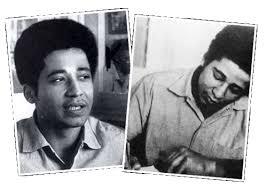 Kalonji Changa is co-founder of Black Power Media and founder of FTP Movement. He joins us from Atlanta to talk about Black August, which has been a fixture of the liberation movement for 43 years.
 Irene Asuwa joins us from Nairobi, Kenya. She is co-convener of Ecological Justice and supports outreach at Ukombozi Library. We discuss the recent presidential election in that country.
 In a recent webinar hosted by the United National Antiwar Coalition (UNAC), Margaret Kimberley discussed what she witnessed during the commemoration events for the 43rd anniversary of the Sandinista…
 Why would Black people laud the FBI or criticize protection against self-incrimination? The FBI search of Donald Trump's home has reawakened Trump Derangement Syndrome.
 To commemorate Black August and in memory of the forty-two men massacred during the September 13, 1971 Attica Prison uprising we reproduce below an essay and petition from The Black Panther…


