
Black Agenda Report
Black Agenda Report
News, commentary and analysis from the black left.

  • Home
  • Africa
  • African America
  • Education
  • Environment
  • International
  • Media and Culture
  • Political Economy
  • Radio
  • US Politics
  • War and Empire

A Racial Reckoning at Doctors Without Borders
Mara Kardas-Nelson, Ngozi Cole, Sean Campbell
26 Sep 2021
🖨️ Print Article
A Racial Reckoning at Doctors Without Borders

The Nobel Peace Prize winning organization Doctors Without Borders has been accused of racist policies which privilege so-called ex-pat workers from North America and Europe over local medical staff working in the global south. Local workers speak of mistreatment, wage discrimination, and being unprotected during conflicts and pandemics.

For decades, Doctors Without Borders has been admired for bringing desperately needed medical care to crises around the globe and pioneering modern-day humanitarian aid. It’s an organization with radical roots, promising to do whatever it takes to deliver life-saving care to people in need. But now, it’s struggling to address institutional racism.

The organization, also known by its French acronym MSF, has about 63,000 people working in 88 countries. While foreign doctors parachuting into crisis zones get most of the attention, 90 percent of the work is being done by local health workers. 

In the summer of 2020, more than 1,000 current and former staffers wrote a letter calling out institutional racism at MSF. They say that MSF operates a two-tiered tiered system that favors  foreign doctors, or expat doctors, over local health workers. 

On the eve of MSF’s 50th anniversary, reporters Mara Kardas-Nelson, Ngozi Cole and Sean Campbell talked to about 100 current and former MSF workers to investigate how deep these issues run. We meet Dr. Indira Govender, a South African doctor who in 2011 accepted what she thought was her dream job with MSF in South Africa, only to get a front-row seat to the organization’s institutional racism. Even though she’s officially the second-in-command of her project, she says it feels like a select group of European expats and White South Africans are running the show.  

Then, Kardas-Nelson and Cole take us inside the inequities MSF staffers experienced during the 2014 Ebola outbreak in Sierra Leone. While expat doctors had their meals together and socialized, local health workers were left out. But inequities ran deeper. If expat doctors got sick, they would be evacuated out of the country, while local workers didn’t get that care – they were treated at the same center where they worked. Kardas-Nelson and Cole reported the story from Sierra Leone in the Spring of 2021 and spoke to former National MSF clinicians.

Finally, we talk about what can change in humanitarian aid. Govender is part of a group of current and former MSF workers called Decolonize MSF. While she and others are pushing the organization to commit to changes that address racial inequities, some are skeptical about what will actually change. 

This week’s episode was created in partnership with the global news site Insider.

These interviews originally appeared in the Reveal News podcast.


Doctors Without Borders
Racial Discrimination
NGOs

Do you need and appreciate Black Agenda Report articles? Please click on the DONATE icon, and help us out, if you can.


Related Stories

Alexander Rubinstein
Black Money, Black Flags: How USAID Paved the Way for Syria’s Militant Takeover
22 January 2025
The United States leverages soft power through NGOs such as USAID.
John Perry
How the Human Rights Industry Manufactures Consent for “Regime Change”
08 January 2025
The international human rights apparatus comprises a web of organizations, task forces, committees, and the United Nations itself.

Travis Ross
Imperialist feminism: Canada funds compliance from Haitian human rights groups
02 October 2024
Canada uses Non-Governmental Organizations (NGOs) to exert soft power and maintain its interests in Haiti.
Flooding in Somalia
Ann Garrison, BAR Contributing Editor
Climate Profiteers Exploit Somali Suffering
20 December 2023
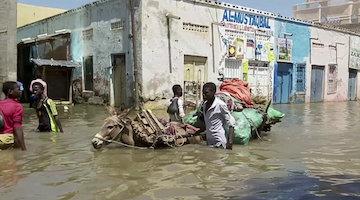
NGOs and other climate profiteers treat Somalia as a poster child for global warming.

More Stories


  • “We must collectively fight back”: An Interview with Jordan McGowan
    Roberto Sirvent, BAR Book Forum Editor
    “We must collectively fight back”: An Interview with Jordan McGowan
    31 Aug 2022
    The Neighbor Program is a "Pan-African Socialist Organization committed to serving the people & loving our neighbor." Founder Jordan MacGowan speaks to Roberto Sirvent.

  • BAR Book Forum: Alyosha Goldstein and SimĂłn Ventura Trujillo’s book, “For Antifascist Futures”
    Roberto Sirvent, BAR Book Forum Editor
    BAR Book Forum: Alyosha Goldstein and Simón Ventura Trujillo’s book, “For Antifascist Futures”
    31 Aug 2022
    This week’s featured authors are Alyosha Goldstein and Simón Ventura Trujillo. Goldstein is Professor of American Studies at the University of New Mexico. Trujillo is Assistant Professor in the…
  • The “International Community” is an Unreliable Broker in Ethiopia Conflict
    Hermela Aregawi
    The “International Community” is an Unreliable Broker in Ethiopia Conflict
    31 Aug 2022
    The ongoing conflict in Ethiopia's Tigray region has been fueled by support from the United States. It is yet another proxy war which has brough great suffering to thousands of people.

  • 'You Can't Swim the Same River Twice': Why Full Employment Was a Great Idea, But is No More
    Jon Jeter
    'You Can't Swim the Same River Twice': Why Full Employment Was a Great Idea, But is No More
    31 Aug 2022
    Had it been fully implemented the Hawkins-Humphrey full employment bill would have been a boon to U.S. workers. Any talk of reviving it is now moot, as the industrial economy of the 1970s has been…
  •  Why Does the United States Continue to Occupy a Haitian Island?
    Melissa Béralus
    Why Does the United States Continue to Occupy a Haitian Island?
    31 Aug 2022
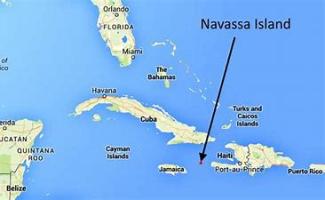
    The U.S. mined a million tons of guano on a Haitian island without paying a cent to the Haitian authorities. Other countries have sold the product for hundreds of millions of dollars.

  • Load More
Subscribe
connect with us
about us
contact us

