Across from Revolution Square in Cuba. Renderings of revolutionaries, Ché Guevara, and Camilo Cienfuegos.
Empire taught us what to believe about the Global South. It also taught us how to move through it, and being colonized here does not exempt us from carrying that with us.
Cuba introduced itself to us before anyone else could.
We walked out of the airport with over a hundred suitcases and boxes of material aid in tow. I took it all in — the Caribbean sun on my skin and the humid air as it reached my lungs. We heard music blasting somewhere on the street and saw people socializing outside, in front of beautiful architecture with splashes of color that made the city look alive and vibrant.
Then, that ninety-degree sun got a little hotter. As we moved through the city, I noticed the beautiful buildings in disrepair. We saw streets full of homes with solar panels to power them when the electrical grid fails. And I realized the people outside weren't only socializing. They were also trying to manage the heat that undoubtedly builds up inside their homes.
Next, I noticed the trash piled up on the corners. I'd read about this before I arrived, but the magnitude of the problem hit me hard. The oil blockade touches every part of Cuban life. It even keeps the country from fueling its garbage collection.
Soon, other brigadistas with the Venceremos Brigade who, like me, were traveling to Cuba for the first time came to the same realizations. When we reached our accommodations, we immediately experienced a lack of water and electricity, and for the next several days we had to ration and organize our time around the availability of both. This is when we came face to face with a small sample of the cruel conditions inflicted on the country by the country we live in.
Knowing what is happening in Cuba is not the same as being confronted with its reality.
We were trained to be introspective, challenge our assumptions about Cuba, and engage with principle. So we spent the trip trying not to move through the country the way USians usually move through the world.
Being a captured African in the United States means that I have developed many of the bad habits taught to us by this soulless empire. An empire that teaches us that the Global South is run by savages and authoritarians. We carry those behaviors around the world — individualism, entitlement, judgment, and cultural disruption. But we think our position as an oppressed and internally colonized people makes us different. It doesn't. Not only do we bring the nasty habits with us, we also bring the trauma of our oppression. We measure our experiences in other countries against our experiences in U.S. society rather than understanding a nation for what it is.
As soon as we arrived at the airport, the first thing I noticed was the presence of Cuban military personnel in civilian or what we would consider basic law enforcement roles. The customs agents. The security who waved us through the scanners. The person managing the lines at arrivals. Bag checkers as we left the airport. The shock of it froze me. I struggled to speak to the customs agent. I wanted to walk away from the person directing us to the appropriate line. I felt my heart race as I waited for someone to finish looking at our bags as we walked out the door.
I was shocked by my shock. I realized I was flinching at something that posed no threat to me. I knew the nature of the Cuban military was very different than what we have in the U.S. And yet…
My experience in the U.S. is one of colonial occupation. A domestic military roams the streets looking for reasons to kill us, or lock us up in prison to destabilize our communities and exploit our labor. And the U.S. wages that same kind of terror around the world using its armed forces.
My strong disdain for the U.S. military and my general discomfort around its personnel carried over with me as I entered Cuba. I wasn't even there for an hour and already had to check myself.
Mani, don't bring none of your bullshit with you here. Leave it in the States.
The feeling of distrust and discomfort hit me hard. I didn't know what to do with those feelings. And honestly, I still don't. Being in Cuba didn't eliminate the discomfort, but I learned to sit with it instead of turning it into an indictment of the nation.
On that first day, we began to see the gap between our experience and the real lives of Cubans: relatively comfortable housing, bottled water, and food prepared for us. While we had to quickly adapt to an environment most of us had never experienced, we knew it wasn't permanent. We would be leaving after two weeks. Our Cuban family would not.
As the days went on, we also learned that the staff faced infrastructure failures so severe that they often slept there rather than going home. The location had access to electricity at times when they had none where they lived. They could rest in relatively cool air instead of temperatures that reached 100 degrees inside many Cuban homes at night.
The staff's personal stories reflect what Cubans across the country deal with every day, worsening steadily over the decades.
As much as we discuss the impact of the blockade, we should also make clear the country's successes under this assault. This is not to romanticize the steadfastness of the Cuban people or blindly praise the resilience of the Cuban revolution. Suffering is not something you can wave away because the people experiencing it are resilient. They are human beings forced to live in inhumane conditions. But they have to survive. The structures built by the revolution sustain the island under extreme stress, and the commitment to defending that revolution keeps it going.
The Cuban medical system is one example of those successes. The care demonstrated by medical professionals and those who work in medical sciences shows what can be done when there is political will.
At one point, we held a discussion with medical technologists who design and produce diagnostic tools, and the equipment needed to conduct those tests and treat the conditions they reveal. I stood up and told them something that visibly shocked them. I spoke about the plight of African/Black women in the U.S. as they deal with the medical system, raising the issue of fibroids and ovarian cysts — pain, infertility, permanent hormonal changes to their bodies, and how little the U.S. system does about any of it.
Crickets.
That revelation gave them pause, and they took a few seconds to gather themselves and answer my question about how their diagnostic tools help catch and treat these conditions early.
The shock wave in that room told me something. People living under the barbarity of U.S. empire still had room to be appalled at what this country does to African/Black women. That is what Cuba's dedication to internationalist struggle and African liberation looks like among the people.
In this, Cuba has been consistent for decades, never switching up.
We saw it in the battle to liberate Angola, where over 300,000 Cuban troops fought alongside Angolans against the apartheid South African state. At Cuito Cuanavale, they broke the apartheid army's momentum and pushed the regime closer to its end.
We saw it in the steadfast protection of our beloved now-ancestor Assata Shakur, who Cuba took into its home and kept there through decades of U.S. pressure. She died in Havana on September 25, 2025. Still in exile, still protected.
And we saw it in Cuba's offer of aid to African/Black communities after Hurricane Katrina in 2005, including more than 1,500 medical professionals. An offer that then-president George Bush rejected, while African/Black people were being packed into deplorable "shelters" like sardines, left to die on their rooftops, and hunted by white barbarians in the streets. Cuba turned that rejected contingent into a permanent brigade, the Henry Reeve Brigade, which travels the world doing disaster relief to this day.
Speaking with these professionals brought me to the awful realization that the blockade forces a medical system to betray itself and the people it works so hard to protect. Decades of research and a commitment to the public health of all Cubans created a health care system better than the one we have in the U.S. And still, according to the Cuban Ministry of Public Health, over 100,000 people are waiting for surgery, including 10,000–12,000 children.
The backlog of medical care in Cuba is not just an effect of the blockade. It is the intent. The U.S. means to deconstruct Cuba piece by piece and rebuild it in its own image.
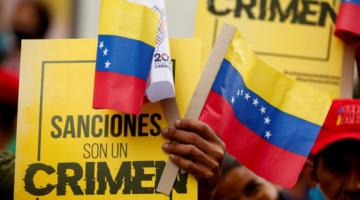
The decades-long mass psychological warfare campaign against Cuba and communism broadly, supported by military aggression and a cruel web of sanctions, is working. It instilled in us a belief that the country is so corrupt that sanctions are the only way to ensure peace. Yes, we've been convinced that starving people is the best way to improve a country's conditions. The U.S. created those conditions it now claims to be saving the people from.
An ass backward ideology for an ass backward nation.
The thing is, for the U.S., this inhumanity is the way to achieve peace. "Peace through strength," as they say. Which really means peace through terror. Peace through destruction. To an empire like the U.S., peace is subservience and fealty. It is shut up and do what I say, or I will slap you into next week with hundreds of sanctions.
Foreign policy is bipartisan, and Cuba is the clearest evidence. Three presidents from the two dominant political parties carry the same policy on Cuba. Under Obama, the FBI made Assata Shakur the first woman ever named to its Most Wanted Terrorists list. The bounty on her reached $2 million, which reinforced the ridiculous idea that Cuba is a terrorist-supporting nation. But then, that same administration later removed Cuba from the State Sponsors of Terrorism (SSOT) list in an effort to give U.S. corporations more access to the island. Donald Trump put Cuba back on the SSOT list, scaled up the propaganda, and escalated tensions by tightening sanctions and restricting travel. He targeted Cuba’s financial sector in an attempt to cripple the economy. Biden imposed additional sanctions on Cuban officials and entities, saying “this is just the beginning.” Then, he performatively took Cuba off the list days before leaving office on January 14, 2025. Trump reinstated it almost immediately and escalated again with a steady stream of military threats and barbaric sanctions on every sector of Cuban society. Nothing about Cuba changed in those few days, but that wasn't the point.
The designation is a political tool, deployed according to the desires of whoever is holding it. And here we are now. Another sanctions package on September 3. Marco Rubio is running around like a deranged mascot for the genocidal blockade, while the Cuba solidarity movement gets hunted at home.
So, Mani, since you got your degrees and you know everything, what do we do? Good question.
It's a question I can't give a concrete answer to other than this: it's time to get serious.
Commit ourselves to internationalist politics. The absurd belief that what happens in other countries isn’t our concern can’t be allowed to grow, especially when it comes from other African/Black people. We have watched this reactionary thinking spread for years, led in part by the ADOS and FBA blacks who want to disconnect us from our African lineage and from international politics altogether. They will walk us off a cliff if it means getting white applause. They must meet resistance.
Remember that anger or grief is not solidarity. Solidarity is a practice.
No more superficial and vague marches. Be bold and precise in our demands.
Listen to the mandate given to us by the Cuban people — use our position in the belly of the beast to attack it from within.
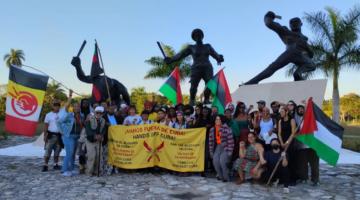
Travel to Cuba if you can. Join the Venceremos Brigade, the oldest brigade still in existence. Learn what is happening to Cuba and the long history of the Cuban revolution. Engage in good faith with a sober mind. Do not bring your baggage from the U.S. to the island.
Join the National Network on Cuba and organize with specific, tangible objectives to directly support Cubans with material aid and strengthen the solidarity movement. More importantly, use the information and clarity you gain from our Cuban comrades and put it to good use in your movement work.
Put your internationalist solidarity to work and tap in with the campaign to make our Americas a Zone of Peace. Join the U.S./NATO out of Our Americas Network and organize to kick U.S. and Western imperialism and savagery out of this region.
Finally, understand (and I cannot stress this enough) that the struggle to liberate Cuba is also a struggle to liberate ourselves.
Imani Nile is the assistant to BAR's Executive Editor, a proud member of the Black Alliance for Peace (BAP) NYC/NJ, and the BAP Communications Team Lead. She works in movement communications and media.

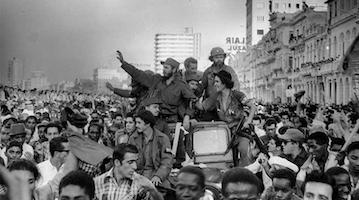
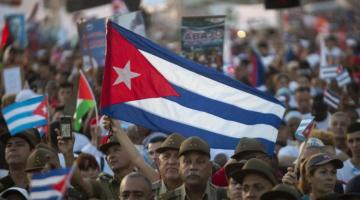
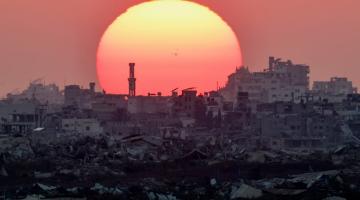 Why the world must force accountability on Gaza now.
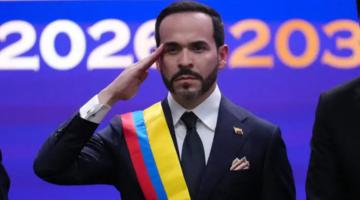 Colombia's new president has ties to paramilitaries and drug traffickers, but Trump's endorsement swept his crimes aside as he embraces Washington's agenda, including enhancing relations with Israel…
 The American's lawyers, led by Baltasar Garzón, denounce a "political persecution" by Trump for his support of Palestine. The government will have to decide whether to extradite him.
 The Supreme Court ruled in favor of the Trump administration cancellation of Temporary Protected Status (TPS) for more than 350,000 Haitians in the U.S. TPS holders can no longer work legally, are…


