A farmer in Nasik, Maharashtra, India fertilizes banana plants. Photo Credit: Parikh Mahendra N./Shutterstock.com
Faced with the blockade of vital oil routes, the extreme dependence of modern agriculture on fossil fuels foreshadows not only high prices but also a food shortage capable of generating global social upheaval.
Originally published in Portuguese in A Terra é Redonda.
This article is a warning. A global food crisis is likely approaching — driven by the collapse of supply chains feeding the agri-food system, a consequence of the war against Iran and the resulting blockade of the Strait of Hormuz. The prospect has gone largely unnoticed by most political and economic actors.
Supply crises, as a rule, are resolved through the Law of Supply and Demand. When supply falls, prices rise; those who can afford to pay grumble but pay, while those who cannot find a cheaper substitute. Or do without.
But we are talking about food — and food is indispensable to life.
To those who believe that “the market self-regulates” and that this supply crisis will therefore be absorbed through higher prices — costlier food, but food nonetheless — I would say: there is a threshold. Below a certain level of supply, the problem is no longer that food becomes expensive; the problem is that there is not enough food for everyone, regardless of how much money people have to spend. This article explains the dynamic well. If the Law of Supply and Demand is the global economy's homeostatic mechanism — its way of restoring equilibrium after a shock — then supply chains are its Achilles' heel.
Supply chain disruptions and extreme weather events periodically afflict one country or another and are offset through global trade. But never before has there been a situation like the present one, in which farmers across every corner of the world are simultaneously grappling with shrinking supply and rising input costs — fertilizers, pesticides, diesel, lubricants, transport. And one thing is certain: anywhere in the world, a farmer pays closer attention to news about the Super El Niño than the average person does.
Agriculture has always been a business of thin margins and constant uncertainty, where disincentives weigh heavily. Whether to skip this planting season — or to plant less — is a decision each farmer makes individually. Agriculture is a fragmented activity, loosely coordinated at best. There is simply no way to know how many producers have chosen not to plant. But since February 28th, millions across the world have made that choice.
Food planted today will take several months to be harvested, processed, transported, distributed, and finally consumed. What we eat today was planted months ago — perhaps more than a year ago. This includes animal products, since livestock are fattened on plant-based feed. The implication is that the world is locked in a crisis that will not erupt tomorrow, but months from now — possibly next year.
Governments track harvests — food after it has been collected — but not plantings, and certainly not what was never planted at all. Only when the (smaller) harvests arrive will the true scale of the problem become apparent.
Has the world already crossed the threshold between expensive food and genuinely scarce food? There is no way to know. Every day that Hormuz remained closed made the situation worse.
Mass hunger means social upheaval. What is incubating in the aftermath of the war against Iran is advancing quietly toward what could become the greatest economic and social crisis in recorded history.
The Supply Chain Breakdown
Let me be clear from the outset: this is not only a global food crisis. It is a crisis running through virtually every global supply chain, because petroleum derivatives are embedded in virtually all of them:
However, the disruption in oil- and derivative-dependent supply chains had so far been mitigated because the whole world has been using its oil reserves, stored precisely to deal with crises. The United States not only used up its reserves but also exported them at low prices, keeping international oil prices down. China, the world’s largest importer, reduced its imports during this period. But global reserves are now practically depleted, and China has resumed importing, so the crisis can no longer be postponed.
The war has just started again, but even if it had actually ended, the repercussions would still be felt (see, for example, this video). The wishful thinking prevalent in financial markets — the eagerness for a "return to normal" — is likely to be disappointed. Apart from the months that would be needed for maritime traffic to gradually recover and global supply chains to reach whatever normalization would still be possible (a full return to pre-war levels is already out of the question; see this video, minutes 55′ to 59′45″), there are several additional obstacles:
- The bombing of oil and gas facilities caused physical damage that will keep part of the supply offline for years.
- Resuming production from wells that were forcibly shut down after storage capacity was exhausted — a problem that bears far more heavily on the Gulf states than on Iran, which has spent decades managing precisely this under the pressure of sanctions — will be both slow and incomplete.
- Shipowners and insurers carry enormous costs — the value of the vessel and its cargo, extended crew deployments, fuel, port and customs fees, and much more. They will need to feel genuinely secure before routing ships through the Strait again. To illustrate: the Houthis stopped attacking commercial shipping in the Bab el-Mandeb Strait over a year ago, yet traffic through the Red Sea has recovered to only 75% of pre-attack levels (watch this video from minute 6′15″). Why? Simply because the Houthis are still there (so they might now close Bab-el-Mandeb again). The Iranians, likewise, will remain stationed along Hormuz. Analysts estimate — though they cannot predict — that even if Hormuz were reopened today, traffic by year-end would reach only about 40% of pre-war levels (see this video at 1′20″). There also emerge yet unprecedented factors, such as countries banning their nationals from being part of crews on ships headed to the Persian Gulf;
- For a synthesis of all the above, watch this video starting at minute 27′15″.
The Global Food Crisis
Food supply chains — fertilizers, pesticides, agricultural machinery, diesel, lubricants, transport — will be as disrupted as any other. But food is our central concern, because it is indispensable to human survival. If garbage bags disappeared from supermarket shelves (they are made of plastic, which is made of polymers, which are made of naphtha, which comes from oil), people would cope — they would wash their trash cans. There is no equivalent workaround for a food shortage. Any rupture in food production chains is a reliable recipe for social disorder.
Here's a summary of the factors that will lead to the global food crisis:
- Before the war, Persian Gulf countries accounted for roughly 35% of global urea production, 40% of sulfur production, and 20% of liquefied natural gas (LNG) output. Urea is the primary feedstock for nitrogen fertilizers; sulfuric acid (derived from sulfur) is the primary feedstock for phosphate fertilizers; and LNG is itself a source of urea production. Bangladesh, for example, has urea plants that ran on LNG from Qatar — one of the most heavily bombed industries in the conflict — and they are now idle. The Gulf blockade has severed global fertilizer chains, with direct consequences for global food chains.
- Major fertilizer exporters — Russia and China among them — have suspended exports to protect their own domestic food security. India urgently requested fertilizer supplies from China; China refused, citing its own needs.
- Following the war, global fertilizer prices skyrocketed. More recently, they have begun to fall, but this is due to demand destruction: so many farmers are stopping planting that a surplus of fertilizer is starting to build up.
- The United States has just declared a national emergency on fertilizers (see here and here);
- China, the world's largest producer and exporter of sulfuric acid (accounting for over 40% of global production), has halted exports — jeopardizing copper mining in Chile and the Democratic Republic of Congo, nickel mining in Indonesia, and uranium mining in Kazakhstan. About half of all sulfuric acid consumed globally goes into phosphate fertilizer production.
- Crops everywhere have narrow planting windows tied to the seasons. Plantings completed before the war began will not be affected, but those harvests are still months away, which will mask the crisis for some time — the world is currently eating food planted or even harvested months ago. Plantings scheduled after the war broke out may also have proceeded normally, provided the relevant fertilizers were already stockpiled. Otherwise, farmers who depended on fertilizer shipments passing through the Suez Canal received them roughly twenty days late, the additional time required for ships to reroute around the Cape of Good Hope. Even where those fertilizers were purchased at a premium, the delay alone meant application outside the optimal window, with lower yields as a result. The worst cases are those where rising input prices simply cause farmers to abandon planting altogether — as is already happening as far apart as the United States (soybeans, despite China having reopened its market to American soy — watch this video, from minutes 12′ to 15′) and Thailand (rice — read this report).
- If the Strait of Hormuz remains blocked through around September or October, the global sulfur shortage will exhaust reserves in countries without domestic production, shutting down their phosphate fertilizer plants.
- Cutting fertilizer use — for the same planted area — is not a viable option. After years of continuous cultivation, soils are depleted; without NPK (nitrogen, phosphorus, potassium), they simply will not produce. And the relationship is non-linear: 10% less fertilizer can mean 30% less harvest (the ratio varies by crop — corn, for instance, is more fertilizer-hungry than soybeans). Large producers have no alternative to fertilizers that are now both expensive and scarce; smaller farmers are desperately improvising (see here, here and here).
- One consequence will be crop-switching: corn farmers shifting to soybeans, for example; in Thailand, there are farmers flooding their rice fields to raise fish. Consumers will eventually have to adapt their diets accordingly.
- Beyond fertilizers, agricultural pesticide supply chains will also break down. Pesticide production depends on petrochemical naphtha: toluene- and xylene-rich reformate is extracted from heavy naphtha; benzene-rich pyrolysis gasoline comes from steam-cracking light naphtha. Benzene, toluene, and xylene — known as BTX — underlie the chemistry of virtually all commercial herbicides, fungicides, and insecticides. And effective application requires that active ingredients be dissolved in heavy aromatic solvents, which are likewise BTX derivatives. Modern agriculture survives only under intensive chemical protection; without pesticides, today's crop varieties do not have the intrinsic resilience to withstand pests.
- Agriculture worldwide runs on thin margins and heavy fixed costs. On top of scarce and expensive fertilizers and pesticides, farmers are now facing sharply higher diesel prices, rising lubricant costs for tractors and combines, and higher transport and freight charges. It is already common for farmers to simply walk away from this season's planting, waiting for conditions to improve — a wait that could stretch years — or to leave the business entirely. All of this will happen long before governments grasp the scale of the problem and mobilize a response. Since crops planted (or not) today will not be harvestable for months, the full force of the crisis will not be felt until 2027.
- Predictably, small farmers with limited capital will suffer most, fueling black and gray markets for diverted or counterfeit fertilizers and pesticides.
- Livestock farming will be hit as hard as crop production. Corn and soybeans are the dietary foundation of the meat industry; a grain shortage will force the premature liquidation of poultry and hog herds.
- Countries everywhere will scramble to import food, driving prices up in global markets as well as domestic ones. Any country sitting on stockpiles of grain, potash, phosphates, or pesticides will treat them as strategic assets rather than tradable goods — as China has already done with sulfuric acid. Export controls, emergency rationing, and hoarding will replace normal commerce. Faced with critical food security needs at home, governments can be expected to hoard input materials for fertilizer and pesticide production, finished fertilizers and pesticides, and food in general.
- As if all this were not enough, extreme climate events will intensify dramatically in the second half of 2026 and into 2027 — precisely when the food crisis reaches its most acute phase. The result could be a genuine perfect storm. Meteorologists already consider the occurrence of a "Super El Niño" as certain, bringing droughts, floods, and extreme heat waves around the globe (for the effects of heat on food production see here, here and here), potentially on the scale of the Great Famine of 1877 — also an El Niño event — which killed more than 50 million people worldwide. By this point, it's already known for sure that this will be an absolutely catastrophic weather event. (see here and here).
- Both extremes — drought and flood — critically undermine fertilizer effectiveness. In drought-stricken areas, water is the medium through which nutrients dissolve and reach plant roots; without adequate soil moisture, applied fertilizers simply fail to be absorbed. In flood-affected areas, excess rainfall leaches highly soluble nitrogen and phosphate from the soil before plants can take them up.
- Farmers already traumatized by climate change may stop planting in advance, anticipating the expected harsh effects of El Niño.
- El Niño, an oceanic anomaly in the equatorial Pacific, fundamentally disrupts the upwelling of cold, nutrient-rich deep water — and with it, the Peruvian anchovy fishery, the cornerstone of global fishmeal and fish oil production. The result is a protein deficit rippling through livestock and aquaculture feed markets. Fishmeal byproducts are also prized as premium organic fertilizers and soil conditioners. The simultaneous loss of synthetic fertilizers (derived from sulfuric acid and urea) and organic substitutes (due to the collapse of fisheries caused by El Niño, compounded by rising fuel costs for fishing vessels — see also here) is yet another perfect storm bearing down on the world's farmers.
- Other unforeseen factors also add to the mix: the war in Ukraine ended up halting Russia's wheat exports through the Black Sea.
Ruben Bauer Naveira, a Brazilian activist and pacifist, is also the author of One and all – or none at all: Life after nuclear war.






 In this week’s segment, we discuss student protests by Black and brown youth in France against austerity measures and race-based inequality in the education system. But we begin with a discussion of…
 Brazil's incumbent president Lula da Silva finished second behind Flavio Bolsonaro in the first round of the presidential election. Because neither man received at least 51% of the vote, a run-off…
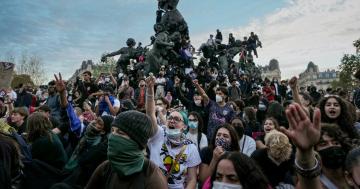 Students in France are engaging in mass protests. Hundreds of them have been arrested and injured by police, and many schools are closed. Annick Metefia joins us from Paris. She is a member of the…
 Ajamu Baraka of the Black Alliance for Peace joins Dimitri Lascaris on BettBeat Media for a conversation about something Western publics have not yet come to terms with — the fact that resistance to…
 Progressive candidates rarely remain so after winning public office. Zohran Mamdani is no exception, but his capitulation to New York zionists angered his supporters, and the people he hoped to…


