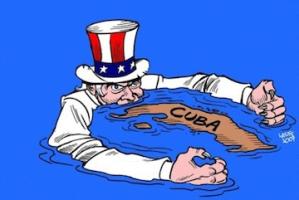
The United States has made economic coercive measures, sanctions, its primary foreign policy tool, committing war by other means with a comparable death toll.
Originally published in CounterCurrents.
This spring, people have been raising awareness of the harms caused by Unilateral Coercive Measures (UCMs or “sanctions”). Sanctions have become the “go-to” foreign policy tool of the United States government, now impacting a quarter of the global economy and one-third of the world’s population. These measures cause an average of 564,000 deaths around the world annually—comparable to the toll from armed conflict—mostly among children under 5 years old.
On April 22 Congress held a briefing on “Humanitarian Impacts of Economic Sanctions, Cuba as a Case Study,” with three outside experts: Mark Weisbrot of the Center for Economic Policy, co-author of the largest study ever conducted on the impacts of sanctions on mortality; David Paul, co-founder of the SanctionsKill campaign, retired nurse practitioner, and co-author of a letter from health workers to Congress about child deaths from sanctions; and Danny Valdes, co-founder of Cuban Americans for Cuba, who shared the perspective of bi-national families impacted by the longstanding and escalating US blockade of Cuba.
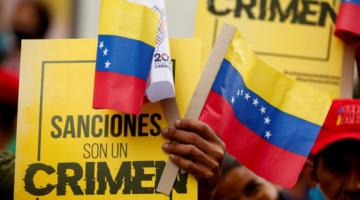
Economist Weisbrot said that 71% of the world’s broad economic sanctions are imposed by the United States. These unilateral measures violate international law by deliberately targeting civilian populations for collective punishment in the hope of bringing about regime change, and may even constitute war crimes. In addition to his global study, Weisbrot has compiled research which found US sanctions on Venezuela’s oil industry caused the worst depression in world history outside of wartime, leading to 40,000 excess deaths in just one year, from 2017-2018. And current data on Cuba shows a strained health system and deteriorating health indicators, such as a doubling of infant mortality over the past eight years due to the tightening of the US blockade.
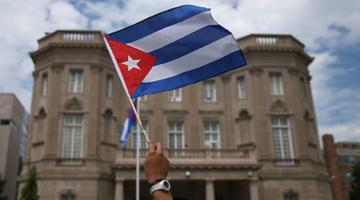
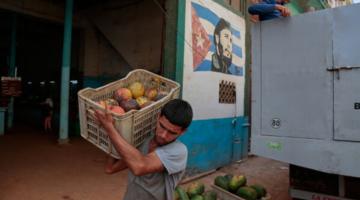
David Paul painted a devastating picture of life in Cuba under escalated coercive measures, especially the fuel blockade which is causing massive power outages and disrupts transportation, the production and distribution of food, refrigeration, water and sanitation, and the operation of ambulances and life-saving medical equipment. He said this is not an embargo, but an actual blockade of the island. “People in the US government make the false claim that ‘Cuba can buy all the medicines wherever they want.’ It’s a total lie, when in reality all their banking transactions are blocked. [The US] will threaten and punish any corporation—domestic or international—or government, that trades with you. But you are free to buy!” More pregnant women are starting prenatal care late and suffering from malnutrition, which results in premature births and low birth weights. More babies are at risk of dying from congenital malformations because of the shortage of functioning diagnostic equipment like ultrasounds needed to detect them. Half of all essential medicines are no longer available in the country, as Cuba cannot even import the raw materials needed to keep its pharmaceutical industry afloat. Children are dying from treatable cancers due to lack of medicines, and physicians are hand-pumping ventilators for their patients when the lights go out. Heartbroken Cuban doctors tell parents, “We know what medicine your daughter needs to treat her cancer, we know where it is, but we can’t get it because they won’t sell it to us.” One parent asked, “Why is the President of the United States deciding whether my son lives or dies?”
Valdes reported an exponential deterioration of conditions on the island between his visits in October 2025 and March 2026, due to the lack of fuel, such as health problems caused by uncollected garbage in the streets of Havana. He says that some blame Cuba exclusively for these troubles, but one cannot deny the role played by US policy. Cuban Americans are impacted because they cannot easily visit relatives or efficiently send them remittances, which can make the difference “between eating and not eating; between accessing medicines and going without.” He noted that the Florida International University poll, running since 1991, reports that 52% of Cuban Americans support the embargo, yet 70% also support the sale of medicine to Cuba. This shows they are not actually in favor of maximum pressure policies.
The host of the briefing, Congresswoman Ramírez, is a strong proponent of respectful and constructive US foreign policy. She is a leading co-sponsors of H.Res. 1056 which calls for a reset of US relations with Latin America and the Caribbean, including the end of all unilateral economic sanctions. The Congresswoman indicated that from Monroe to Trump, US interventionism has left a legacy of destruction and distrust, which never leads to peace and democracy.
Congress is gaining awareness of these injustices. A growing number of lawmakers are working to curtail the threat of military force against Cuba, and several signed a statement condemning the ongoing blockade and have endorsed legislation to end it. Some even use the proper terminology, calling for an end to “coercive economic measures.” Are they finally listening to the demands of the American people to end the longest blockade in history? Ever more people are moved to act. During its Congressional Advocacy Day on April 15, Doctors Against Genocide insisted that Cuba be allowed to import medical supplies and pushed legislation to lift the blockade.
We must take advantage of this moment to grow the movement to expose the human cost of sanctions and work to end them. Popular education materials are available on the SanctionsKill website, such as the Sanctions Toolkit. A recent webinar titled “Sanctions Undermine Children’s Right to Health” uses Cuba and Venezuela as case studies to illustrate these impacts and propose a new approach to human rights, such as the Peoples-Centered Human Rights framework.
As stated in the Letter calling on Congress to end child-killing sanctions, “Imposing collective punishment on the innocent is morally reprehensible. It must stop.” Join the fight to end Unilateral Coercive Measures by contacting AmericasWithoutSanctions@gmail.com, a project of the SanctionsKill campaign.
Jill Clark-Gollub is the Coordinator of Americas Without Sanctions, a Project of the SanctionsKill campaign. She is also on the Coordinating Committee of the Nicaragua Solidarity Coalition, and a member of the Solidarity Network of the Black Alliance for Peace. She has published in various alternative media outlets.

 The Anti-Imperialist Scholars Collective (AISC) offers an analysis of the Ramadan War and the multiple fronts of Iranian anti- imperialism. It uses anti-imperialist methodology, grounded in…
 Early last year, Governor Ron DeSantis began signing death warrants at a faster rate than ever before. What followed was the most intense period of executions the state has carried out in more than…
 Eight student activists in Michigan face decades in prison for advocating that their university divest from genocide. It is clear the goal of the indictment is to terrorize the Palestine solidarity…
 In this week’s segment, we discuss U.S. control over Venezuela and its resources, and the Venezuelan people's response to their loss of sovereignty. But we begin with a report on the police killing…


