Morocco's colonial project in Western Sahara has persisted not through legitimacy, but through the complicity of other nations and United Nations inaction.
Originally published in Por Un Sahara Libre.
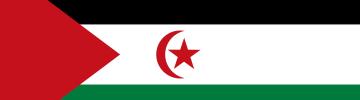
In the protracted conflict over Western Sahara, the international community has long spoken the language of “dialogue,” “compromise,” and “mutual concessions.” Yet at the heart of this decades-long struggle lies a raw, often ignored truth: the question of Western Sahara is not a dispute between two equal parties — it is a case of colonial occupation. And like all occupations, it must end.
Morocco’s presence in Western Sahara is, by any objective and legal standard, an occupation. The International Court of Justice, in its 1975 advisory opinion, rejected Morocco’s territorial claims. The United Nations has classified Western Sahara as a non-self-governing territory, and dozens of UN resolutions have affirmed the Sahrawi people’s right to self-determination. This is not a matter of border disputes or competing sovereignty claims; it is a case of decolonization.
In this context, the only legitimate negotiation left between Morocco and the Polisario Front is not if the Sahrawi people should exercise their right to self-determination, but when. And “when” must mean soon — not some vague and distant future that allows the status quo to persist. The only morally and legally acceptable terms for negotiation are, therefore:
a) the date for the long-promised and long-delayed independence referendum to be held within the coming months, and the immediate implementation of its result; or
b) an immediate deadline for the end of Moroccan occupation, including a fixed timeline for the withdrawal of all components of the occupation — military forces, police, gendarmerie, administrative structures, and settlers directly involved in or benefiting from the occupation and its crimes.
Anything short of this is not negotiation; it is a betrayal of international law and the perpetuation of a war crime. Suggesting that the Sahrawi people must compromise on their right to self-determination legitimizes aggression and rewards impunity. It sends the message that colonial conquest can still succeed in the 21st century — if it is patient, brutal, and geopolitically convenient enough.
Calls for “realism” and “flexibility” often mask a dangerous double standard. The Sahrawi people are asked to negotiate what is already theirs under international law. Meanwhile, Morocco is rewarded for its intransigence with diplomatic recognition, arms deals, and economic investments in the occupied territory. This approach not only prolongs the suffering of the Sahrawi people but also sets a dangerous precedent for the future of international law.
Moroccan occupation has been marked by systemic human rights violations, plundering of natural resources, forced displacement, and demographic engineering of Western Sahara through colonization policies. These actions violate the Fourth Geneva Convention and constitute war crimes under international law. No fair negotiation can ignore these crimes. No just agreement can validate the results of occupation and forced assimilation.
Justice demands a clear line: Morocco must leave. The Sahrawi people must decide their future without coercion, delay, or concessions. Negotiations must focus exclusively on the logistics of implementing international law — how and when, within a short and definite timeline, the referendum will be held or how and when Morocco will depart.
Until then, any other “solution” is an illusion — one that prolongs suffering, emboldens other occupiers, and weakens the moral authority of the international system. The time has come not for more process, but for a conclusion to one of the last colonial conflicts on Earth. It is not only the right thing to do; it is the only thing left to do.



 A pamphlet written 70 years ago by an exiled Black American communist reveals an African continent seething to break free from European colonization.
 The real story of the Rwandan genocide begins in 1990, when exiled Tutsis from Uganda invaded northern Rwanda, unleashing a deadly campaign that uprooted a million Hutu peasants and set ethnic tens
 Northeast, midwest, southwest, south, down south, up south, out south—south of the Canadian border—Slouched down in his cruiser, slow-rollin’ the ‘hood; Or a-
 The new Democratic administration seems determined to sabotage an agreement to end the “longest war.”
 King explicitly linked the value of human dignity to the material conditions necessary to enable people to live a decent life.


