Black Agenda Report
Black Agenda Report
News, commentary and analysis from the black left.

  • Home
  • Africa
  • African America
  • Education
  • Environment
  • International
  • Media and Culture
  • Political Economy
  • Radio
  • US Politics
  • War and Empire

The Only Fair Negotiation Between Morocco and the Polisario: When, Not If, to End the Occupation
Isabel Lourenço
06 Aug 2025
🖨️ Print Article
Western Sahara

Morocco's colonial project in Western Sahara has persisted not through legitimacy, but through the complicity of other nations and United Nations inaction.

Originally published in Por Un Sahara Libre.

In the protracted conflict over Western Sahara, the international community has long spoken the language of “dialogue,” “compromise,” and “mutual concessions.” Yet at the heart of this decades-long struggle lies a raw, often ignored truth: the question of Western Sahara is not a dispute between two equal parties — it is a case of colonial occupation. And like all occupations, it must end.

Morocco’s presence in Western Sahara is, by any objective and legal standard, an occupation. The International Court of Justice, in its 1975 advisory opinion, rejected Morocco’s territorial claims. The United Nations has classified Western Sahara as a non-self-governing territory, and dozens of UN resolutions have affirmed the Sahrawi people’s right to self-determination. This is not a matter of border disputes or competing sovereignty claims; it is a case of decolonization.

In this context, the only legitimate negotiation left between Morocco and the Polisario Front is not if the Sahrawi people should exercise their right to self-determination, but when. And “when” must mean soon — not some vague and distant future that allows the status quo to persist. The only morally and legally acceptable terms for negotiation are, therefore:

a) the date for the long-promised and long-delayed independence referendum to be held within the coming months, and the immediate implementation of its result; or

b) an immediate deadline for the end of Moroccan occupation, including a fixed timeline for the withdrawal of all components of the occupation — military forces, police, gendarmerie, administrative structures, and settlers directly involved in or benefiting from the occupation and its crimes.

Anything short of this is not negotiation; it is a betrayal of international law and the perpetuation of a war crime. Suggesting that the Sahrawi people must compromise on their right to self-determination legitimizes aggression and rewards impunity. It sends the message that colonial conquest can still succeed in the 21st century — if it is patient, brutal, and geopolitically convenient enough.

Calls for “realism” and “flexibility” often mask a dangerous double standard. The Sahrawi people are asked to negotiate what is already theirs under international law. Meanwhile, Morocco is rewarded for its intransigence with diplomatic recognition, arms deals, and economic investments in the occupied territory. This approach not only prolongs the suffering of the Sahrawi people but also sets a dangerous precedent for the future of international law.

Moroccan occupation has been marked by systemic human rights violations, plundering of natural resources, forced displacement, and demographic engineering of Western Sahara through colonization policies. These actions violate the Fourth Geneva Convention and constitute war crimes under international law. No fair negotiation can ignore these crimes. No just agreement can validate the results of occupation and forced assimilation.

Justice demands a clear line: Morocco must leave. The Sahrawi people must decide their future without coercion, delay, or concessions. Negotiations must focus exclusively on the logistics of implementing international law — how and when, within a short and definite timeline, the referendum will be held or how and when Morocco will depart.

Until then, any other “solution” is an illusion — one that prolongs suffering, emboldens other occupiers, and weakens the moral authority of the international system. The time has come not for more process, but for a conclusion to one of the last colonial conflicts on Earth. It is not only the right thing to do; it is the only thing left to do.

Western Sahara
Morocco
Colonialism

Do you need and appreciate Black Agenda Report articles? Please click on the DONATE icon, and help us out, if you can.


Related Stories

Editors, The Black Agenda Review
STATEMENT: Question of Western Sahara, Tinguiri Mansour Omar, 1979
29 July 2026
“It is perfectly clear that the war of aggression waged by Morocco against the [Western] Saharan people is a purely colonial war.”
Beverley Waithaka
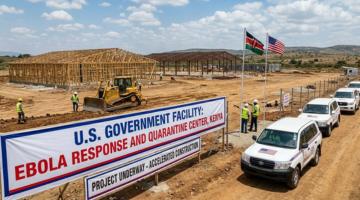
Kenya Is Not America's Quarantine Zone
24 June 2026
The United States announced that Kenya, with the permission of a comprador government, would serve as an Ebola quarantine hub for Ame
Socialist Movement of Ghana , Dhoruba bin-Wahad
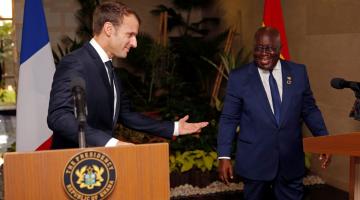
Statement of Condemnation of the Plan to Have Emmanuel Macron Deliver a Keynote Address on Reparations in Ghana
10 June 2026
The Socialist Movement of Ghana declared its strong opposition to their government's invitation to French president Emmanuel Macron t
Booker Omole
Statement on Zionist Plans to Create a Mini-State in Kenya and the Lessons from History
18 February 2026
In 1903, Britain offered Kenyan land to Zionist settlers. That scheme failed. Now, a new attempt is underway in Nakuru.
Editors, The Black Agenda Review
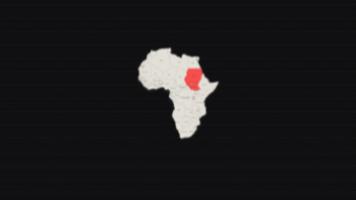
ESSAY: The Southern Sudan, Joseph U. Garang, 1969
12 November 2025
“Thus it can be said that British colonialism is mainly responsible for the Southern Sudan problem…”
Raïs Neza Boneza
Macron, Madagascar, and the Return of France’s Old Colonial Ghosts
12 November 2025
In 2025, Françafrique didn’t die — it just booked a seat on a French military plane.
Tunde Osazua
Nigeria in the Crosshairs: Separating Fact from Fiction in the Looming Crisis
05 November 2025
The threat of U.S. military action in Nigeria has little to do with protecting Christians and everything to do with domestic U.S.
​​​​​​​ Ajamu Baraka, BAR editor and columnist
"Inequality in Kenya: View from Kibera" Documentary Premieres August 28
27 August 2025
Poverty is an artificial creation.
Editors, The Black Agenda Review
SPEECH: Why We Use Violence, Frantz Fanon, 1960
23 July 2025
“This violence of the colonial regime…irreparably provokes the birth of an internal violence in the col
Ann Garrison, BAR Contributing Editor
The Struggle for a Somali Nation
04 June 2025
Despite shared language, culture, and religion, Somalis still struggle to become a cohesive

More Stories


  • Margaret Kimberley , BAR editor and senior columnist
    Freedom Rider The U.N. Investigates American Racism
    21 May 2008
    by BAR Editor  and Senior Columnist Margaret Kimberley   The United Nations is sending a special observer to investigate the role that racism plays in the ordinary life of the United States…
  • Bill Quigley
    Atlanta's Answer to America's Urban Transit Apartheid
    14 May 2008
    by BAR Managing Editor Bruce Dixon Denuded of their manufacturing sectors, urban America is the scene of a new gold rush.  Chambers of commerce and speculators are scrambling for the last…
  • Bill Quigley
    Laura and George: Hypocritical Ghouls of Disaster
    14 May 2008
    A Black Agenda Radio commentary by Glen Ford Global aggression is a family affair at the Bush White House. The President cynically assigns his wife to threaten the ruling military junta in Myanmar…
  • Bill Quigley
    The Deeper Racism in Iowa: Beneath the White Obama Craze
    14 May 2008
    by Paul Street Barack Obama's January 3rd Democratic Caucus victory in Iowa demonstrated that a Black man - or, at least, this particular Black man - could attract winning numbers of white voters…
  • Bill Quigley
    Barack Obama and Jeremiah Wright: Sabotage, Division, or Sedition
    14 May 2008
    by Brother Bede Vincent Barack Obama made his break with Rev. Jeremiah Wright under relentless pressure from white corporate media to disavow the Black Liberation theologian. Rev. Wright did not…
  • Load More
Subscribe
connect with us
about us
contact us