The following is part of the first installment of our “Captive Maternal Roundtable” on Joy James’ new book, In Pursuit of Revolutionary Love: Precarity, Power, Communities.
Introduction: On the Impasse between Revolution and Revolutionary Love
(This piece is dedicated to Joy James’ most groundbreaking essay, “Airbrushing Revolution for the Sake of Abolition.”)
The release of Joy James’s highly anticipated text, In Pursuit of Revolutionary Love; Precarity, Power, and Communities, offers a unique and rare approach toward the long-standing debate of theory versus praxis. This debate is a source of division between theorists and/or academics (who imagine themselves as insurgents) and non-academic community organizers (who imagine themselves as the heartbeats of revolutionary struggle). The argument against theory on behalf of praxis seeks to interrogate how “academic” assertions can reconcile itself to the material or tangible realities of “lived experiences.” However, I remain skeptical regarding our capacity to reconcile this debate, not simply because academics are parasitic upon narratives of Black suffering, but also because there remains a general disavowal amongst political subjects and movements regarding the legitimacy of the abstractions that theory seeks to contend with.
Theory and theorists have been accused of being removed from “on-the-ground” struggles while organizers on-the-ground are fighting to reconcile themselves to an abstraction of freedom. While theorists — a position not always coterminous with academics, which functions as a very specific occupation within an anti-Black capitalistic structure — are accused of being far removed from community, community struggles remain in pursuit of a symbolic imagined future, or in the case of James, revolution. As such, theory cannot align with praxis because praxis demands an answer for all of theories’ assertions, but theory cannot deliver a praxis for all its assertions as it remains in pursuit of an impossible ideal. This long-standing impasse has thwarted many of our capacities to think about the terrain of struggle and its impact on quotidian life, forcing us to “do something” about this ethical imperative to make theory align with praxis.
In James’s text, she makes a subversive attempt to reclaim revolutionary struggle from the academy and deliver it back to communities — which James refers to as Captive Maternals, who practice revolutionary love. Her pedagogical move is to take theory outside of the academic enterprise into the hearts and lives of “the collective” to explore what is at stake for a revolution (theory) that is saturated in revolutionary love (praxis). This call for revolutionary love as praxis begs us to live the deep implications of our theoretical assertions regarding revolution — to give the words and ideas flesh, meat, and bone. But revolution in theory is having a hard time conceding to a praxis of revolutionary love that can adequately respond or give form to the stakes at hand, hence why James’s title places emphasis on the term “pursuit.” James states,
“The contributors to this book cannot fully define Revolutionary Love; yet we Pursue it. When we retreat from searching for it, we stagnate and stumble.”[1]
Pursuit reminds us once again that not only does there remain no consensus on how to respond to the predatory formations of the antiblack empire, but also there remains little desire amongst captive maternals to embrace what James refers to as the “political will” of revolution. To put succinctly, captive maternals, who bear the burden of praxis, are still not convinced that revolution is the only answer to their freedom dreams.
The book discusses at length the limits of reform strategies such as “Black faces in high places,” neoliberal activism, and democracy to outline what is at stake in our pursuits of revolutionary love. The stakes of revolution are most clearly asserted and foregrounded in the foreword by Da’Shaun Harrison, who brilliantly claims that revolutionary love is an act of death. This assertion by Harrison heightens the contradictions between revolution and revolutionary love; theory and praxis. Perhaps what this theory and praxis impasse is really all about is an inability to contend with a black demand that calls for the death of an antiblack world (the theory), and the constant betrayal of this demand for "the pursuit” of revolutionary love (the praxis). Revolutionary love has difficulty moving beyond the confines of its pursuit because there is both anxiety and compulsion around the death-dealing implications of revolution. Which is to say the focus of praxis isn’t simply a blueprint for “how to do” revolution (which is what much of academia remains fixated on in their radical postulations), but rather the praxis is in the question “will we do it?” — “it” being dying, which Joy James names as an “impossible task that is completely worthy of us.” The question of “will we do it?” remains a question of political will for James.
What James’s text implies, as opposed to explicitly stating, is that our communal praxis must be embedded in how we end a predatory formation we are all implicated in. We are trying to destroy the very things that have overdetermined our capacity to live without grappling with the very serious possibility that no one may survive the destruction of an antiblack predatory empire. This is why theory and praxis remain irreconcilable. We remain repulsed by our inability to practice what we preach, which means the problem may not be that our theories regarding the death-dealing stakes of revolution are too abstract, but rather that our praxis reminds us that death as the inevitable fate of a revolution is the true source of our collective anxiety. This is why James remains the most formidable political theorist of our contemporary moment, as her life’s work has been in service to centering the death-dealing narratives of political prisoners as an attempt to raise the stakes of revolution and revolutionary love. Her turn toward political prisoners offers us a more honest and integral approach to theory and praxis as they remain the captive maternals who have pursued revolutionary love on behalf of revolution. They remind us that revolution is not just an impractical symbolic subject but the truth of what James identifies as our collective political object: agape.
In Joy James’s construction of the Captive Maternal (CM) she suggests that the captive maternal is what stabilizes community, and the state, which includes and is sustained by academia, builds upon that stability for its own coherence. The care of the community is repurposed for state-violence, and the community’s inability to refuse or withhold care is what sustains our captivity. James develops the framework of the Captive Maternal as an attempt to move community care toward communal rebellion, developing four stages that the CM goes through that both prepares them for the already-present interminable war on Black life and develops their “political will” to rebel. James calls for a CM that moves from the first two stages of rebellion—which is communal caretaking and democratic organizing—to the last two stages that involve direct confrontation with the state and the Black neoliberal intramural. Perhaps what remains the real Jamesian intervention is that if a theory of revolution cannot be reconciled to a praxis of death, then it is best that we all TRAIN ourselves in service to a “political will” that can build our capacity for war. As James states,
“A caretaker discourse is not sufficient, although it is helpful and therapeutic. To confront cooptation and coercion from state and (non)profit corporations, donors, and political parties requires critical building blocks that foster dialogue, debate, and transformational politics and maneuvers that stabilize Revolutionary Love.”
This forum seeks to examine, engage, and interrogate how the contributors engage that zone of confrontation through their own insights of James’s construction of the Captive Maternal and revolutionary love. Through their diverse perspectives, these theorists and practitioners will further the discourse on the captive maternal to take seriously the effects of antiBlackness on every sector of life. My hope is that as we move intellectualism from the academic factory into communal struggle, this forum would lead us to thinking through the following questions: how might we move from the pursuit of revolutionary love to revolution? How might we reconcile ourselves to a praxis that calls for the end of anti-Blackness itself? How might we stop foregoing the revolutionary demand for our own compulsive pursuits? And what are we prepared/willing to do about antiblackness?
Bibliography
James, J. (2022). In Pursuit of Revolutionary Love: Precarity, Power, and Communities. Belgium: Divided Publishing.
[1] (James, 2022, p. xxvii)
Rebecca A. Wilcox (RAW) is a fourth-year doctoral student at Princeton Theological Seminary concentrating in Religion and Society. Her research engages Black religion, Hauntology, and Critical Black Studies to explore the anti-Black antagonism between life and death.

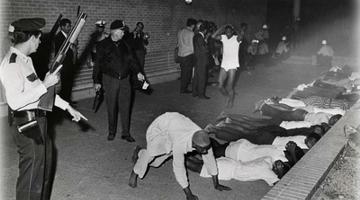 The greatest thing about HBCUs are the toiling students fighting for justice on these campuses. Not the college presidents, boards of trustees, the administrators, teachers, or coaches.
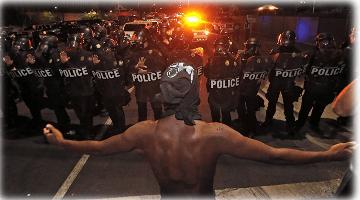 “…hear me now, five, four, three, two, one…
 Rwandan dictator Paul Kagame has released two of his best known political prisoners: Victoire Ingabire, a Hutu political activist, and Kizito Mihigo, a Tutsi gospel singer.
 Long before the Nike deal it was clear that Kaepernick’s politics were being subsumed by other forces pushing a weak soup of “diversity” and “free speech.”
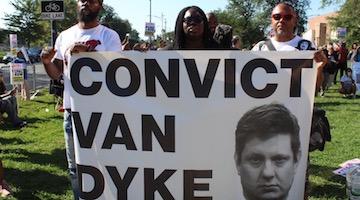 Things could get very ugly in Chicago if the cop that killed Laquan McDonald is set free by a jury that includes only one Black person.



