In this series, we ask acclaimed authors to answer five questions about their book. This week’s featured author is Robin Brooks. Brooks is Assistant Professor of Africana Studies at the University of Pittsburgh. Her book is Class Interruptions: Inequality and Division in African Diasporic Women's Fiction.
How can your book help BAR readers understand the current political and social climate?
Robin Brooks: Given that so much is at stake during these volatile times, it is imperative for all of us to try to comprehend our current political and social climate. My book Class Interruptions: Inequality and Division in African Diasporic Women’s Fiction (UNC Press, 2022) provides an analysis of what we are facing and what led to these circumstances. During the novel coronavirus (COVID-19) pandemic, we have heard a lot about “essential workers,” which usually refer to frontline workers whose wages are not very high. The dire circumstances of working-class populations were largely ignored prior to the pandemic, and requests for a higher national minimum wage was (and remains, in many respects) contentious. Without a doubt, this deadly and disruptive pandemic has put under microscope various oppressions and the widening class gaps in societies around the globe. Intersectionality and how different forms of inequality operate together to shape people’s lives and life chances are central to Class Interruptions. Black populations, which are the focus of my book, have long suffered disproportionate rates in various areas which the pandemic has highlighted, such as disparities in employment, housing, education, and healthcare. Root causes for these troubling rates and the disproportionate impact of the global pandemic on the lived experiences of Black people include the continued history of systemic racism, racial capitalism, and neoliberalism. While the social sciences are normally sought after for understanding changes in people’s class positions and related matters, a driving question for Class Interruptions is: how does the field of literary studies, more specifically African Diaspora literary studies, participate in these discourses on class change? If we want comprehensive understanding of how societies are addressing egregious class gaps and their impacts, the answer must include the influences of a wider range of fields—including African Diaspora literary studies. In Class Interruptions, I argue that contemporary African American and Caribbean women writers advocate for a reassessment of economic, social, and political practices within U.S. and Caribbean societies while leading readers to greater class consciousness.
What do you hope activists and community organizers will take away from reading your book?
I especially want people reading my book to recognize the significance of paying more attention to the role of class in people’s lived experiences. Class Interruptions can be valuable to activists, community organizers, people working on public policy, and anybody interested in eliminating inequalities and learning more about them. It is important that people from different walks of life be knowledgeable about inequalities and committed to reducing them, or we run the risk of reinforcing inequalities. Grassroots efforts have long proven to be crucial components in getting societies to make playing fields less unequal. Having a diverse collective working towards similar goals aimed at enhancing people’s quality of life is a necessary and encouraging part of the larger fight for full liberation. I hope people see Class Interruptions as the solution-oriented and forward-looking book that it is and that they are inspired to reimagine our current realities. The book urges us to practice our class consciousness even if the impact is diffuse and does not immediately or directly end in policy overhauls.
We know readers will learn a lot from your book, but what do you hope readers will un-learn? In other words, is there a particular ideology you’re hoping to dismantle?
Dismantling the untruths proffered by neoliberalism—an ideological, political, and economic project spanning from deregulated markets to practically every aspect of people’s lives—is imperative. Neoliberalism came about in response to post-World War II legislation and civil rights achievements, and it blames individual people rather than constrictive macro-level conditions or systemic racism for the grossly unequal playing fields. I explain that the highly stratified extremes we are witnessing today did not come out of the blue; there are laws and policies that have facilitated these extremes over time, especially with neoliberalism beginning in the 1970s. Societies are making the “choice” to continue with destructive practices, and so, they can make the choice to stop these practices. Specifically, governments can start choosing to require paid sick leave, raise the minimum wage, provide more affordable health care, and ensure basic services for everyone, for example. Class Interruptions urges us to shine a brighter light on wider constraints that limit the choices of people of African descent, as there are long-term consequences for structural discrimination that Black people have been dealing with for generations. We need to stop shaming people for their circumstances that stem from structural inequalities. Akin to the literary artists whose work my book examines, Class Interruptions is making a call to action to imagine generative possibilities that turn attention to needed structural solutions. Stratification economists such as Darrick Hamilton advocate for a federal jobs program and postal banking, for example, as these are solutions that would be helpful in causing positive outcomes to emerge for millions of people.
Who are the intellectual heroes that inspire your work?
Class Interruptions contributes to multiple fields and is in conversation with the work of many brilliant scholars. Situated within the larger analytical framework of racial capitalism, my book builds on this Black intellectual tradition, which includes noteworthy scholars from the past and present such as Eric Williams, C. L. R. James, Oliver Cromwell Cox, Walter Rodney, Angela Davis, Ruth Wilson Gilmore, Carole Boyce-Davies, Robin D. G. Kelley, Peter J. Hudson, Stephanie Smallwood, Donna Murch, Nathan D. B. Connolly, Jennifer L. Morgan, Walter Rucker, Jessica M. Johnson, Charisse Burden-Stelly, and Barbara Ransby. A book on class is also necessarily interdisciplinary, and scholarship from different disciplines influence my work, including Africana Studies, literary studies, working-class studies, women’s studies, history, anthropology, sociology, and economics. Class Interruptions benefits from the work of people like Andreá N. Williams, Candice M. Jenkins, Erik Olin Wright, Karyn Lacy, Michael Zweig, Paul Lauter, Sherry Linkon, and Aneeka Henderson.
In what way does your book help us imagine new worlds?
The imagination matters as we think about novel ways to address long-standing and simultaneously evolving issues. A rallying call from the Movement for Black Lives (aka the Black Lives Matter Movement) is to remember the importance of the imagination because everything currently in existence was once imagined. Class Interruptions demonstrates how literary artists are imagining well-functioning, just socioeconomic systems where people’s basic needs are met no matter the intersections of their makeup. They are encouraging us to use our imaginations as well. We are not in a post-class world; class matters, and it is crucial that we work to lessen the negative impacts on the life chances of people who are often called working-class, low-income, working poor, inner city, and lower class. Significantly, we need to be committed to the work of imagining—and then building—the world anew, not as it was pre-pandemic.
Roberto Sirvent is editor of the Black Agenda Report Book Forum.

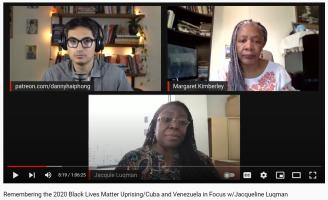 Journalist and activist Jacqueline Luqman joins the Left Lens to discuss the two year anniversary of the BLM uprisings and her recent trips to Cuba and Venezuela.
 The UK sends asylum seekers to Rwanda, the number of police killings in the U.S. continue unabated, and the Democratic Republic of Congo is threatened by U.S. client states and comprador, neo-…
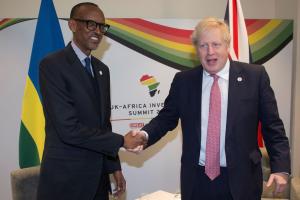 The United Kingdom is paying the Rwandan government $150 million to accept asylum seekers. The UK is accelerating deportations and denial of legal rights to Global South immigrants. Fiona of the…
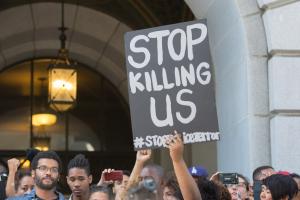 Police killings continue at a rate of more than 1,000 per year in the U.S., with 2022 numbers outpacing those of 2021. Sam Simyangwe of Mapping Police Violence provides analysis of the death toll and…
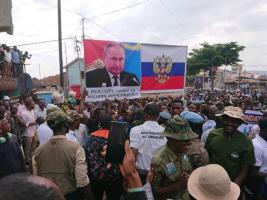 The Democratic Republic of Congo lives under threat of attack from neighboring U.S. client states Rwanda and Uganda. Its neo-colonial leadership acts on the direction of Washington and Europe.…


