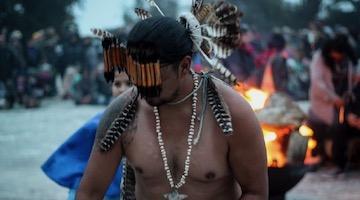
Native American and African/Black people in America have both been victims of Settler Colonialism.
“Black Lives Matter activists stood in solidarity with the Sioux at Standing Rock in resistance to the Keystone Pipeline.”
A friend texted me, asking: “Do you think Snyder really will change the Skins name?” My answer was “Yes.” I’ll explain why and what can come out of this.
The current uprisings for racial justice are primed to become the tipping point for the fall of yet another symbol of racist oppression. The days of the Washington football team slur are apparently short.
Though nothing is official yet, when the stadium sponsor, in this case FedEx, bailed on being associated with the team over the name, the first shot was fired. Normally a number of corporate suiters would line up to replace them.
Not today, no way!
And as a result, the team has formally announced the beginning of doing what it should have done long ago, and that is to change the damn name.
Should this slur fall, pressure will increase for the baseball team in Cleveland, the hockey team in Chicago and other racist slur mascots.
One thing to take away from this victory is the irony that the final nail did not come from the valiant agitation of Native American groups. It came from the reaction to the “lynching” of a Black man named George Floyd.
There is an irony in that Floyd’s” lynching” took place in Minnesota, which was also the cite of one of the largest mass lynching in American history. In 1862, Abraham Lincoln signed off on the lynching of 39 Dakota resistors.
“The final nail did not come from the valiant agitation of Native American groups.”
On the one hand, this is not at all unusual. Black people have either been at the heart of, or have inspired, every significant social justice movement in American history. While I believe that an expression of appreciation is warranted, that is not what I am most interested in securing. I am interested in a stronger bond of solidarity arising between Native American and Black people.
There have been signs of this growing. Black Lives Matter activists stood in solidarity with the Sioux at Standing Rock in resistance to the Keystone Pipeline.
There are also challenges rooted in historical wounds.
Black folks have routinely praised the so-called “Buffalo Soldiers” which were a group of Black military regiments formed after the Civil War. Their primary mission was to help advance Western expansion by driving Native People from their lands.
During the Civil War, several Native American tribes sided with the Confederacy.
It is also true that many of the enslaved that escaped who would come to be known as Maroons, found refuge among Native Americans.
“’Buffalo Soldiers’ helped advance Western expansion by driving Native People from their lands.”
With all this said, the most common intersectional aspect in the relationship between Native American and African/Black people in America is that we have been the victims of Settler Colonialism both historically and today. Black America is essentially a domestic colony. We just don’t have the sovereignty that Native Americans have and, if that meant as much as it appears to mean on paper they would have the power to stop President Trump from speaking at Mount Rushmore, which is on Sioux territory.
Maybe I am too optimistic about the possibilities that might come from the name change of a sports team. On the other hand, two months ago if someone were hopeful that major cities would be redirecting funds from their police budgets, I myself would dismiss them as being too optimistic. So, I say as long as we are willing to put the work in, we should not limit ourselves to what is possible. And greater solidarity between Black and Native American people is absolutely not only possible but necessary.
Gustavus Griffin is longtime activist and scholar now based in the Washington, DC area and member of the Black Alliance for Peace.

 The cost of the United States' war on Iran is falling hardest on the working class.
 Global Africa must oppose military aggression. Global Africans must stand with the Iranians and prepare to navigate the ripple effects of this war on African peoples.
 In this week’s segment, we discuss past and present U.S. imperialism, analyzing struggles to protect Venezuela’s Bolivarian Revolution and to bring independence to Puerto Rico.
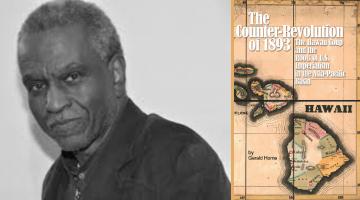 Dr. Gerald Horne joins us from Houston to discuss his latest work, The Counter Revolution of 1893: The Hawaii Coup and the Roots of U.S. Imperialism in the Asia-Pacific Basin. He connects 19th-…
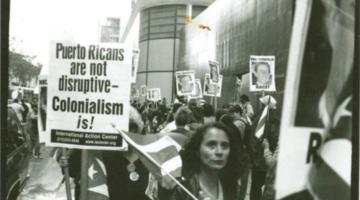 Brianna Alvarado Ramos of Diaspora Pa’lante Collective discusses the challenges of the revolutionary struggle in Venezuela and the fight for Puerto Rico's independence from U.S. colonialism.


