by Danny Haiphong
Periodic crisis is endemic to capitalism, built into the system. However, late stage capitalism has entered a phase in which crises are the norm. “Unemployment has remained high for months, if not years, after each successive crisis since the 1990s.” Expect no lasting recovery. “No amount of austerity, war, or repression can halt this trend” because “this is all capitalism can offer.”
The Crisis This Time: US Capitalism Continues to Decline with No End in Sight
by Danny Haiphong
This article previously appeared in the American Herald Tribune.
“US capitalist decline has become the system's new normal.”
When the 2008 capitalist crash sent shock waves throughout the entire global economy, the US ruling class scrambled for a political remedy. The most effective remedy thus far has been the rule of Barack Obama. Obama's presidency has been defined by his service to Wall Street and his ability to convince broad sections of the population that the capitalist economy is in recovery. Yet whether this service came in the form of bank bailouts, austerity, or the creation of the TPP-TTIP trade agreement, confidence in the capitalist system remains at a low point. The US capitalist system continues to decline and the reality of permanent crisis has become increasingly visible.
Recent findings from the Bureau of Economic Analysis reveal that for the first three months of 2016, the US capitalist economy saw its GDP increase by a minuscule 0.1 percent. These numbers greatly contrast President Obama's assertion in his last State of the Union Address that the US economy is the most "durable" in the world. Regardless of Obama’s comments, the capitalist slowdown should come as no surprise. The US capitalist economy has been experiencing a slowdown for decades. US capitalist decline has become the system's new normal.
“Capitalist crises since the 1990s have produced mainly jobless recoveries.”
Low growth numbers tell only part of the story of capitalist decline. The real measure of a capitalist recovery is in the system's ability to increase investment and rehire previously laid off workers that produce the value, i.e. profits, from investment. However, capitalist crises since the 1990s have produced mainly jobless recoveries. Unemployment has remained high for months, if not years, after each successive crisis since the 1990s. After the 2008 crisis, unemployment remained close to double digits into 2011.
In 2015, The Obama Administration claimed that unemployment was down to a low of 4.9 percent. He explained the drop in unemployment as a product of steady recovery and his administration's commitment to increasing job growth. However, something else was happening. US workers were actually dropping out of the workforce in record numbers and not counted in official statistics. Those who did find new jobs mostly found them in the expanding low-wage service sector. The so-called unemployment dip thus did little to aid a capitalist recovery.
In fact, the great lie regarding unemployment in the US only served to mask the crisis underneath the surface. A capitalist crisis is caused by overproduction in which labor exploitation disables the ability of the masses to buy back the fruits of their labor. This leads to a retraction in production overall and deep cuts to employment. These periodic episodes are inherent under capitalism. However, the crisis that US capitalism experiences today possesses a different character than crises prior to 1973. The main difference is the new role that technology and finance capital plays in the capitalist production process.
“A capitalist crisis is caused by overproduction in which labor exploitation disables the ability of the masses to buy back the fruits of their labor.”
Past economic crises, such as the one that occurred during the Great Depression, often relied on automation to speed up production and rejuvenate the economy. The US relied on technological advances in the military to boost production after the Great Depression. This time around, however, technological advances have become a drag on production. Technology has replaced much of US capitalism's need for labor in the arena of industry. Workers have been forced to work harder, longer, and for less pay as firms squeeze every last penny of profit to make up for the increased cost of production.
Capitalism's relationship to labor is critical in this development. Capitalists, or bosses, derive all profits from labor. Labor creates value that is born from the fruits of production and is then paid a wage that reflects only a fraction of the value it creates. The rest goes to the capitalist as profit. But when workers are permanently replaced, they are replaced by machines that increase the cost of production. Machines cannot create value unless they are utilized by labor. Automation in this period has thus built the most productive and globalized capitalist system in history, but has done so by shedding the primary source of capitalist profit.
“Most of the rich are sitting on capital rather than investing it.”
A highly productive capitalist system and a shrinking labor force is the recipe for capitalist slowdown and crisis. The capitalist system has attempted to remedy the crisis temporarily through vast investments in the realm of finance. However, as the Panama Papers, LIBHOR scandal, and the 2008 crash reveal, finance capital only further reinforces the fact that most of the rich are sitting on capital rather than investing it. No amount of austerity, war, or repression can halt this trend. Yet this is all capitalism can offer.
There will be no capitalist recovery in our lifetime. The masses of the exploited and oppressed will continue to be subject to the horrors of poverty, racism, and war until a strong enough fight back is organized by the people. This fight back must be fought on a class basis and possess an internationalist character. It must also place racism and sexism at the forefront of the movement to be effective. These are revolutionary times, and only a revolutionary movement is capable of resolving capitalist crisis before us by ridding of the system all together.
Danny Haiphong is an Asian activist and political analyst in the Boston area. He can be reached at wakeupriseup1990@gmail.com.

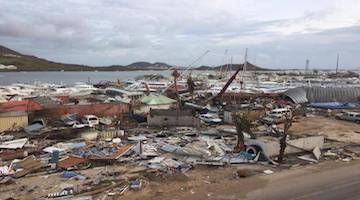 “Barbudans are rightly suspicious that ultimately their paradise of equality for all will be taken away in favor of capitalist predation.”
 “WikiLeaks has done humanity a service by exposing the Democratic Party as but another organ of the rich.”
 “Migrants deported from Israel to Rwanda in 2014 and 2015 have been horrifically abused and trafficked back to the Mediterranean.”
 “Non-mainstream media news sources across the political spectrum would no longer be able to afford to compete in the marketplace of ideas.”
 “Black people from all over the world must come together and organize and mobilize against Facebook, on Facebook.”



