by BAR editor and senior columnist Margaret Kimberley
How does a writer make slavery a light and breezy read for children? By presenting a story that’s comforting to white bosses at corporate publishing houses, that’s how. The same racial hierarchy that prevailed under the slavocracy calls the shots in today’s book selling industry. The rules haven’t changed: don’t make Mr. Charlie angry, or hurt Miss Ann’s feelings.
Freedom Rider: Return of the “Happy” Slave
by BAR editor and senior columnist Margaret Kimberley
“Bizarrely and yes, disturbingly, there were some enslaved people who had a better quality of life than others and ‘close’ relationships with those who enslaved them. But they were smart enough to use those ‘advantages’ to improve their lives.” – Ramin Ganeshram, author of A Birthday Cake for George Washington
“I am determined to lower her spirit or skin her back.” – Anthony Whitting, George Washington’s overseer
“This dubious story would not have been given the green light unless it had passed psychological muster with white people in the publishing and newspaper world.”
Black Americans must always assume that their history of suffering in this country will be perverted and used against them. Despite the obviously cruel nature of chattel slavery and the well documented atrocities used to maintain it, the much loved white American fantasy of the happy slave is periodically resurrected. This sick propaganda has two important functions. It trivializes any demand, complaint or expression of anger from black people as being insignificant. It also gives white people license to do anything they want, just as their forebears did.
In the past year, two children’s books were published which put slavery in rather a good light. In both stories the protagonists are enslaved house servants and their lives are depicted as being not so bad after all.
A Fine Dessert includes the story of an enslaved woman and her daughter in Charleston, South Carolina, who prepare a lavish dish for the slave holders. After waiting on master, mistress and family they hide in a cupboard and lick the cooking bowls. Enslaved people were often denied food and had to hide if they wanted more than they were allotted. This reality is turned into amusing anecdote for the 21st century literary minstrel show.
The New York Times included A Fine Dessert on its list of the best illustrated children’s books of 2015. It has been mentioned as a serious contender for prestigious book awards. This dubious story would not have been given the green light unless it had passed psychological muster with white people in the publishing and newspaper world. It is not surprising then that any coverage of black people in the corporate media is problematic at best.
“The author wanted to focus on how enslaved people found some happiness amid the cruelty and tortures inflicted upon them.”
This title and the controversy it spawned went largely unnoticed until this month. The Scholastic company rang in the new year with the announced publication of A Birthday Cake for George Washington. It tells the story of a man named Hercules who was in fact enslaved by George Washington. Hercules was a well known cook and one of those who lived in bondage with Washington when the nation’s capital was located in Philadelphia.
The story of Hercules should be part of an important chapter in American history. New York City was the nation’s first capital and it was followed by Philadelphia before a new city was created along the Potomac River. The purpose of moving the seat of government further and further south was not coincidental. The final location between the states of Maryland and Virginia put the city out of reach of any northerners who might have abolitionist tendencies.
Philadelphia proved to be a great inconvenience to Washington because any enslaved person who lived in Pennsylvania for more than six months was entitled to freedom. The president was forced to rotate slaves between Philadelphia and his plantation in Mount Vernon, Virginia, to prevent their freedom. This action was a violation of the letter of that law but Washington exempted himself and kept his human property.
If a children’s book were to teach these easily provable facts there would be no harm done. Instead the author Ganeshram revealed another very dangerous truth about herself and others. She wanted to focus on how enslaved people found some happiness amid the cruelty and tortures inflicted upon them.
“They think racial hierarchy is just fine and that telling a heart-warming story can make inconvenient facts disappear.”
“In our modern society, we abhor holding two competing truths in our minds. It is simply too hard. How could one person enslave another and at the same time respect him? It’s difficult to fathom, but the fact remains it was true.”
Despite the author’s claim of respect and trust, Hercules ended up as a laborer at Mount Vernon before he was able to make a successful escape in 1797. But a larger question remains. Why is it so important to defend the institution of slavery at all? The answer is obvious. The defenders see servitude of black people and the supremacy of white people as part of a natural order that should not be disturbed. They think racial hierarchy is just fine and that telling a heart-warming story can make inconvenient facts disappear.
Ganeshram’s Trinidadian ancestry has been used by her defenders as a shield from criticism. Likewise a black editor at Scholastic was called in to defend the indefensible. Both ended up with egg on their faces after Scholastic decided to end the public relations disaster and withdraw the book from publication.
Black people who spoke up about this travesty are to be congratulated for using social media in an important way. As always speaking out is the best course of action but that protest is never ending. The publishing industry may shy away from any slavery stories for the rest of 2016. However it is best to assume that stories of happy, smiling chattel will return.
Margaret Kimberley's Freedom Rider column appears weekly in BAR, and is widely reprinted elsewhere. She maintains a frequently updated blog as well as at http://freedomrider.blogspot.com. Ms. Kimberley lives in New York City, and can be reached via e-Mail at Margaret.Kimberley(at)BlackAgendaReport.com.

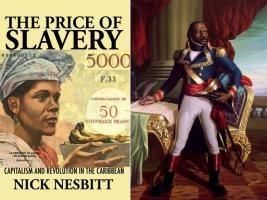 This week’s featured author is Nick Nesbitt. Nesbitt is Professor of French and Italian at Princeton University. His book is The Price of Slavery: Capitalism and Revolution in the Caribbean.
 The failure of the U.S. to respect the sovereignty of nations in the region and its decision to exclude states from the Summit disqualifies it from being a credible host. The Black Alliance for Peace…
 Farming is a stressful occupation. Black farmers face the additional burdens of racism, debt, and displacement.
 The judge presiding over the trial of an accused killer of Haitian president Jovenel Moise granted the DOJ request to classify certain evidence. The action points to a possible US connection with…
 The city of Berlin, Germany banned pro-Palestinian protests on May 15, Nakba Day. But solidarity with Palestine could not be stopped.



